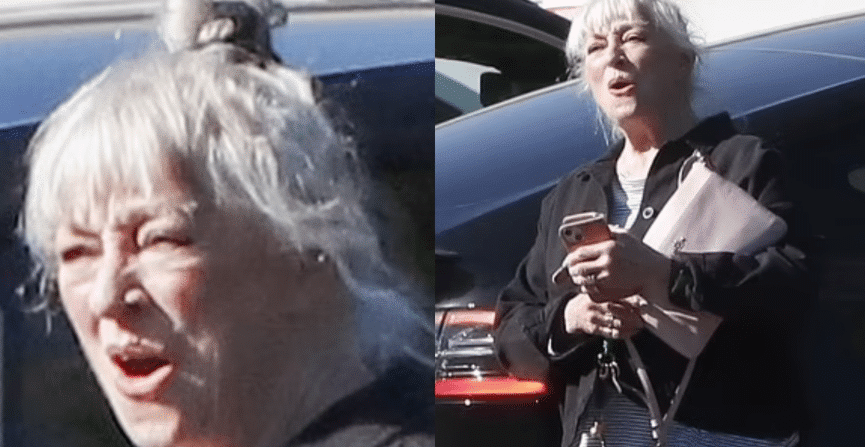
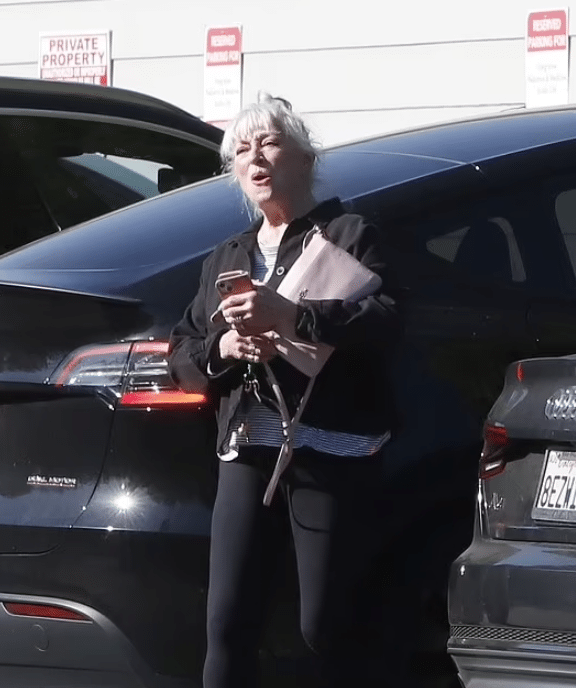
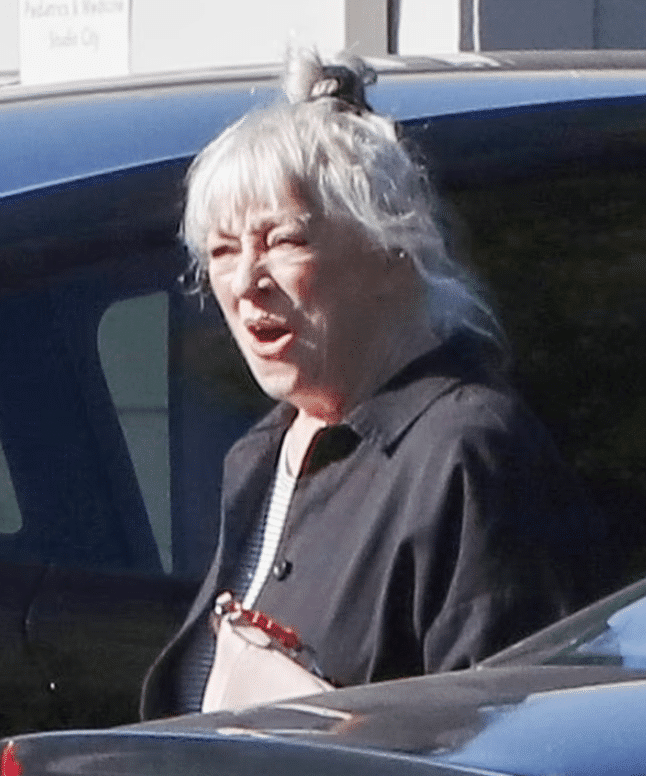
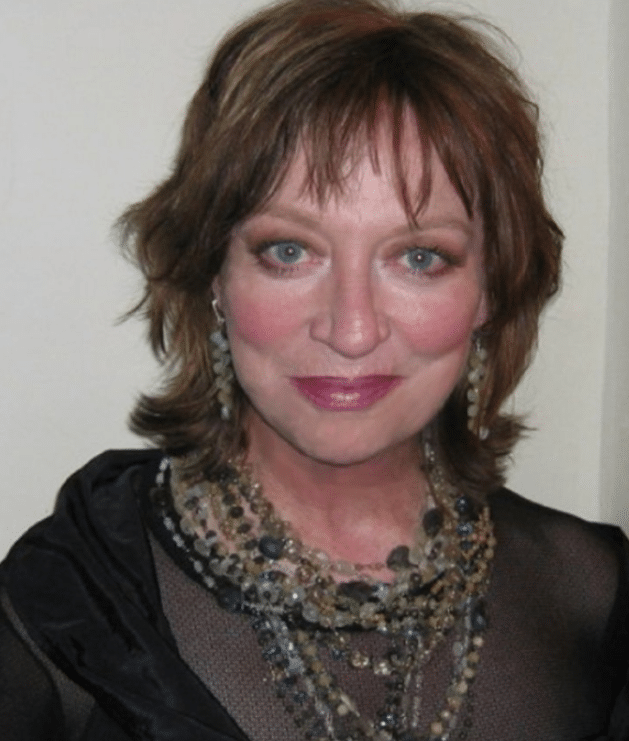
Dressed comfortably in dark clothing and moccasin-style shoes, with her silver hair swept into an updo, this veteran actress looked relaxed during a recent afternoon outing in Los Angeles.
There was no elaborate premiere wardrobe, professional makeup, or carefully arranged lighting—only an accomplished performer going about an ordinary day.
The woman in the photographs is Veronica Cartwright.
Movie fans may remember her as the frightened young schoolgirl in Alfred Hitchcock’s The Birds, the determined Nancy Bellicec in Invasion of the Body Snatchers, or Lambert, the increasingly terrified navigator aboard the Nostromo in Alien.
At 77 in 2026, Cartwright remains connected with some of the most influential suspense, science-fiction, and fantasy productions in American cinema. Yet her career reaches far beyond fear. It includes childhood television, drama, comedy, acclaimed guest performances, and recent streaming work.
A Childhood Career Built During Television’s Early Years
Veronica Cartwright was born in Bristol, England, on April 20, 1949. Her family later moved to the United States, where she and her younger sister, Angela Cartwright, both entered acting.
Angela would become widely recognized through The Sound of Music and Lost in Space. Veronica followed a different path, gradually becoming known for emotionally intense performances in film and television.
As a child, Veronica appeared on popular programs including Leave It to Beaver, Make Room for Daddy, and Alfred Hitchcock Presents.
Working at such a young age required unusual discipline. Child actors had to balance schoolwork with long production days while learning dialogue, hitting marks, and responding to direction.
Cartwright’s early performances revealed a natural ability to communicate fear, confusion, and intelligence without exaggeration. That quality soon brought her into two major motion pictures.
“The Children’s Hour” Gave Her Serious Dramatic Material
In 1961, Cartwright appeared in William Wyler’s The Children’s Hour, starring Audrey Hepburn, Shirley MacLaine, and James Garner.
She played Rosalie Wells, a student drawn into a damaging lie that changes the lives of the adults around her.
The role placed Cartwright within emotionally demanding material at an age when many young performers were limited to cheerful family stories.
Working alongside Hepburn and MacLaine also gave her an extraordinary view of professional filmmaking. She saw how experienced actors used restraint, listening, and small physical choices to strengthen a scene.
Two years later, she entered a very different production—one that would become part of cinema history.
Alfred Hitchcock Cast Her in “The Birds”
Released in 1963, The Birds followed a California coastal community suddenly threatened by unexplained attacks from ordinary birds.
Tippi Hedren played Melanie Daniels, while Rod Taylor portrayed attorney Mitch Brenner. Jessica Tandy appeared as Mitch’s mother, and Cartwright played his younger sister, Cathy.
The movie’s disturbing power came partly from its refusal to offer a comforting explanation. The birds simply gathered and attacked, turning familiar landscapes into places of uncertainty.
Cartwright’s reactions helped viewers experience that fear. Cathy was not an action heroine prepared for danger. She was a child trying to understand why the natural world had suddenly become hostile.
Filming Terror Before Digital Effects
The production relied on trained birds, mechanical creations, careful editing, painted imagery, and photographic effects.
Performers sometimes had to react to elements that would be added later, while other scenes involved live birds moving through controlled sets.
Hitchcock was famous for detailed preparation. Camera movement, actor placement, sound, and visual rhythm were carefully planned.
Cartwright learned early that suspense is not created by constant screaming. It develops through anticipation—the glance toward a window, the sound outside a room, or the pause before something enters the frame.
Those lessons would serve her throughout her career.
The Transition From Child Performer to Adult Actress
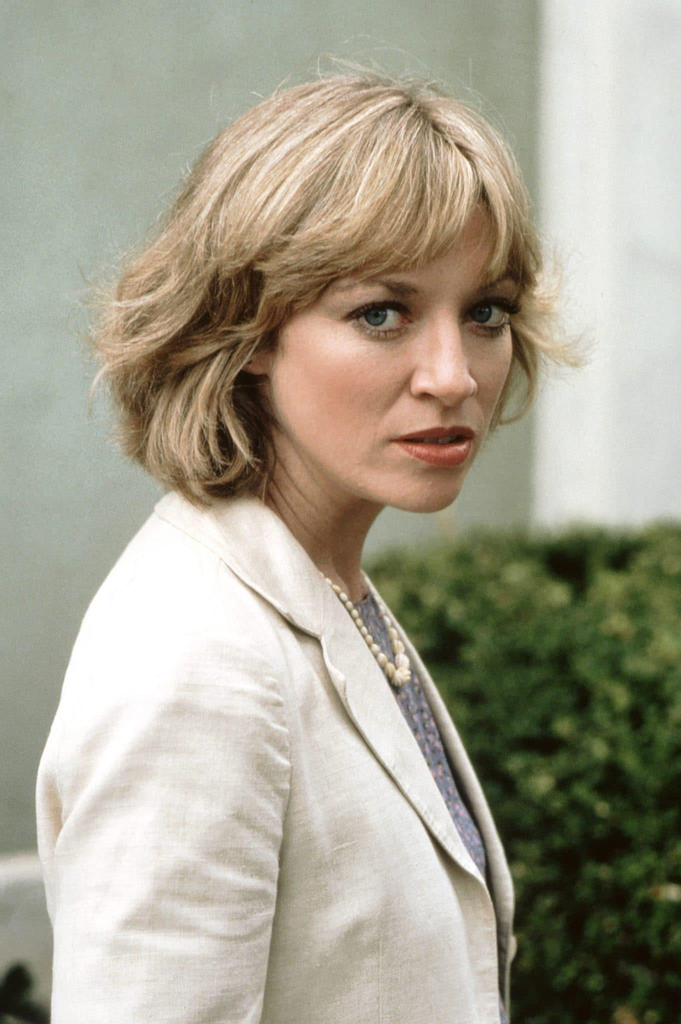
Many child actors struggle to establish adult careers. Casting professionals may continue to see the face they remember from an earlier production, even when the performer has matured.
Cartwright stepped away from acting for a period before returning in the late 1960s and 1970s.
Her adult work included television guest roles and films that made excellent use of her alert, observant screen presence. She had a remarkable ability to make an extraordinary situation feel immediate and real.
That talent became especially valuable during the late 1970s, when American filmmakers were reinventing science fiction and psychological suspense.
“Invasion of the Body Snatchers” Found Horror in Everyday Life
Cartwright played Nancy Bellicec in the 1978 version of Invasion of the Body Snatchers.
The film starred Donald Sutherland, Brooke Adams, Jeff Goldblum, and Leonard Nimoy. Its story involved mysterious organisms replacing people with emotionless copies while they slept.
Cartwright’s Nancy recognizes the threat earlier than most characters. She and her husband, Jack, become part of a small group trying to remain human as the city around them changes.
The movie turned ordinary urban spaces into sources of anxiety. Friends, coworkers, and strangers might look exactly the same while no longer possessing the qualities that made them themselves.
Cartwright brought nervous energy and practical intelligence to Nancy. She was frightened, but she continued observing, adapting, and trying to survive.
The performance helped establish her as one of the era’s most effective actors in speculative stories.
“Alien” Made Her Part of Another Landmark Film
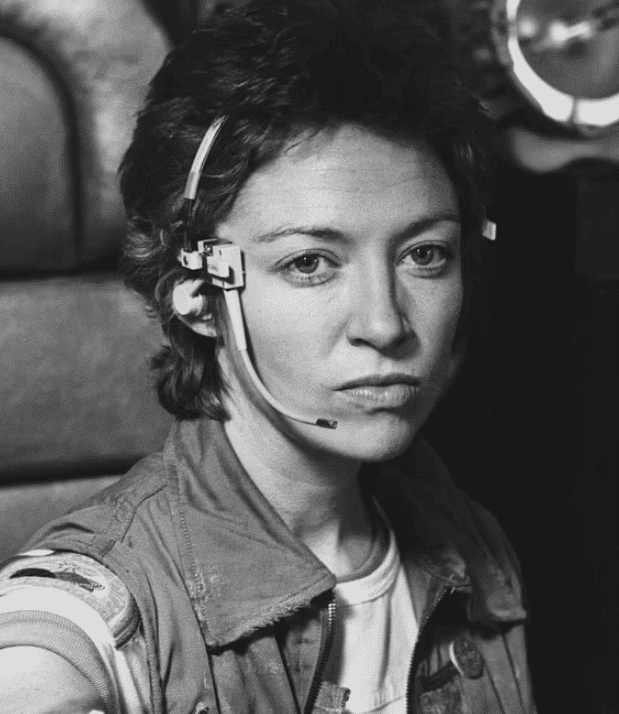
One year later, Cartwright appeared in Ridley Scott’s Alien as Joan Lambert, navigator of the commercial spacecraft Nostromo.
The ensemble included Sigourney Weaver, Tom Skerritt, John Hurt, Ian Holm, Yaphet Kotto, and Harry Dean Stanton.
The production combined science fiction with the structure of a confined suspense story. Its spaceship did not look like a spotless futuristic palace. It felt industrial, cramped, and used—a workplace in space.
Lambert responded to the growing threat with visible fear. Some viewers initially interpreted that vulnerability as weakness, but her behavior reflects how many ordinary people might react when trapped with something beyond their understanding.
Cartwright made the terror physical. Her breathing, posture, and voice allowed viewers to feel the pressure surrounding the crew.
Her performance earned a Saturn Award for Best Supporting Actress.
The Strength of Showing Fear Honestly
Popular entertainment often treats bravery as the absence of fear. Cartwright’s best performances suggest something more truthful.
Fear is information. It tells a person that the situation is dangerous, uncertain, and beyond familiar rules.
Lambert does not become a conventional action hero, but she gives the film emotional credibility. If every character responded calmly to the creature, the threat would feel less powerful.
Cartwright became memorable because she represented the reaction many viewers were experiencing in their theater seats.
Comedy and Fantasy Revealed a Wider Range
Cartwright continued working steadily through the 1980s and beyond.
In The Witches of Eastwick, she portrayed Felicia Alden, a deeply suspicious resident of a picturesque New England town. The dark fantasy starred Cher, Susan Sarandon, Michelle Pfeiffer, and Jack Nicholson.
Felicia begins recognizing that something disturbing has entered the community, but her alarm makes other residents dismiss her.
Cartwright played the role with such intensity that even the film’s most outrageous moments remained emotionally grounded.
She also appeared in the family science-fiction adventure Flight of the Navigator, giving another generation of viewers a chance to discover her work.
Later, she demonstrated her comic ability through television roles, including an appearance as the mother of Jack McFarland on Will & Grace.
Prestige Television Recognized Her Talent
Cartwright became a valued guest performer across numerous television genres.
She received Emmy nominations for appearances on ER and The X-Files. In the latter series, she played Cassandra Spender, a woman whose experiences connect with the show’s central mythology involving government secrecy and extraterrestrial life.
The role required emotional complexity. Cassandra could not simply appear mysterious; viewers needed to believe in her history, fear, and longing for answers.
Cartwright’s casting gave the character immediate credibility. Her earlier films had already taught generations of viewers to trust her reactions when the impossible entered everyday life.
A New Generation Discovered Her Through Streaming
In 2024, Cartwright joined the Netflix comedy A Man on the Inside, starring Ted Danson.
The series follows a retired professor who enters a senior living community while assisting with a private investigation. Beneath the mystery structure is a warm story about friendship, purpose, loneliness, and life after retirement.
Cartwright plays Virginia, one of the community’s memorable residents.
The role allows her to use humor and social confidence rather than the intense fear associated with many of her classic movies. It also introduces her to viewers who may not immediately connect her with Hitchcock or Ridley Scott.
A career lasting this long depends on adaptability. Cartwright moved from black-and-white television to color epics, practical-effects classics, network dramas, and streaming comedy without losing the honesty that distinguishes her work.
A Rare Outing Should Remain an Ordinary Moment
The recent Los Angeles photographs show Cartwright away from a set or red carpet.
She appears comfortable and unguarded, as anyone should be allowed to appear while handling daily errands. Her natural face and practical clothing do not represent a disappearance of Hollywood glamour. They represent an ordinary private moment photographed in public.
Responsible coverage should not evaluate how closely she resembles the child in The Birds or the young navigator in Alien.
More than 60 years have passed since Hitchcock’s film. Aging across that span is not a transformation requiring explanation. It is a privilege reflected in every chapter of her extraordinary career.
Veronica Cartwright’s Legacy Is Written Across Generations
Veronica Cartwright has faced attacking birds, hidden duplicates, creatures in space, supernatural forces, government conspiracies, and the unpredictable world of television comedy.
Her characters often respond to danger before anyone else understands it. She became one of cinema’s finest interpreters of fear because she never treated emotion as something to hide.
At 77, Cartwright has nothing to prove through a casual photograph. Her work already speaks across seven decades.
For longtime moviegoers, she remains Cathy, Nancy, Lambert, or Felicia. For younger streaming viewers, she may simply be the witty resident who makes Ted Danson’s latest adventure more enjoyable.
Every one of those performances belongs to the same gifted actress—a quiet Hollywood survivor whose talent has always been more memorable than any red-carpet image.