Only a short time earlier, she had been running beneath the stadium lights in Paris as millions of people watched.
Now, standing beside the calm Mediterranean Sea, British track star Keely Hodgkinson appeared far removed from the pressure, noise, and expectations of Olympic competition.
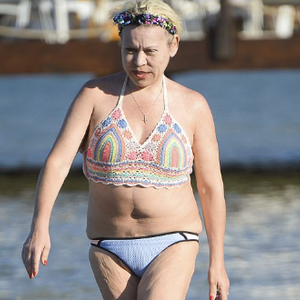
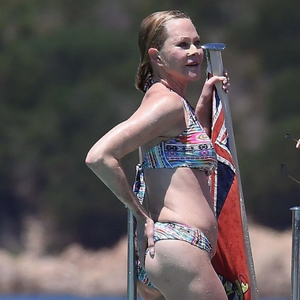
The celebrated middle-distance runner was photographed enjoying a family vacation in Marbella, Spain, after earning the greatest victory of her athletic career. Accompanied by her father, Dean Hodgkinson, she spent time walking along the shoreline and relaxing near the water.
The photographs offered fans something they rarely see: an Olympic champion enjoying an ordinary family moment after years of extraordinary dedication.
A Peaceful Reward After Olympic Glory
Hodgkinson arrived in Marbella following her gold-medal performance in the women’s 800 meters at the 2024 Paris Olympic Games.
She won the final in 1 minute, 56.72 seconds, finishing ahead of Ethiopia’s Tsige Duguma and Kenya’s Mary Moraa. It was the senior global title she had pursued through several seasons of remarkable performances and narrow disappointments.
The victory carried special meaning because Hodgkinson had won silver at the Tokyo Olympics three years earlier.
Tokyo introduced her to a worldwide audience, but the event took place under unusual circumstances, with pandemic restrictions changing the atmosphere of the Games. Paris provided a more traditional Olympic setting, complete with crowded stands and spectators cheering throughout the stadium.
This time, Hodgkinson left with gold.
After the demanding preparation and emotional intensity of the Games, Marbella offered an entirely different rhythm. There were no qualifying rounds to navigate, no race strategy to study, and no stopwatch determining the outcome of the day.
There was simply sunshine, family, and time to rest.
Walking Beside the Person Who Knew Her Before Fame
The beach photographs show Hodgkinson walking beside her father, Dean.
They appeared relaxed as they made their way between the shoreline and the water, without any formal sporting event or media obligation surrounding them.
For an athlete whose schedule is carefully organized around training, recovery, travel, and competition, an unhurried afternoon with family can feel especially valuable.
Her father knew her long before Olympic medals, national records, and international recognition became part of everyday life. That connection gave the images a warmth that went beyond a typical celebrity vacation photograph.
The trip reportedly included time near Puerto Banús, the well-known marina and resort destination close to Marbella. The family used the getaway as an opportunity to celebrate Hodgkinson’s achievement and reflect on everything that had led to her victory in Paris.
A Teenage Talent Who Surprised the World

Hodgkinson was still a teenager when she emerged as one of the leading 800-meter runners in international athletics.
At the postponed Tokyo Olympics in 2021, she entered the competition without the same level of recognition enjoyed by several established competitors. By the end of the final, however, the young British runner had earned a silver medal and announced herself as a major new talent.
Her result was remarkable, but it also created new expectations.
Once an athlete wins an Olympic medal at such a young age, every subsequent race is measured against that early success. A promising career suddenly becomes a public journey, with spectators watching to see whether the first breakthrough can be repeated.
Hodgkinson continued collecting major medals while steadily improving her performances. Silver became familiar, even as the top step of the podium remained frustratingly close.
Those results demonstrated remarkable consistency, but for a fiercely competitive athlete, finishing second could also provide motivation.
Years of Work Led to One Evening in Paris
By the summer of 2024, Hodgkinson had established herself as one of the clear favorites for Olympic gold.
Shortly before the Paris Games, she ran 1:54.61 in London, setting a British record and producing one of the fastest women’s 800-meter performances in history.
The result confirmed that she was in exceptional form, but it also increased the pressure surrounding her Olympic campaign. Being favored to win can make every qualifying round feel more demanding, because anything short of victory may be viewed as a disappointment.

Hodgkinson handled those expectations with impressive composure.
In the Olympic final, she placed herself in a strong position and remained controlled through the decisive closing stages. When she crossed the finish line first, years of preparation and several near misses came together in one unforgettable moment.
Her victory made her the first British woman to win the Olympic 800-meter title since Kelly Holmes accomplished the feat in Athens in 2004.
For longtime British athletics fans, that connection added a deeply nostalgic dimension to the result. Twenty years after Holmes stood atop the Olympic podium, another British runner continued the tradition.
The Demanding Reality Behind Two Laps
The 800 meters occupies a fascinating place in track and field.
It requires the speed of a sprinter, but competitors must maintain that pace for two full laps. The event also demands tactical intelligence, because position and timing can be as important as raw speed.
A runner may possess exceptional fitness and still lose precious time by becoming trapped behind another athlete. Moving too early can leave a competitor exhausted before the finish, while waiting too long may allow rivals to create an impossible gap.
Those details unfold in less than two minutes.
Behind such a short race are years of conditioning, carefully measured workouts, strength training, recovery, and countless repetitions. Athletes practice not only running fast, but also making decisions while their bodies are under enormous strain.
Hodgkinson’s calm racing style can make the event look deceptively simple. Her Olympic victory, however, represented the result of preparation extending far beyond one evening in Paris.
A New Level of Fame Beyond Athletics

Winning Olympic gold brought Hodgkinson to the attention of people who may never have followed the professional track circuit.
Before Paris, she was already widely respected by athletics fans. Her medals and record-setting performances had made her one of Britain’s most accomplished young runners.
An Olympic title, however, reaches a much broader audience.
The Games remain one of the few sporting occasions capable of turning an athlete into a household name in a matter of minutes. People who rarely watch an 800-meter race may remember the emotion of an Olympic final for years.
Greater recognition naturally brings more interviews, public appearances, magazine features, and interest in life away from competition.
The Marbella photographs arrived during that transition. They showed a young woman adjusting to a new level of public attention while enjoying a brief return to ordinary family life.
A Celebration With Deep Personal Meaning
The vacation was reportedly more of a family celebration than a large public event.
That quiet approach seemed appropriate for an achievement built through years of patient work.
Hodgkinson had experienced the joy of early success, the frustration of finishing close to gold, and the pressure of arriving in Paris as a favorite. Her Olympic victory was therefore not simply one successful race.
It represented a long progression from a promising teenage runner to the leading athlete on the sport’s biggest stage.
The people closest to an athlete often experience that journey as well. Families see the early mornings, difficult training days, injuries, uncertain results, and sacrifices that never appear during a televised final.
Celebrating with her father allowed Hodgkinson to share the moment with someone who understood the years behind the medal.
The Champion Behind the Beach Photographs
The athlete pictured along the Marbella shoreline is Keely Hodgkinson, Great Britain’s Olympic champion in the women’s 800 meters.
Her relaxed getaway revealed no dramatic secret. Instead, it offered a gentle glimpse of the person behind the stopwatch—a daughter spending time with her father and a young athlete allowing herself to enjoy what she had accomplished.
The images serve as a reminder that champions are not defined only by the moments when they cross a finish line.
Sometimes an achievement becomes real later, during a quiet walk beside the ocean, when the cheering has faded and there is finally time to look back at how far the journey has come.