Some comedians make audiences laugh with a clever line. John Cleese could make them laugh simply by crossing a room.
With his towering frame, stern expression, precise voice, and unmatched sense of timing, Cleese became one of the most influential comic performers of the modern era. He helped transform British comedy through surreal sketches, sharp satire, and characters who seemed only one small inconvenience away from total panic.
For viewers around the world, he is forever linked to Monty Python and Fawlty Towers. Those shows created phrases, characters, and routines that still bring instant recognition decades later.
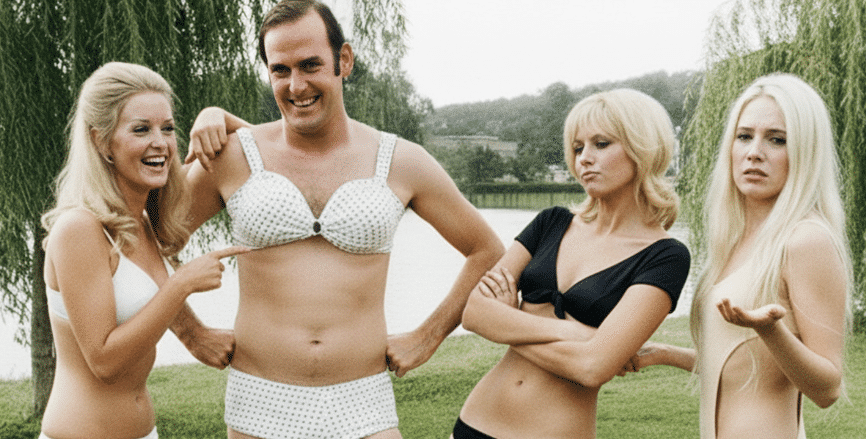
A playful archival image may invite a guessing game, but Cleese’s lasting legacy comes from something much bigger: he taught generations of audiences that intelligent comedy can also be wonderfully ridiculous.
From Weston-super-Mare to Cambridge
John Cleese was born in Weston-super-Mare, England, in 1939. He grew up in a family that valued education and later attended Cambridge University, where he studied law.
At Cambridge, however, he found another calling. He joined the Footlights theatrical club, an institution that had already helped launch many British comedy talents.
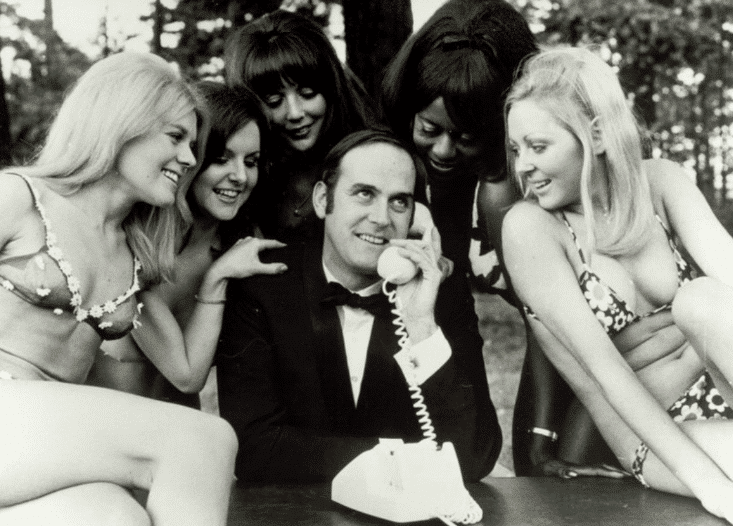
The Footlights gave Cleese room to write, perform, and experiment. He quickly showed a gift for creating characters who spoke with complete seriousness while behaving in utterly unreasonable ways.
That contrast became a defining part of his comedy. Cleese understood that the funniest person in a scene is often the one who does not realize how funny they are.
The Beginning of Monty Python
In the late 1960s, Cleese joined Graham Chapman, Eric Idle, Terry Gilliam, Terry Jones, and Michael Palin to create Monty Python’s Flying Circus.
The program was unlike anything most television audiences had seen. Its sketches did not always have traditional endings. Characters could interrupt one another, scenes could turn into animation, and the humor often came from taking a perfectly ordinary situation to a wildly illogical place.
Cleese stood out for his ability to play authority figures, frustrated professionals, and people determined to impose order on complete nonsense.
One of the show’s best-known routines featured a government department devoted to unusual walking styles. Cleese’s exaggerated strut, high kicks, and rigid concentration turned a few minutes of physical comedy into a cultural landmark.
The sketch remains one of television’s most recognizable examples of how a simple idea can become unforgettable in the hands of the right performer.
Comedy That Treated Absurdity Seriously
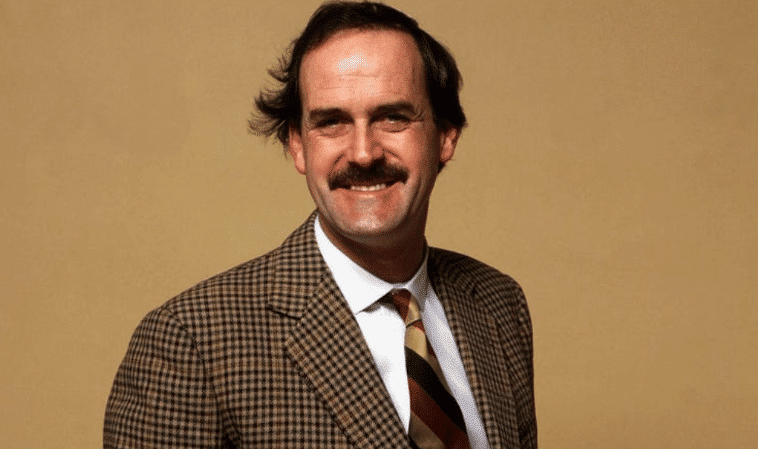
Monty Python’s humor worked because its members played the strangest ideas with great conviction. Cleese was especially skilled at this.
He could portray an impatient customer, a pompous official, or a deeply confused man with the same commanding seriousness. The more formal the character appeared, the funnier it became when the situation unraveled.
The group’s famous parrot sketch, for example, became a classic because of Cleese’s escalating frustration. What begins as a customer complaint becomes a dazzling display of language, timing, and comic persistence.
Monty Python did not simply tell jokes. It challenged expectations about what television comedy could be. Its influence can still be seen in sketch shows, animated series, movies, and internet humor today.
The Hotel Manager Nobody Could Forget
If Monty Python established John Cleese as a comic original, Fawlty Towers made him a household name.
The sitcom, which he co-created with Connie Booth, centered on Basil Fawlty, the anxious and frequently overwhelmed owner of a small seaside hotel. Basil wanted his establishment to feel refined and respectable, but nearly every guest, employee, and everyday problem seemed to push him further from that dream.
Cleese’s performance was a masterclass in comic tension. Basil would try to maintain a polite smile while his body language revealed growing frustration. Then, at exactly the right moment, the character’s carefully controlled manner would collapse into chaos.
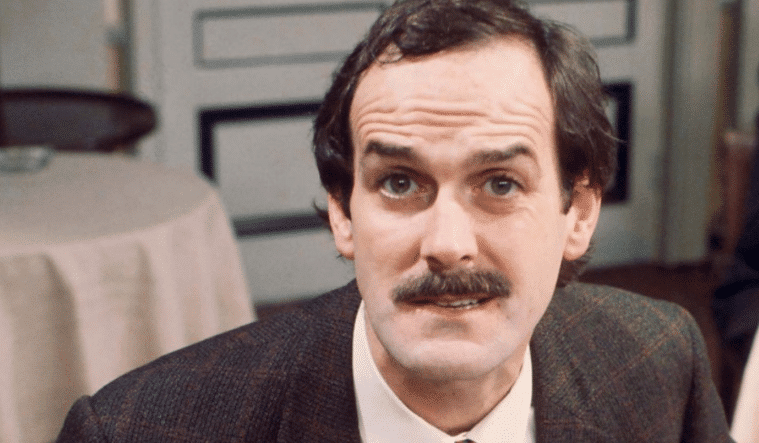
The series produced only twelve episodes, but its impact has lasted for generations. Fans continue to quote its lines, revisit its scenes, and admire the careful construction behind every misunderstanding.
Why Basil Fawlty Worked So Well
Basil Fawlty was not a simple character. He was impatient, vain, easily irritated, and often wrong—but Cleese made him compelling because he understood the character’s desperation.
Basil wanted to be respected. He wanted the hotel to succeed. He wanted life to follow a sensible plan. Unfortunately for him, Fawlty Towers was built around the certainty that life never follows a sensible plan.
Cleese used physical comedy, facial expressions, and rapid dialogue to show Basil trying to regain control. The humor came from watching that effort become more impossible by the minute.
It was comedy with precision. Every slammed door, awkward pause, and increasingly frantic explanation had a purpose.
Success on Film and Beyond
Cleese’s career extended far beyond television. He appeared in the Monty Python films, including Monty Python and the Holy Grail and Life of Brian, which helped bring the group’s style to an even wider audience.
He later co-wrote and starred in A Fish Called Wanda, a sharp comedy that earned him an Academy Award nomination for Best Original Screenplay. The film showed that Cleese could bring his comic instincts to a more traditional movie format without losing his distinctive edge.
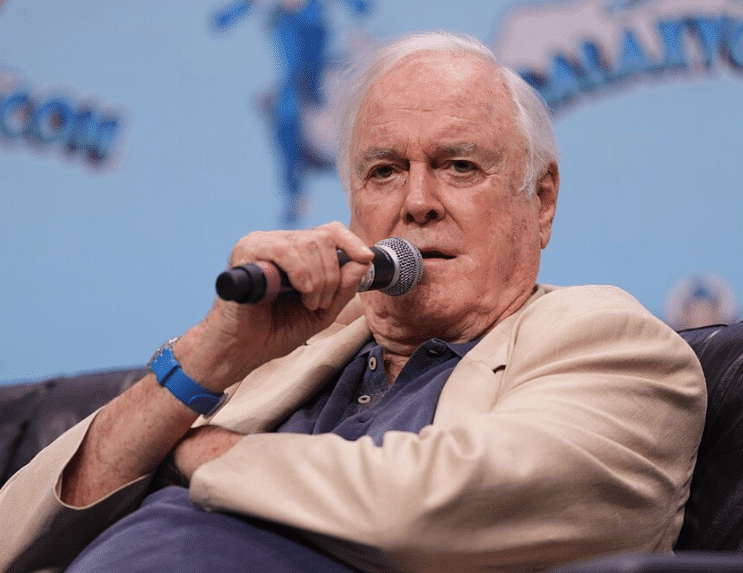
Younger audiences also came to know his work through projects such as the Harry Potter films and his voice role as King Harold in the Shrek series.
Across every era, Cleese has remained unmistakable. Even in a brief appearance, his voice, posture, and sense of comic precision make an immediate impression.
A Legacy That Still Makes People Laugh
John Cleese’s greatest achievement may be the durability of his work. Decades after Monty Python’s Flying Circus first aired, new audiences continue to discover its sketches and understand why they became classics.
His comedy was never afraid to be strange. It found humor in bureaucracy, social rules, bad manners, inflated egos, and the small absurdities of daily life.
Cleese showed that a joke could be sophisticated without losing its sense of play. He could make audiences laugh at a silly walk, then make them laugh again at the seriousness with which it was performed.
That is the mark of a true comic original. John Cleese did not merely create memorable characters—he changed the way people think about comedy itself.