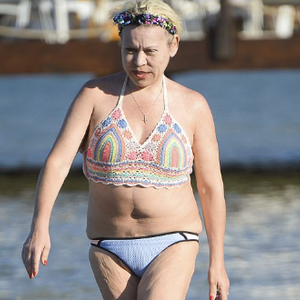
A photograph of a woman enjoying the Mediterranean in casual snorkel gear has recently drawn attention online. Away from fashion shows, magazine covers, and carefully staged campaigns, the image offers a quieter view of a face that helped define an entire era of style.
The woman is Kate Moss.
For more than three decades, Moss has remained one of fashion’s most recognizable figures. She emerged in the early 1990s with a look that was strikingly different from the glamorous supermodel image that had dominated the previous decade.
Her influence was never based on one photograph alone. It came from an instinctive understanding of clothes, an ability to change the mood of a picture, and a career that lasted far beyond any single trend.
A Discovery That Changed Fashion
Kate Moss was discovered as a teenager in the late 1980s and soon entered a modeling world dominated by towering, athletic-looking supermodels.
Moss offered something different. Her compact frame, expressive face, and understated presence created a new visual language for fashion photography. She could look vulnerable, cool, rebellious, elegant, or completely natural—sometimes within the same campaign.
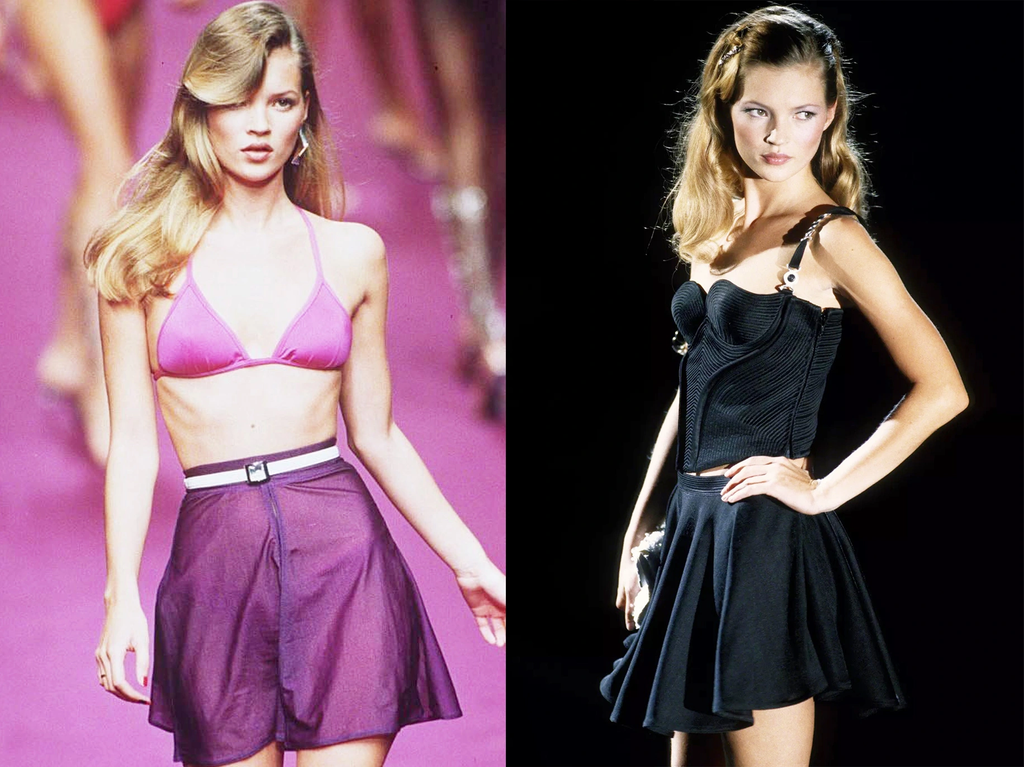
Her breakthrough came through photographs that captured the looser, more minimalist energy of the 1990s. Designers and editors saw that she could make simple clothing feel memorable. A slip dress, jeans, a leather jacket, or an oversized coat could become part of a larger cultural moment when Moss wore it.
Her success helped shift the fashion industry’s idea of what a major model could look like.
The Face of a New Decade

The early 1990s brought a major change in fashion.
The high-gloss glamour of the 1980s gave way to a more stripped-back style. Designers embraced simplicity, streetwear influences, vintage references, and clothes that appeared relaxed rather than overly formal.
Kate Moss became closely associated with that transformation.
Her work with Calvin Klein, particularly alongside Mark Wahlberg, became part of the visual memory of the decade. She also appeared in influential editorials and campaigns that helped define the era’s mood.
Moss was not merely modeling clothes. She was helping create an attitude: effortless, slightly undone, and confident without needing to appear polished every second.
That quality made her relatable to audiences even as she became one of the world’s most photographed women.
More Than a Runway Model
Over time, Kate Moss proved that her influence extended beyond the runway.
She became a muse for major designers, photographers, and artists. Her collaborations and campaign work spanned luxury fashion, beauty, music, and popular culture. She appeared in music videos, inspired songs, and became a frequent reference point for designers trying to capture a particular kind of British cool.
Her style also influenced everyday fashion.

The combination of skinny jeans, ankle boots, vintage jackets, simple tanks, and bohemian touches became closely linked to Moss’s public image. Many people did not need to buy designer clothing to recognize the feeling she represented.
That is one sign of lasting fashion influence: when a person’s style moves from the pages of magazines into ordinary wardrobes.
A Career Built on Reinvention
Few models remain at the center of fashion for as long as Kate Moss has.
The industry changes quickly, and fame can be fleeting. Moss continued working through different decades because she understood how to evolve without losing the qualities that made her distinctive in the first place.
She moved from young model to established fashion icon, collaborator, businesswoman, and mentor-like figure for younger talent. Instead of trying to recreate the exact image of her early years, she allowed her public style to grow with her.
That evolution is part of what makes candid pictures of Moss interesting. They do not need to resemble a 1990s campaign to have value. A person’s life is meant to change, and a long career should be measured by adaptability rather than by comparison with old photographs.
The Private Person Behind the Public Image
Kate Moss has spent much of her adult life under intense public attention.
That kind of visibility can make ordinary moments seem unusual. A walk, a vacation, or a day near the water becomes material for public discussion simply because a famous person is involved.
Yet the most respectful way to look at candid images is to remember that they show only one small part of a larger life.
Moss has built a career, raised a daughter, worked with countless creative collaborators, and developed projects outside traditional modeling. A relaxed day outdoors does not need to become a test of whether she looks like a photograph from decades ago.
It can simply be what it is: a moment away from work.
Why Her Influence Endures
Kate Moss remains important to fashion because she changed more than a trend.
She represented a shift in what the industry considered beautiful, aspirational, and modern. Her influence helped make room for a wider range of attitudes and appearances in modeling. She also showed that fashion could be personal rather than overly perfect.
Her greatest strength has always been presence. In front of a camera, she can make an image feel immediate and alive. Away from the camera, her style still reflects the independence that made her famous.
That is why her legacy has lasted. She did not simply belong to the 1990s. She helped shape them.
A More Meaningful Way to See the Photograph
The recent images are not a reason to ask whether Kate Moss is “recognizable” away from a runway or a magazine cover. They are a reminder that famous people, like everyone else, have ordinary moments and changing seasons in their lives.
For longtime fans, the more meaningful story is her continued place in fashion history.
Kate Moss began as a teenager with an unconventional look and became one of the defining models of her generation. She influenced designers, photographers, stylists, and shoppers around the world. She helped make simplicity feel powerful and individuality feel fashionable.
The woman by the sea is still that same cultural figure—only seen in a more natural setting, living a life far larger than any single photograph.