What began as a normal morning at Paramillo Airport in San Cristóbal, Venezuela, quickly turned into a devastating aviation tragedy. A twin-engine aircraft, identified as a Piper PA-31T1 Cheyenne, crashed just seconds after takeoff—killing both crew members on board.
Witnesses described a chilling sequence of events. The aircraft accelerated down the runway smoothly, engines sounding normal at first. But shortly after lifting off, something went wrong.
Engine Trouble and Sudden
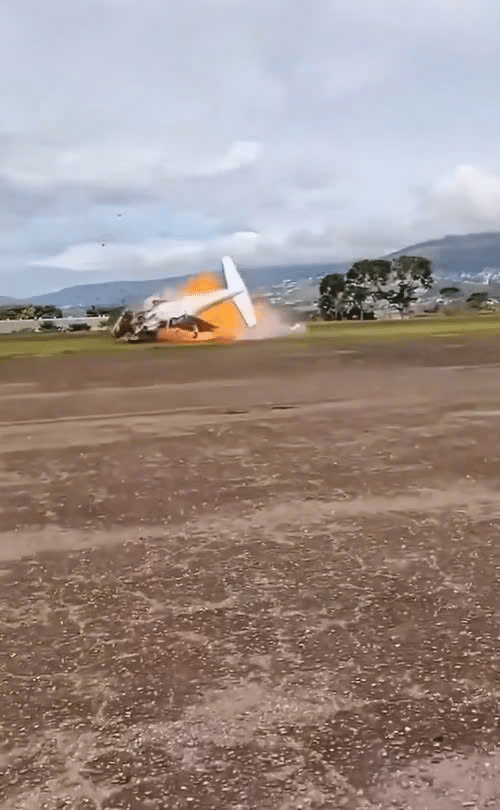
According to eyewitness accounts, the plane struggled to gain altitude almost immediately. The engines began to sputter, and the aircraft appeared unstable as it climbed only a short distance before losing lift.
Within moments, it crashed near the runway perimeter.
A loud explosion followed, sending flames and thick black smoke into the sky. Emergency responders rushed to the scene, battling the fire and attempting rescue—but the impact had already proven fatal.
Both pilots were pronounced dead at the scene.
Emergency Response Prevents Greater Tragedy
Firefighters and rescue teams arrived within minutes, containing the blaze before it could spread to nearby structures or fuel storage areas.
Authorities confirmed:
- No casualties occurred on the ground
- Airport infrastructure remained largely intact
- The fire was quickly controlled
Officials credited the rapid response for preventing a larger disaster.
Investigation Launched Into Cause
Venezuela’s aviation authority, the National Institute of Civil Aeronautics, has opened a full investigation into the crash.
Early reports indicate:
- Weather conditions were clear
- The aircraft had recently undergone maintenance
- No immediate external factors (like storms) were involved
Investigators are now examining:
- Engine components
- Flight data and communication logs
- Possible mechanical or fuel-related failures
The Civil Aviation Accident Investigation Board is leading the inquiry, aiming to determine exactly what caused the sudden loss of power.
Why Takeoff Is the Most Critical Phase
Aviation experts emphasize that takeoff is one of the most dangerous phases of flight. At low altitude, pilots have very limited time to respond to unexpected mechanical issues.
In cases involving engine failure:
- There may be only seconds to react
- Recovery options are extremely limited
- Terrain and airport surroundings play a major role
This incident highlights how even reliable aircraft can face catastrophic issues under certain conditions.
Aviation Community in Mourning
The loss of the two pilots has deeply affected the aviation community. Colleagues and fellow professionals have shared tributes, remembering them as dedicated individuals committed to their work.
Their deaths serve as a reminder of the risks pilots face—even during routine operations.
Broader Safety Concerns Raised
The حادث has also sparked renewed discussions about aviation safety, particularly at regional airports.
Experts are calling for:
- Enhanced maintenance oversight
- Continued investment in safety systems
- Improved emergency preparedness
For travelers and aviation professionals alike, incidents like this reinforce the importance of strict safety protocols and ongoing monitoring.
Final Thoughts
The crash of the Piper PA-31T1 Cheyenne is a tragic reminder that even routine flights can turn deadly in seconds.
As investigators work to uncover the cause, the focus remains on ensuring that lessons are learned—and that future tragedies can be prevented.
For now, two lives have been lost, and a nation mourns


