For viewers who grew up with 1990s television and movies, Helen Hunt remains tied to some of the decade’s most comforting and memorable performances. She could make a sitcom feel intimate, give a disaster film its emotional center, and hold her own opposite some of Hollywood’s biggest stars.
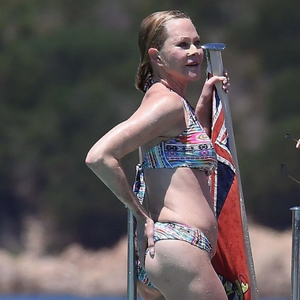
A set of casual photographs once led to headlines about whether audiences recognized her. But Helen Hunt’s career is far more interesting than an ordinary moment away from a film set.
Today, Hunt is 63 and continues to be recognized as an actor, director, and storyteller. Her body of work reminds audiences why the 1990s remain such a cherished period in American entertainment: the characters felt lived-in, the stories had heart, and the stars often seemed like people viewers could imagine knowing.
A Young Performer With a Strong Television Foundation
Helen Hunt began acting as a child, appearing in television programs and made-for-TV movies during the 1970s and 1980s. Those early years gave her experience across comedies, dramas, and family shows long before she became a familiar name.
She appeared in series including The Mary Tyler Moore Show, The Facts of Life, and St. Elsewhere. These roles were often brief, but they helped establish her as a reliable young actor with a natural screen presence.

By the early 1990s, Hunt was ready for the role that would make her one of television’s most beloved performers.
That role was Jamie Buchman.
Why Jamie Buchman Felt Like Someone Viewers Knew
When Mad About You premiered in 1992, it offered a warm and witty look at married life in New York City. Hunt starred opposite Paul Reiser as Jamie Buchman, a public relations professional navigating work, friendship, family, and life with her husband, Paul.
The show succeeded because it understood that everyday life could be funny without becoming mean-spirited. Jamie and Paul argued about small things, supported one another through larger ones, and made viewers laugh at the familiar frustrations of sharing a home.
Hunt brought intelligence and openness to Jamie. She could deliver a sharp joke, but she also made the character feel emotionally real. Audiences saw not a sitcom stereotype, but a woman trying to balance career, marriage, and her own sense of independence.
Mad About You ran for seven seasons and became an important part of 1990s television. Hunt received multiple Emmy Awards for her performance, confirming what viewers already knew: Jamie Buchman was one of the era’s standout characters.
Chasing Storms in a Blockbuster Favorite
In 1996, Hunt brought that same determination to the big screen in Twister. She played Dr. Jo Harding, a storm chaser who risks everything to study tornadoes and better understand the forces that had shaped her life.
The film paired Hunt with Bill Paxton and became one of the year’s biggest hits. Its special effects were groundbreaking for the time, but the movie’s appeal came from more than flying debris and dramatic weather.
Jo Harding was driven, knowledgeable, and unafraid to take charge. Hunt made her believable as a scientist, a colleague, and a person carrying the memory of a difficult childhood experience.
For people who watched Twister in theaters, the film was a full-scale event. It had the enormous sound, visual spectacle, and shared excitement that defined summer moviegoing in the 1990s.
Even today, viewers remember the storm chasers racing across Oklahoma roads, the flying cow, and Hunt’s focused performance at the center of the action.
An Oscar-Winning Turn With Heart
A year later, Hunt delivered one of the defining performances of her career in As Good as It Gets. She played Carol Connelly, a waitress and single mother whose life becomes unexpectedly connected to a difficult novelist played by Jack Nicholson.

Carol was not written as a glamorous fantasy. She was tired, practical, loving, and doing her best under difficult circumstances. Hunt gave her humor and dignity, making the character feel wonderfully specific.
Her performance earned the Academy Award for Best Actress. It was a major milestone, but it also reflected the qualities she had shown throughout her work: intelligence, emotional honesty, and the ability to make audiences care deeply about a character’s ordinary struggles.
The film remains a favorite for many viewers because it balances comedy and tenderness. Hunt and Nicholson created an unusual screen partnership that made the story feel surprising and sincere.
A Familiar Face in Memorable 2000s Films
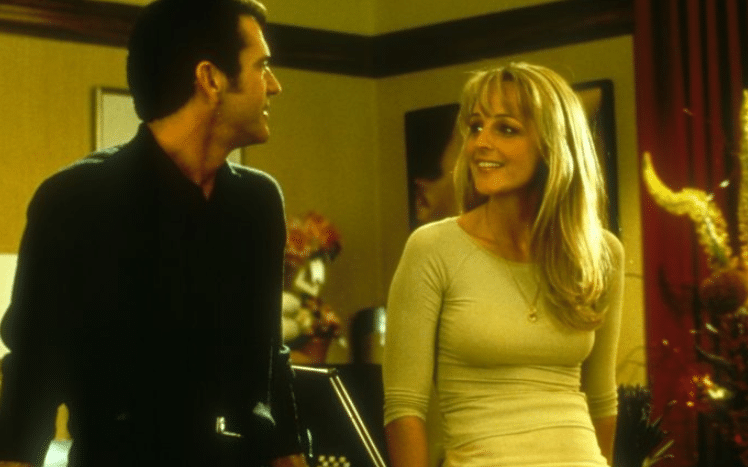
Hunt continued working in widely seen films as a new decade began. In 2000, she appeared in What Women Want with Mel Gibson, playing Darcy Maguire, an advertising executive whose career and ideas challenge the people around her.

The romantic comedy became a major hit and introduced Hunt to another large audience. Darcy was smart, professional, and direct—qualities Hunt portrayed with confidence.
That same year, she appeared in Cast Away opposite Tom Hanks. Her role as Kelly Frears carried much of the film’s emotional weight, particularly in the scenes that explore love, distance, and the choices people make when life does not turn out as planned.
She also appeared in Pay It Forward and Dr. T & the Women, showing once again that she could move easily between drama, comedy, and ensemble storytelling.
Stepping Behind the Camera
Helen Hunt’s creative work has never been limited to acting. She has directed television episodes and feature films, including Then She Found Me and Ride.
Directing allowed her to explore stories from a new angle. Instead of focusing on one character, she could help shape the entire world of a project—from performances and tone to pacing and visual storytelling.
This move behind the camera reflects the curiosity that has always defined her career. Hunt has been willing to learn, take risks, and build on the skills she developed through years of acting.
She also returned to Jamie Buchman for the Mad About You revival, offering longtime fans a chance to revisit a character who had become part of their own television memories.
Why Helen Hunt Still Connects With Audiences

Helen Hunt’s appeal has lasted because her performances never depended on one look, one genre, or one era. She made Jamie Buchman feel like a friend viewers welcomed into their living rooms each week. She made Jo Harding an action hero grounded in purpose. She made Carol Connelly unforgettable through quiet strength.
For older audiences, her work brings back memories of network television at its most comforting, blockbuster theaters crowded with families, and the pleasure of seeing a favorite actor move between comedy and drama.
That is the lasting story of Helen Hunt: not a passing photograph, but decades of thoughtful work from an artist who has kept finding new ways to tell stories.