Some vintage photographs are memorable because they capture famous people.
Others become fascinating because they capture two completely different worlds in the same frame.
A striking image from New York City in 1987 belongs firmly in the second category.
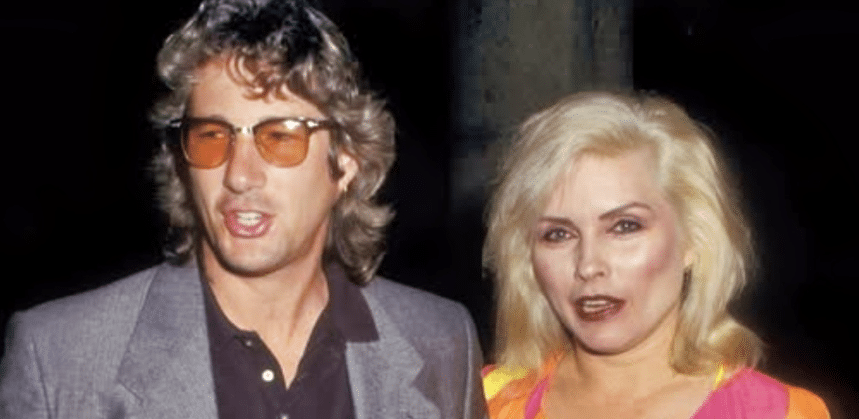
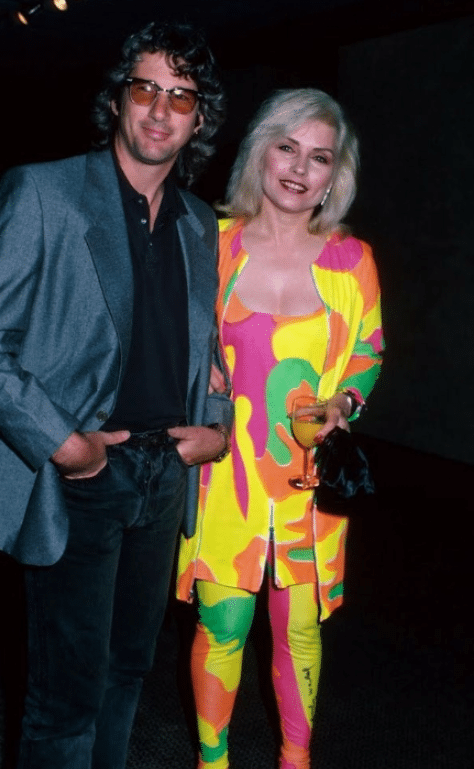
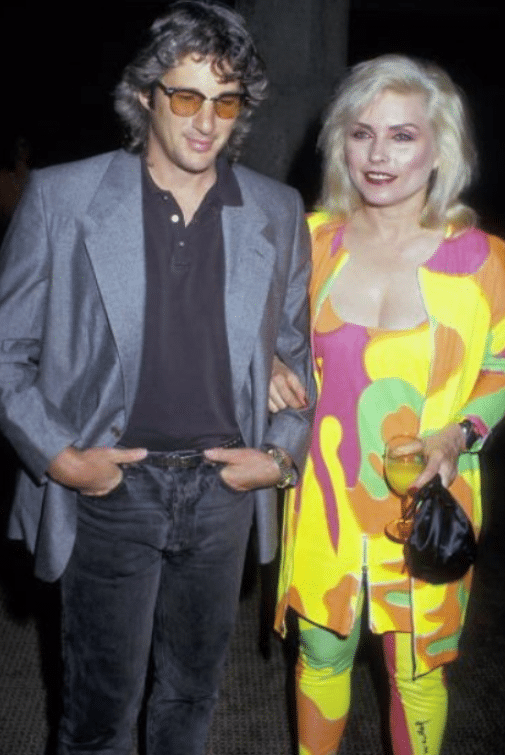
Standing side by side are Richard Gere and Debbie Harry—one already established as one of Hollywood’s most recognizable leading men, the other forever connected with Blondie and the downtown New York music scene that helped reshape popular culture.
The photograph was taken on June 4, 1987, when Gere and Harry attended the Art Against AIDS cocktail party and auction at Sotheby’s in New York, a benefit supporting AIDS research.
Today, nearly four decades later, the picture feels like more than a celebrity snapshot.
It looks like the 1980s meeting itself.
Richard Gere Was Already an ’80s Leading Man
By 1987, Richard Gere did not need an introduction to American movie audiences.
His breakthrough had developed across the late 1970s and early 1980s, with films including Days of Heaven, American Gigolo, and An Officer and a Gentleman. His Golden Globes biography lists those films among the major projects that established his career before later successes such as Pretty Woman and Chicago.
For many viewers, American Gigolo in particular created the Richard Gere image that would follow him for years.
The tailored clothes.
The carefully controlled confidence.
The unmistakably modern urban atmosphere.
Then came An Officer and a Gentleman in 1982, which further established him as one of Hollywood’s most prominent romantic leading men and earned him a Golden Globe nomination.
By the time the 1987 Sotheby’s photograph was taken, Gere had also appeared in The Cotton Club and No Mercy.
But one of the biggest films of his career was still three years away.
Nobody in That Photograph Knew Pretty Woman Was Coming
That is part of the pleasure of looking at an old image.
We know what comes next.
The people inside it do not.
In 1990, Gere would appear opposite Julia Roberts in Pretty Woman, playing businessman Edward Lewis.
The film became an enormous success and introduced Gere to yet another generation of moviegoers. Entertainment Weekly has described the film as a major career resurgence for him after his earlier successes in American Gigolo and An Officer and a Gentleman.
But in the photograph from 1987, none of that has happened yet.
He is simply a successful 37-year-old actor attending a New York benefit.
History has not finished with him.
Debbie Harry Had Already Changed the Sound and Look of Pop Music
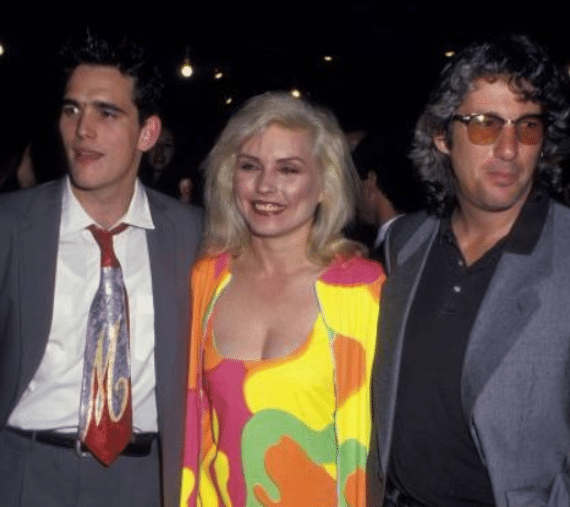
Beside Gere stood a woman whose influence had traveled through an entirely different part of popular culture.
Debbie Harry had become famous as the lead singer of Blondie, the New York band formed in the 1970s that helped carry punk and new wave beyond the downtown club scene.
The Rock & Roll Hall of Fame describes Blondie as a group that refused to remain inside a single genre, experimenting with punk, reggae, disco, pop, and rap while maintaining strong melodic roots. The band was inducted into the Hall in 2006.
That willingness to move between styles helped make Blondie unusual.
They could sound like a downtown rock band on one record and fill dance floors on the next.
And Debbie Harry became the visual center of it all.
Then “Heart of Glass” Changed Everything
Blondie’s international breakthrough accelerated with the 1978 album Parallel Lines.
The record helped move the group from alternative clubs into mainstream radio, with songs including “One Way or Another” and the enormous hit “Heart of Glass.”
The Rock & Roll Hall of Fame credits Blondie with becoming one of the key groups that pushed new wave into a broader popular audience.
For Americans who remember hearing “Heart of Glass” when it was new, the song immediately evokes the transition from the late 1970s into the early 1980s.
Rock, disco, punk, and pop suddenly seemed less separated than before.
Blondie could move between all of them.
And Harry could stand in the middle of those worlds without seeming to belong entirely to any one of them.
“Call Me” Became Part of the Sound of 1980
The song was written by Debbie Harry with producer Giorgio Moroder and became one of Blondie’s defining recordings.
It spent weeks at No. 1 in the United States and became closely tied to the sleek atmosphere of American Gigolo.
For viewers who first experienced the movie in theaters, it is difficult to separate Gere’s image from the music.
The cars.
The clothes.
Los Angeles streets.
The modern interiors.
Then that driving Blondie track.
Movies and popular music were becoming increasingly intertwined at the beginning of the decade, and American Gigolo was an early example of how effectively the two could reinforce each other.
Seven years later, the actor and singer associated with that cultural moment finally appeared together in one memorable photograph.
Debbie Harry Never Looked Like Anyone Else
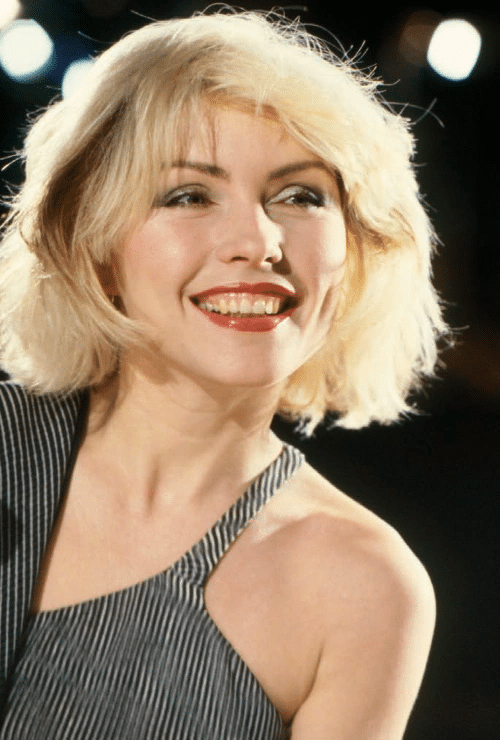
Throughout Blondie’s rise, Harry’s image became almost as influential as the band’s music.
Her platinum hair, downtown styling, and mix of glamour and street attitude helped create a visual identity that was instantly recognizable.
But it would be a mistake to treat her merely as a style figure.
Blondie’s long-term reputation rests on musical experimentation.
The Rock Hall specifically highlights the group’s willingness to mix reggae, rap, punk, disco, and pop.
Songs such as “Heart of Glass,” “The Tide Is High,” “Call Me,” and “Rapture” could sound remarkably different from one another.
Very few bands could move across that range while remaining recognizable.
Harry’s voice was one of the reasons they could.
By 1987, Blondie’s First Chapter Had Already Ended
The photograph also captures Debbie Harry during an unusual stage of her career.
Blondie’s original run had ended earlier in the decade, and Harry was pursuing solo work.
Around the period of the Sotheby’s event, she had released Rockbird, her second solo studio album.
That meant the woman standing beside Gere was not simply looking back at past success.
She was still trying new things.
Blondie would later reunite, and their return ultimately produced another major hit with “Maria” in 1999.
Their eventual induction into the Rock & Roll Hall of Fame in 2006 formally recognized how far their influence had traveled.
Richard Gere’s Career Was Also Far From Finished
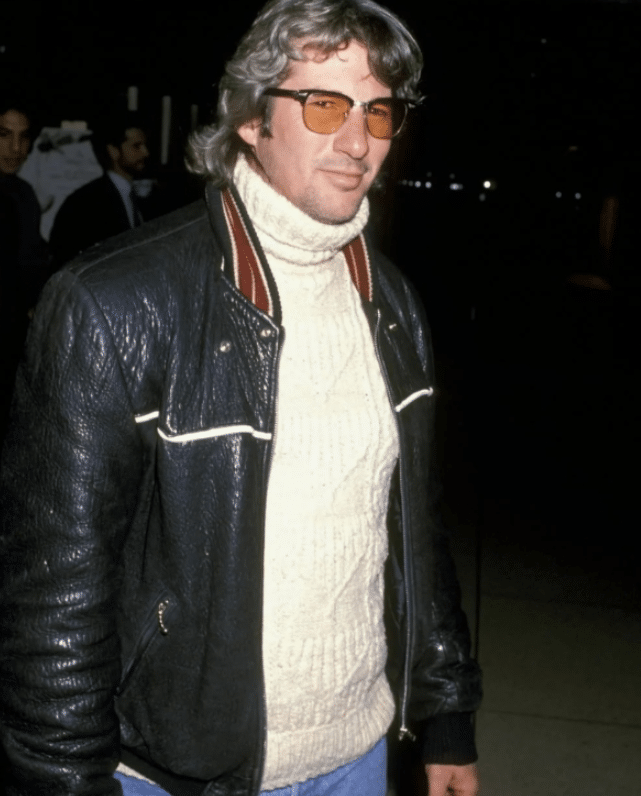
Gere’s path after 1987 would stretch through multiple generations of American movies.
After Pretty Woman came films including Sommersby, Primal Fear, Runaway Bride, Unfaithful, and eventually Chicago.
His performance as Billy Flynn in Chicago earned him the Golden Globe for Best Actor in a Motion Picture – Musical or Comedy in 2003.
That career arc makes the 1987 photographs particularly enjoyable to revisit.
The Gere standing beside Debbie Harry is famous.
But he is not yet the Richard Gere audiences now remember from the full span of his career.
For Older Fans, the Photograph May Bring Back More Than Celebrities
Someone who was young in 1987 may look at the picture and remember an entirely different set of details.
A favorite leather jacket.
A cassette playing in the car.
An answering machine blinking at home.
MTV on the television.
A neighborhood record store.
A movie marquee showing whatever had just opened that weekend.
Maybe Blondie had been part of the soundtrack a few years earlier.
Maybe Richard Gere had appeared on a movie poster over the bed.
Nostalgia rarely comes from one famous person alone.
It comes from everything that surrounded them.
One Flashbulb, and the 1980s Are Back
A photograph can do something video sometimes cannot.
It forces us to stop.
There is Richard Gere, several years before Pretty Woman.
There is Debbie Harry, already responsible for some of Blondie’s most enduring music.
There is New York in 1987.
And somewhere in the background is an entire decade moving forward without knowing it will someday become nostalgia.
More than 39 years later, the image still feels alive.
Perhaps that is because Gere and Harry were never simply famous.
They represented two different ways of being cool in an era overflowing with style.
One came from Hollywood.
The other came from downtown New York.