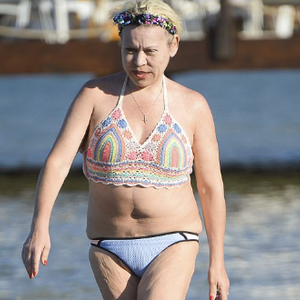
There are movie performances that ask an actor to learn new lines, master a different accent, or adopt another personality.
And then there are performances that require an actor to almost disappear completely.
Renée Zellweger has built a career around taking unexpected roles, but few transformations have been as striking as the one she undertook for The Thing About Pam.
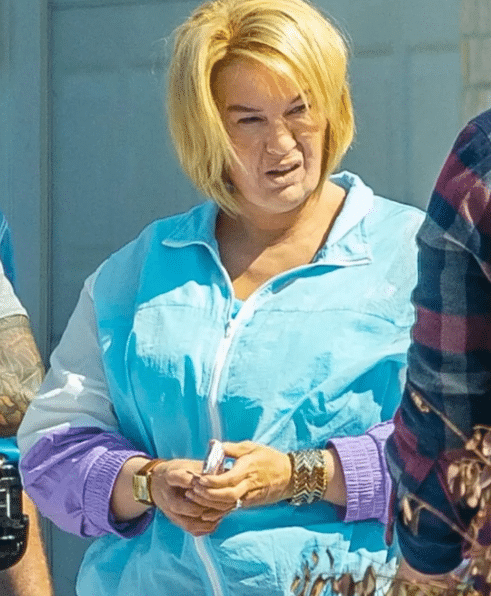
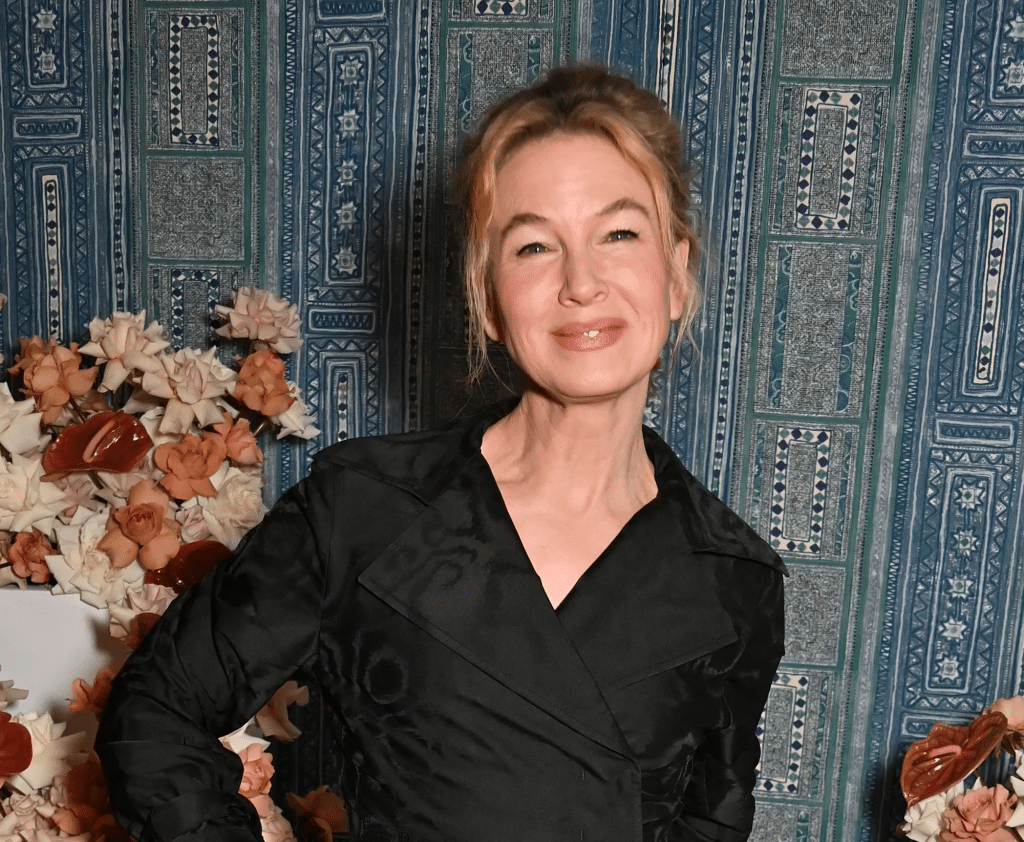
When photographs from the production surfaced, many longtime fans needed a second look. The familiar face associated with Bridget Jones’s Diary, Chicago, Judy, and countless other memorable performances had been transformed so thoroughly that she was difficult to recognize.
It was a reminder of something Hollywood has demonstrated for generations: sometimes the most impressive acting begins when the actor themselves seems to vanish.
A Familiar Hollywood Star Behind an Unfamiliar Face
Zellweger was already an established star when she accepted the role of Pam Hupp.
Her career had moved through romantic comedies, dramas, musicals, and prestige films, earning her multiple major awards along the way. Her portrayal of Judy Garland in the 2019 film Judy ultimately brought her a second Academy Award for acting.
But The Thing About Pam presented an entirely different challenge.
Rather than asking audiences to see the glamorous movie star they knew, the production wanted Zellweger to embody a real person whose appearance, mannerisms, and life story were very different from her own.
That meant changing far more than her hairstyle or wardrobe.
The Makeup Team Had a Big Job to Do
The transformation relied heavily on professional makeup, facial prosthetics, body padding, wardrobe, and other carefully considered details.
During production, Zellweger was photographed wearing extensive costume and prosthetic work designed to create Hupp’s appearance. Contemporary reports noted that the makeup process could take around 80 minutes.
It was the kind of behind-the-scenes work that television viewers rarely think about when watching a finished performance.

On screen, the illusion has to feel natural.
The audience should not be thinking about the layers of makeup, the prosthetic pieces, or the hours spent preparing before the cameras begin rolling.
Instead, viewers should simply see the character.
In that respect, the transformation achieved exactly what it was intended to do.
From Bridget Jones to Judy Garland — Reinvention Was Nothing New
For longtime followers of Zellweger’s career, the physical transformation was not entirely surprising.
She had already demonstrated a willingness to alter her appearance when a role demanded it.
Her work as Bridget Jones became one of her most recognizable performances, while her portrayal of Judy Garland required a completely different physical and emotional approach.
That willingness to leave her familiar image behind has become one of the more interesting threads running through her career.
The public may remember the actress one way.
A successful performance can make audiences forget that image entirely.
And that is precisely what happened with Pam Hupp.
A Story Rooted in Real Events
The Thing About Pam was based on the real-life case surrounding Pam Hupp and the 2011 death of Betsy Faria in Missouri.
The story received extensive attention through news reports, Dateline NBC coverage, podcasts, books, and other forms of media before becoming the subject of the six-part NBC series.
Hupp was ultimately convicted in connection with the 2016 killing of Louis Gumpenberger and received a life sentence. The earlier case involving Faria became closely connected to the broader investigation and generated years of public discussion.
That real-world background made Zellweger’s task particularly complicated.
She was not simply creating a fictional character from a blank page.
She was portraying a real person whose story involved real victims and real families.
That distinction matters.
Why True Stories Require a Different Kind of Performance
Actors have enormous freedom when playing fictional characters.
With a fictional role, an actor and director can decide almost everything: how a character moves, speaks, reacts, dresses, and behaves.
A real person is different.

There are photographs, recordings, interviews, public records, and people who actually knew the individual.
For Zellweger, recreating Hupp meant studying those details carefully.
The goal was not simply to look different.
It was to create a believable character while remaining conscious of the serious events behind the story.
In an interview with the Los Angeles Times, Zellweger discussed her interest in the case and the broader fascination people have with true-crime stories.
That interest has become an enduring part of American television culture.
The Transformation Also Started a Conversation
The physical transformation did not receive universal praise.
Some viewers and commentators questioned the decision to use a padded body costume, while others defended it as part of the practical process of recreating a real person’s appearance.
Similar debates had already emerged around other productions in which actors used body padding or extensive prosthetics to portray real people.
Zellweger herself later explained that the costume was only one part of a much larger transformation involving prosthetics, clothing, posture, movement, and other physical details.
Whatever one’s opinion of the technique, the discussion illustrates just how much expectations around screen portrayals have changed.
Audiences today often look beyond the finished performance.
They want to know how a character was created, why particular casting decisions were made, and how much physical transformation was involved.
The Actress Behind the Transformation

Perhaps the most interesting part of the story is that the transformation did not erase Zellweger’s career.
It added another chapter to it.
Long before The Thing About Pam, she had already demonstrated a remarkable ability to move between very different genres.
She could be funny and understated in one project, dramatic in another, and deeply theatrical in something like Chicago or Judy.
Her career has never been defined by a single screen persona.
That flexibility may be one reason she has remained such a recognizable presence in American film and television.
Looking Back at a Career Built on Change
For viewers who remember Zellweger from the late 1990s and early 2000s, seeing her transformed into an almost unrecognizable character can be surprisingly nostalgic.
It brings back memories of a period when her movies were regular fixtures at theaters and video stores, long before streaming transformed the way audiences discovered entertainment.
But there is also something reassuring about watching an established star continue to take risks.
Hollywood careers can easily become comfortable.
Once an actor finds an image audiences love, there can be pressure to repeat it.
Zellweger has often chosen another path.
She has allowed herself to look different, sound different, and inhabit characters who bear little resemblance to the woman audiences recognize from interviews or red-carpet appearances.
Sometimes the Best Disguise Is Simply Disappearing
The most striking thing about the photographs from The Thing About Pam was not necessarily the makeup itself.
It was the realization that the famous actress had become almost invisible inside the character.
That is a powerful reminder of what acting can accomplish.
A familiar face can become unfamiliar.
A celebrity can become an ordinary-looking character.
And a performer audiences have watched for decades can suddenly make them forget the star they thought they knew.
For Renée Zellweger, that transformation became another example of her willingness to leave the expected path behind.
The result is more than an unusual Hollywood photograph.
It is a glimpse at the extraordinary amount of craft that can exist behind a performance — and a reminder that sometimes, the clearest sign of an actor’s skill is when audiences stop seeing the actor at all.