For millions of rock fans, Ozzy Osbourne will always be remembered beneath blazing stage lights.
There was the unmistakable voice, the black clothing, the wild energy, and the music that helped turn Black Sabbath into one of the defining bands in heavy metal history.
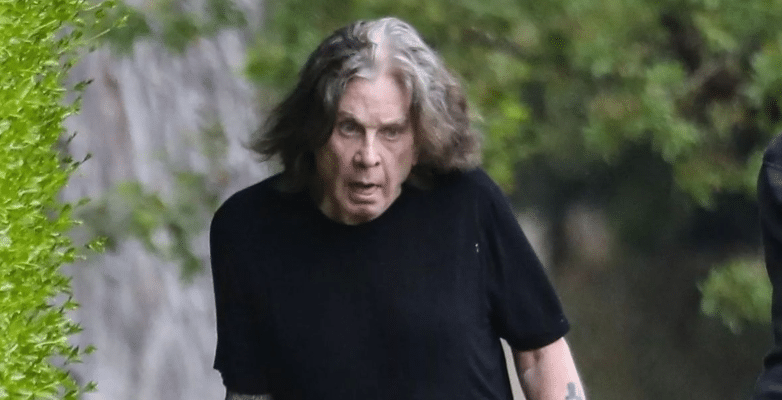
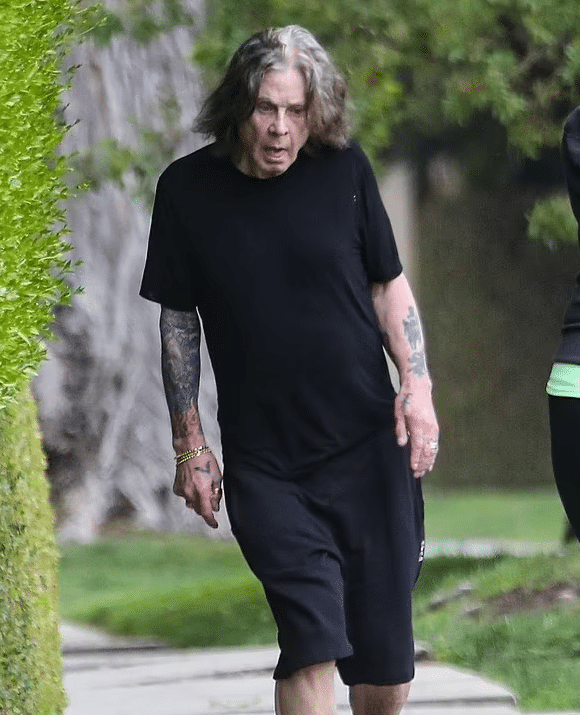
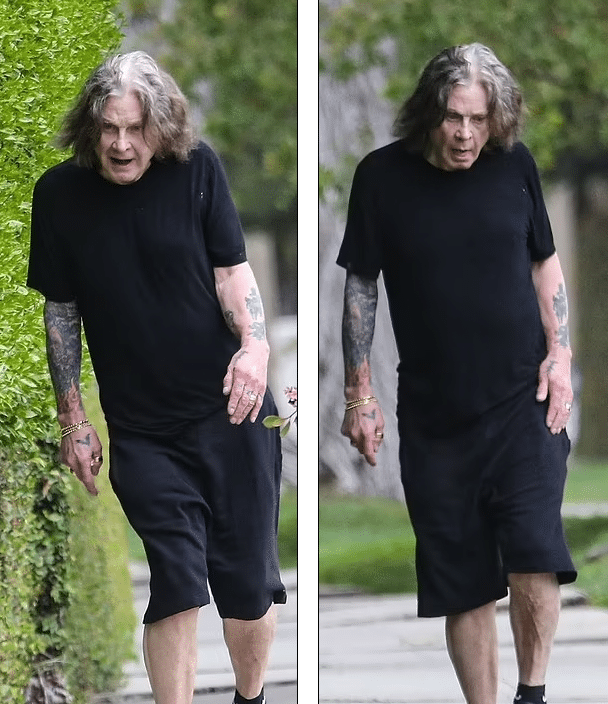
But candid photographs taken during the later years of his life captured something very different.
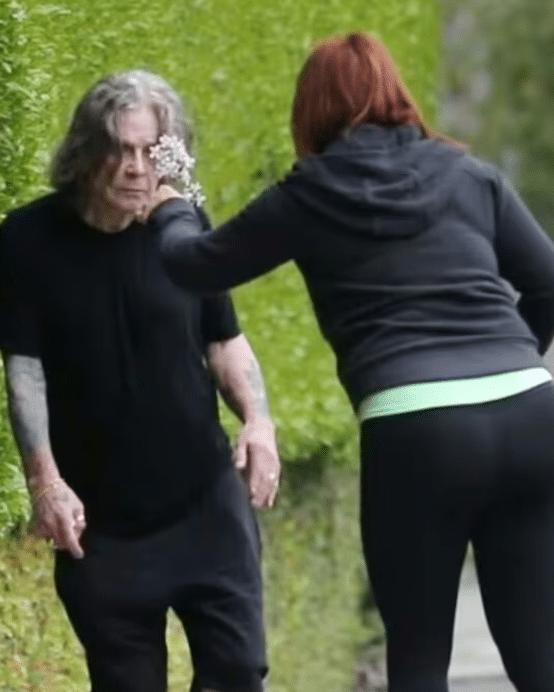
Instead of an enormous arena, Ozzy was seen outdoors in an ordinary neighborhood setting, dressed simply in black and moving at a slower pace than fans remembered from his touring years.
The contrast was striking.
Yet these images were never really about a rock star “looking different.”
They showed something far more human: a legendary performer growing older while facing serious health challenges after more than five decades in the public eye.
Before the Fame, He Was a Working-Class Kid From Birmingham
Ozzy Osbourne was born John Michael Osbourne on December 3, 1948, and grew up in the Aston area of Birmingham, England.
His beginnings were far removed from international fame.
The industrial landscape of Birmingham eventually became part of the story behind Black Sabbath, the band Ozzy formed with Tony Iommi, Geezer Butler, and Bill Ward near the end of the 1960s.
Their sound was darker and heavier than much of the popular rock music surrounding them.
Albums including Black Sabbath, Paranoid, and Master of Reality helped establish a style that would influence generations of heavy-metal musicians.
For listeners who first heard those records when they were new, it was difficult to confuse Black Sabbath with anyone else.
The guitar riffs were enormous.
The atmosphere was ominous.
And Ozzy’s voice sounded unlike almost anything else on the radio.
The Music Became Part of an Entire Generation
By the early 1970s, Black Sabbath had become an international force.
Songs such as “Paranoid,” “War Pigs,” and “Iron Man” became permanent parts of rock culture.
For American fans who grew up during that period, the memories surrounding those records can be almost as vivid as the songs themselves.
There were vinyl albums carried home from record stores.
Heavy headphones connected to large stereo systems.
FM radio stations that played entire album tracks instead of only short singles.
Concert tickets were saved in drawers for decades.
And when Black Sabbath came through town, the experience could become one of those stories people continued telling years later.
Ozzy was at the center of it all.
Then He Had to Begin Again
Ozzy left Black Sabbath in 1979, a moment that could easily have marked the decline of his career.
Instead, the following decade brought an extraordinary second act.
His 1980 solo album Blizzard of Ozz introduced songs including “Crazy Train” and “Mr. Crowley,” while guitarist Randy Rhoads helped create a new sound around him.
The solo career ultimately established Ozzy as something even rarer than the frontman of an enormously successful band.
He became successful twice.
The first time as the voice of Black Sabbath.
The second time under his own name.
A Rock Star Became a Television Dad
Then came one of the strangest reinventions of all.
In 2002, MTV premiered The Osbournes.
Suddenly, the man once presented as the mysterious “Prince of Darkness” was appearing on television with his wife Sharon and their children Kelly and Jack.
Viewers saw arguments over household problems, dogs running through the house, family conversations, and Ozzy trying to understand everyday situations with his unmistakable Birmingham accent.
The series introduced him to people who may never have owned a Black Sabbath album.
For older rock fans, the transformation was almost surreal.
The supposedly frightening figure from album covers had become a television father.
Yet that contrast also revealed something audiences had not always seen before: Ozzy’s humor.
Health Challenges Changed His Final Years
As Ozzy grew older, serious physical problems increasingly affected his ability to perform.
He publicly revealed in 2020 that he had Parkinson’s disease, while spinal injuries and surgeries also contributed to major mobility difficulties.
That history gives his later candid photographs important context.
They show a man whose body had endured an extraordinary amount.
The person walking slowly outdoors was the same performer who had spent decades running across stages around the world.
Time had changed the pace.
It had not erased the history.
For older fans, there can be something unexpectedly emotional about seeing photographs like these.
A record does not age.
A concert film preserves the performer forever.
But the person who made the music continues through the same passing years as everyone else.
One Final Return to Birmingham
Ozzy’s final performance became one of the most poignant moments of his career.
On July 5, 2025, he returned to Birmingham for the Back to the Beginning concert at Villa Park.
Because Parkinson’s disease had severely affected his mobility, Ozzy performed while seated on a black throne.
He sang solo material and then reunited with the original members of Black Sabbath for one last set.
The setting could hardly have been more fitting.
After traveling the world for more than half a century, the story returned to the city where it had started.
Thousands of fans watched as the four musicians who had helped redefine heavy rock music stood—or, in Ozzy’s case, sat—together one final time.
Seventeen Days Later, the Story Changed Forever
Ozzy Osbourne died on July 22, 2025, at the age of 76, surrounded by his family.
His death came only 17 days after that final Birmingham performance.
The news prompted tributes from musicians across generations.
That response reflected the extraordinary reach of his career.
He had influenced performers who were themselves old enough to have influenced another generation.
Heavy metal changed dramatically between 1970 and 2025.
Ozzy remained part of its story throughout.
The Prince of Darkness Became Something More
Ozzy’s career was filled with outrageous stories, controversy, humor, music, television fame, and moments that helped create one of rock’s most recognizable public personas.
But personas are only part of a life.
Behind the “Prince of Darkness” was a working-class kid from Birmingham who helped create a new sound, survived extraordinary highs and lows, built a second solo career, became an unlikely television personality, and eventually returned home for one final performance.
The later photographs do not diminish the legend.
If anything, they complete it.
They remind us that the man who once seemed larger than life was still human enough to grow older, slow down, need help, and keep moving forward for as long as he could.
And when “Paranoid,” “Iron Man,” or “Crazy Train” begins playing today, the Ozzy preserved in the music becomes young again.
That may be one of rock and roll’s strangest gifts.
The years move forward.
The record starts spinning.
And for a few minutes, time disappears.