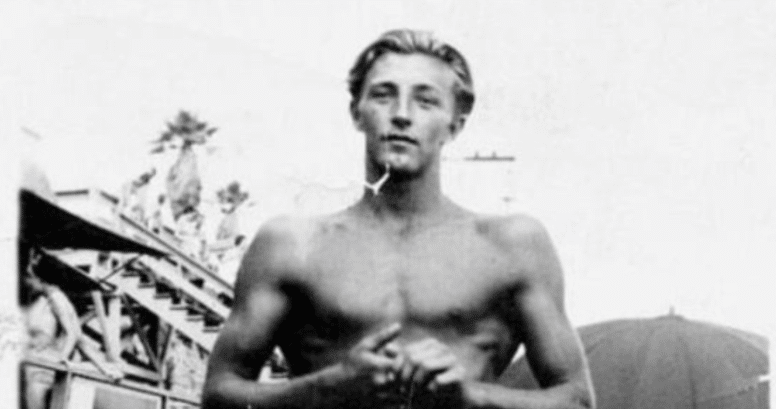
Some movie stars seemed to work hard to command the screen.
Robert Mitchum made it look effortless.
With his heavy-lidded eyes, deep voice, broad shoulders, and famously relaxed manner, Mitchum became one of the most distinctive leading men of classic Hollywood. He could appear dangerous without raising his voice and romantic without becoming sentimental.
For audiences who discovered him during the 1940s, ’50s, and ’60s, that understated presence was impossible to mistake.
Mitchum eventually appeared in more than 100 films, leaving behind unforgettable performances in film noir, westerns, war pictures, thrillers, and dramas.
Before Hollywood, Life Was Anything but Glamorous
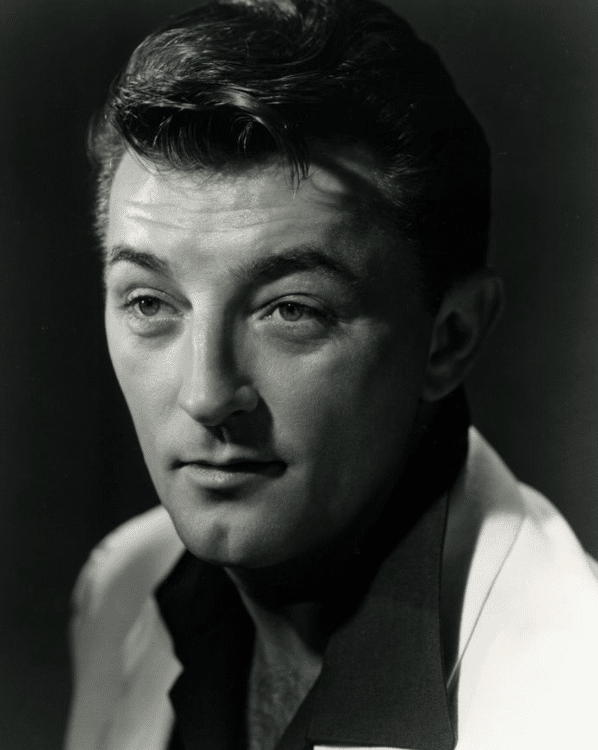
Robert Mitchum was born on August 6, 1917, in Bridgeport, Connecticut.
His early years were far removed from the polished image of a Hollywood leading man. He grew up in difficult circumstances and spent part of his youth traveling around the country, taking various jobs before eventually making his way west. The uncertainty of those years later seemed almost perfectly suited to the world-weary characters he played onscreen.
Hollywood did not immediately treat him as a star.
Like many actors of the period, Mitchum began with small parts, including appearances in westerns. Gradually, however, filmmakers noticed something unusual about him.
He did not perform toughness in an obvious way.
He simply seemed tough.
The Role That Put Him on Hollywood’s Radar
One of Mitchum’s important early performances came in the 1945 war drama The Story of G.I. Joe.
Playing a weary soldier, he earned an Academy Award nomination for Best Supporting Actor—the only competitive Oscar nomination of his career.
Yet it was film noir that truly made Mitchum unforgettable.
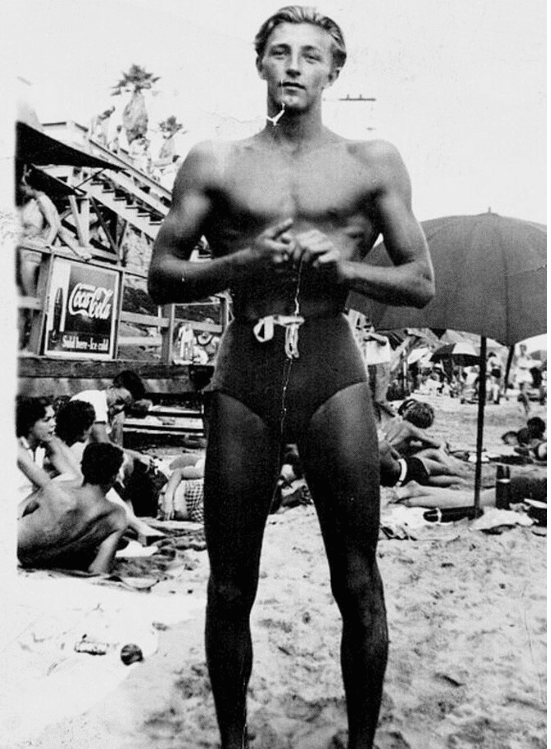
The genre flourished in the years surrounding World War II, filling movie screens with shadowy streets, complicated women, desperate men, and stories in which morality was rarely simple.
Mitchum appeared born for that world.
His calm delivery and detached manner made audiences wonder what his characters were thinking even when he was standing perfectly still.
Then Came Out of the Past
Released in 1947, Out of the Past became one of the films most closely associated with Mitchum’s screen image.
He played Jeff Bailey, a man attempting to escape an earlier life only to find that the past is not finished with him.
The role helped establish the qualities audiences would recognize for decades: quiet confidence, fatalism, and the sense that danger could arrive without warning. Mitchum became one of the defining faces of the film-noir tradition.
For viewers who remember discovering these movies on television years later, noir had a special atmosphere.
Black-and-white photography seemed richer late at night.
Streetlights cast enormous shadows.
Men wore hats and trench coats.
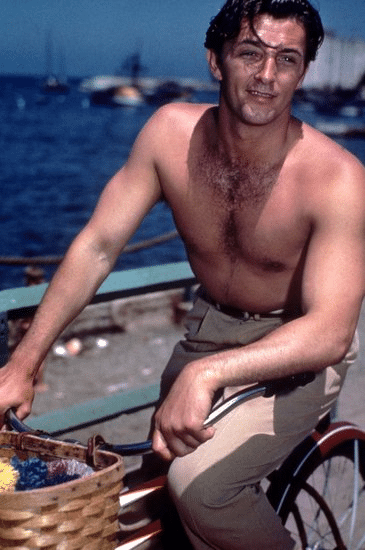
Nobody seemed entirely trustworthy.
And Robert Mitchum belonged in that world as naturally as anyone ever did.
One of Hollywood’s Most Chilling Preachers
Mitchum’s apparent ease could become frightening when filmmakers used it against expectations.
That happened spectacularly in 1955 with The Night of the Hunter.
Directed by actor Charles Laughton, the film cast Mitchum as Harry Powell, a murderous false preacher whose knuckles famously bear the words “LOVE” and “HATE.” He pursues two children while searching for hidden money.
The movie was not a major commercial success when originally released, but its reputation grew enormously over time. Mitchum’s performance eventually became regarded as one of the defining roles of his career.
What made the character so unsettling was restraint.
Mitchum rarely needed theatrical gestures.
A song, a look, or a calmly delivered sentence could create more tension than shouting ever could.
He Could Play the Hero, Too
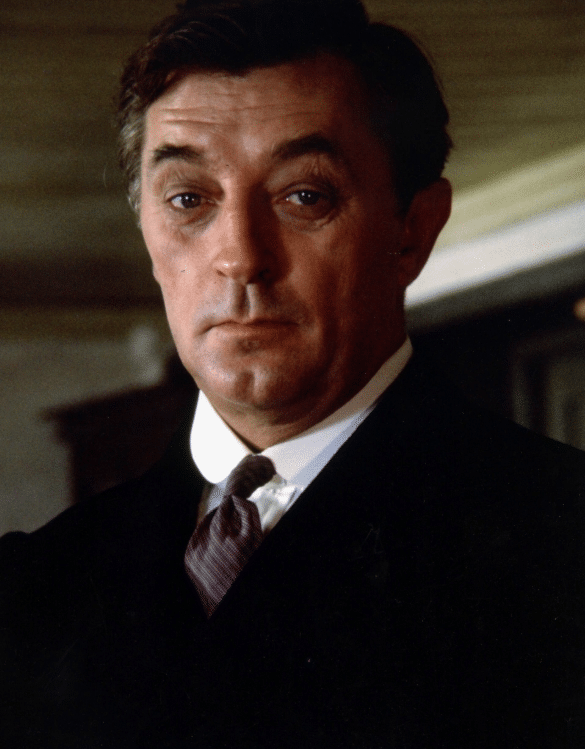
It would be easy to remember Mitchum only for dangerous men.
His career was much broader.
He appeared opposite Deborah Kerr in Heaven Knows, Mr. Allison in 1957, played military figures in major war productions, worked in westerns, and shared the screen with some of Hollywood’s most famous actresses, including Jane Russell and Marilyn Monroe.
That variety helped him survive dramatic changes in the movie business.
The old studio system weakened.
Television became a powerful competitor.
Younger actors brought different styles of performance to the screen.
Mitchum simply kept working.
Then Cape Fear Revealed His Darkest Side
In 1962, Mitchum delivered another performance that generations of movie fans would remember.
He played Max Cady in Cape Fear, opposite Gregory Peck.
Cady is a recently released convict who begins pursuing the lawyer he blames for his imprisonment and threatening the man’s family. Contemporary and later critics frequently singled out Mitchum’s controlled menace as the element that gave the film much of its power.
The character was later played by Robert De Niro in Martin Scorsese’s 1991 remake.
Mitchum himself even appeared in that newer version in a different role, creating an unusual connection between two generations of the story. The character has returned yet again in a 2026 television adaptation, showing how enduring the material—and Mitchum’s original interpretation—has become.
A Face From the Golden Age
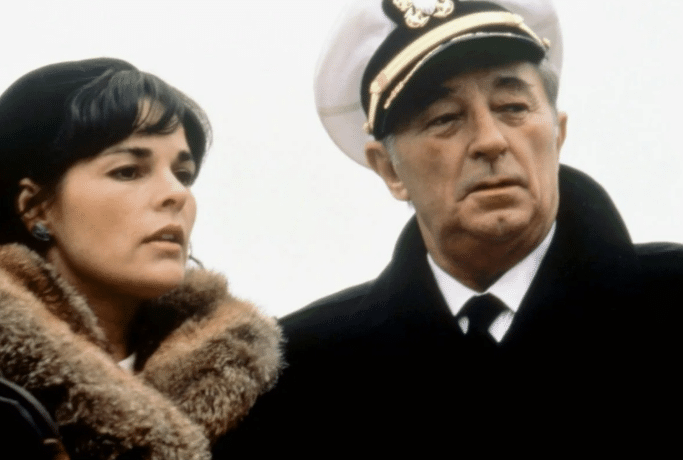
Perhaps that is why old photographs of Mitchum remain so compelling.
They capture a kind of male movie-star image that belonged to another period.
The clothes were simpler.
Publicity photography was usually black and white.
Actors were not posting pieces of their lives every morning.
Mystery was part of fame.
Mitchum benefited enormously from that mystery.
He rarely appeared eager to explain himself, which allowed audiences to project almost anything onto that famously unreadable expression.
Was he amused?
Bored?
Dangerous?
Perhaps a little of all three.
Hollywood Lost One of Its Great Originals in 1997
Robert Mitchum died on July 1, 1997, at his home in California. He was 79. Contemporary reports said he had been suffering from emphysema and lung cancer.
By then, the Hollywood world in which he had become famous had largely vanished.
Multiplexes had replaced many grand neighborhood theaters. Color had long since replaced black and white as the norm. Movie stars were increasingly accessible through television interviews and around-the-clock entertainment coverage.
But the films remained.
And when Mitchum appears onscreen today, something remarkable happens.
The style barely seems dated.
He still looks as though he has nowhere particularly urgent to be.
He still speaks as though raising his voice would require unnecessary effort.
And somehow, everyone else in the scene still seems to be watching him.
That may be Robert Mitchum’s most enduring gift.
He never looked like he was trying to become a legend.
He simply became one.