
For decades, Giorgio Armani seemed almost inseparable from the idea of timeless style.
His clothes appeared on movie screens, at awards ceremonies, in glossy magazines, and in the closets of generations who preferred quiet confidence over flashy trends. His name became so familiar that “Armani” eventually meant more than a fashion label—it suggested a particular way of carrying oneself.
That is why photographs of the designer away from the runway can feel surprisingly personal.
One series of images from a sunny beach shows Armani not in a dark suit or surrounded by models, but simply enjoying the water and warm Mediterranean light.
For longtime admirers, the photographs offer a reminder that behind one of fashion’s most recognizable names was a man whose influence reached far beyond clothing.
Before the Name Became Famous Around the World

Giorgio Armani was born on July 11, 1934, in Piacenza, Italy.
His path into fashion was not direct. As a young man, Armani initially studied medicine before leaving that course and eventually finding work in Milan’s fashion world. Over time, he developed the restrained visual language that would become his signature.
By the 1970s, Armani was beginning to challenge the traditional structure of men’s tailoring.
Instead of stiff jackets with heavy padding and rigid construction, he favored softer lines and lighter fabrics. The result felt relaxed without appearing careless.
That balance became revolutionary.
The Armani company traces its modern story to 1975, the beginning of a fashion house that would eventually grow into one of Italy’s most internationally recognizable luxury brands.
The Suit Suddenly Felt Different
To understand Armani’s influence, it helps to remember how formal clothing once looked.
For much of the 20th century, a business suit was supposed to impose structure. Broad shoulders, firm fabrics, and carefully constructed jackets communicated authority.
Armani softened that image.
His jackets allowed the body to move more naturally. Colors were often muted. Details were restrained. Nothing needed to shout.

The effect was especially important during the late 1970s and 1980s, when changing ideas about work, success, and personal style were reshaping American culture.
Men could look sophisticated without appearing overly formal.
Women, meanwhile, found in Armani’s tailoring another language for professional confidence.
His approach helped transform both men’s and women’s suiting, making relaxed tailoring one of the defining signatures of modern fashion.
Then Hollywood Changed Everything
For many Americans, Giorgio Armani became a household name because of a movie.
In 1980, Richard Gere appeared in American Gigolo wearing Armani.
The clothing was not merely background decoration. The jackets, shirts, ties, and carefully coordinated outfits became part of the character’s identity.
Audiences noticed.
The film helped introduce Armani’s relaxed tailoring to a much wider American audience and strengthened the designer’s relationship with Hollywood.

For moviegoers who remember the early 1980s, that period represented a particular kind of glamour.
There were department-store fragrance counters, glossy magazine advertisements, carefully dressed movie stars, and a growing fascination with Italian design.
Armani seemed to understand exactly what the moment required.
He did not overwhelm the person wearing the clothes.
He made the person look effortless.
A New Relationship Between Fashion and Celebrity
Armani’s Hollywood influence continued to grow.
Over the following decades, he became closely associated with actors and major film events, helping shape what eventually became the modern culture of red-carpet dressing. His designs appeared in hundreds of movies and on countless public figures.
Today, seeing celebrities arrive at an awards ceremony in designer clothing feels completely normal.
That relationship was once far less developed.
Armani helped turn the connection between high fashion and Hollywood into something systematic.

The red carpet became its own stage.
And understated tailoring became just as capable of attracting attention as dramatic gowns or elaborate costumes.
The Quiet Style Behind a Global Empire
What is striking about Armani’s success is how consistent his aesthetic remained.
Fashion often depends on dramatic reinvention.
Armani built his reputation on refinement.
The empire eventually expanded far beyond suits to include casual clothing, accessories, fragrances, home furnishings, restaurants, hotels, and other ventures. Yet the central idea remained remarkably recognizable: simplicity, control, and understated elegance.
He also retained unusual independence within the luxury industry.
While many famous fashion houses became part of enormous conglomerates, Armani remained closely involved with the company that carried his name throughout his lifetime.
Even into his later years, he continued working on collections and business decisions.
Fashion Lost One of Its Last Great Masters
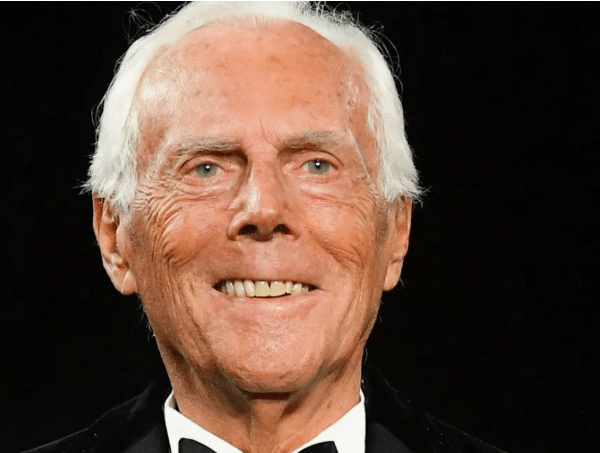
Giorgio Armani died on September 4, 2025, at the age of 91. His fashion house said that he died peacefully at home surrounded by loved ones and noted that he continued working until his final days.
His passing came almost exactly 50 years after the establishment of the Armani fashion house.
The timing gave his final year an unexpected historical symmetry.
A designer who had spent half a century shaping modern fashion left behind a company, an aesthetic, and a visual language that had become recognizable across the world.
Some Styles Never Really Disappear
Fashion is supposed to change.
Hemlines rise and fall. Colors return. Old silhouettes suddenly become fashionable again.
Yet certain ideas endure because they were never entirely dependent on trends.
That may be Giorgio Armani’s greatest legacy.
He demonstrated that elegance did not require excess.
A jacket could be softer.
A color could be quieter.
A person could look powerful without appearing rigid.
More than five decades after his name first appeared on a fashion label, those principles still feel modern.
And perhaps that is why Armani remains so easy to remember.
He did not simply design clothes for a particular era.
He helped teach several generations what understated confidence could look like.