There was a time when some Hollywood performers needed no introduction at all.
They could enter a scene, stand quietly for a few seconds, and instantly make everything feel more believable. Their presence carried weight before they even spoke.
George Kennedy was one of those actors.
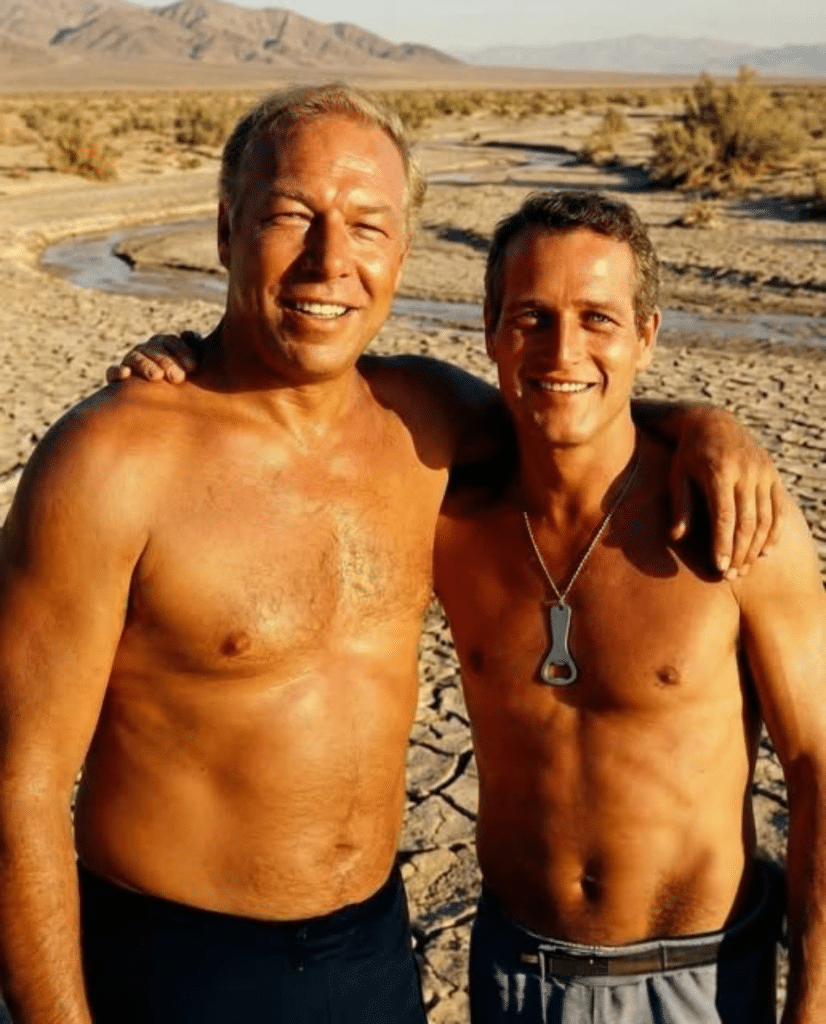
With his towering frame, rugged features, and unmistakably deep voice, Kennedy became one of the most familiar faces in American movies. For viewers who grew up with Saturday matinees, late-night television, and neighborhood theaters, he seemed capable of appearing almost anywhere.
He could be threatening in one film and dependable in the next. He could play soldiers, prisoners, mechanics, lawmen, adventurers, and authority figures.
Then, later in life, audiences discovered something else.
George Kennedy was also very funny.
His remarkable career stretched across more than five decades and included an Academy Award, major Hollywood productions, popular disaster films, and some of the most memorable comedies of the late 20th century.
George Kennedy’s Childhood Was Already Connected to Show Business
George Harris Kennedy Jr. was born in New York City on February 18, 1925.
Entertainment was already part of his family background.
Video: Joe Patroni Takes Charge (George Kennedy)
His father worked as a musician and orchestra leader, while his mother had experience as a ballet dancer. Kennedy was introduced to performance at an unusually young age, but Hollywood would not become his immediate destination.
His early adulthood took him somewhere very different.
Instead of pursuing movie roles, Kennedy spent years building a career in the United States Army.
That experience would later become surprisingly important to his acting.
The discipline, posture, confidence, and natural understanding of authority he developed in military life became qualities directors could immediately use on screen.
Sixteen Years in the U.S. Army Shaped His Future Screen Presence
Kennedy enlisted in the Army during World War II and served in Europe, including during the Battle of the Bulge.
He later reenlisted and remained in military service for roughly 16 years.
His assignments eventually included work with the Armed Forces Radio Network, bringing him closer to broadcasting and entertainment.
One of his final military assignments unexpectedly placed him near television production.
Video: Charlton Heston in Airport 1975 GEORGE KENNEDY
Kennedy served as a military adviser on The Phil Silvers Show, the hugely popular 1950s comedy featuring the scheming Sergeant Bilko.
While working around the production, Kennedy occasionally appeared in small parts.
Those brief appearances offered something valuable: real experience in front of television cameras.
When health issues eventually ended his military career, Kennedy began looking toward acting more seriously.
Hollywood quickly noticed his physical presence.
At approximately six feet four inches tall, he looked perfectly suited to Westerns, crime stories, war pictures, and adventure films.
Cool Hand Luke Changed George Kennedy’s Career Forever
The defining breakthrough arrived with the 1967 drama Cool Hand Luke.
Paul Newman starred as Luke Jackson, a rebellious prisoner whose refusal to submit to authority became the emotional center of the film.
Kennedy played Dragline, the powerful prisoner who initially views Luke as a rival.
At first, Dragline’s strength appears almost entirely physical.
He is dominant, intimidating, and suspicious of Luke’s stubborn independence.
Then the relationship begins to change.
Rivalry becomes respect.
Respect becomes loyalty.
Kennedy allowed that transition to unfold gradually, making Dragline far more complex than the conventional tough character he might have been in another film.
He could be forceful one moment, humorous the next, and unexpectedly vulnerable soon afterward.
That combination gave the character humanity.
The Naked Gun Introduced George Kennedy to a New Generation
By the late 1980s, George Kennedy had already built the kind of career most actors would consider extraordinary.
Then came The Naked Gun: From the Files of Police Squad!
Kennedy played Captain Ed Hocken alongside Leslie Nielsen’s wonderfully incompetent detective Frank Drebin.
The role revealed a completely different side of him.
Or perhaps it revealed a side that had always been there.
The comedy worked because the performers rarely acknowledged how ridiculous the situations were.
They played absurdity with absolute seriousness.
Kennedy was perfectly prepared for that approach.
After decades of playing soldiers, police officers, mechanics, and dependable authority figures, he knew exactly how those characters should look and sound.
So when the dialogue became completely outrageous, he delivered it with the same gravity he might have used in a serious crime drama.
The result was hilarious
Conclusion: George Kennedy Was Much More Than Hollywood’s Dependable Tough Guy
George Kennedy built a career around characters audiences believed.
Whether he was playing Dragline in Cool Hand Luke, Joe Patroni in the Airport films, or Captain Ed Hocken in The Naked Gun, he brought the same essential quality to the screen: complete commitment.
His Academy Award demonstrated his dramatic ability.
His long list of action and adventure films showed his reliability.
His later comedy roles revealed excellent timing and an ability to laugh at the very screen image that had helped make him famous.
Most importantly, Kennedy understood something every great character actor eventually learns.
You do not need to dominate every scene to be remembered.
Sometimes all it takes is a familiar face, a deep voice, and the ability to make audiences believe that your character truly belongs there.
George Kennedy had all three.
That is why, decades later, seeing him on screen can still feel like encountering an old friend from Hollywood’s past.