
Some actors become famous because of one unforgettable role. Others manage to leave their mark on generation after generation, changing with the times while never losing the presence that made audiences notice them in the first place.
Jack Nicholson belongs firmly in the second group.
Born on April 22, 1937, Nicholson celebrated his 89th birthday in 2026, marking another milestone in a remarkable life that has been connected with American movies for more than half a century.
For older moviegoers, his name can bring back an entire collection of memories: crowded theaters, newspaper movie listings, Saturday-night screenings, neighborhood video stores, and performances that people discussed long after the credits rolled.
A Face That Became Part of American Movie History
Long before streaming services and endless on-demand entertainment, going to the movies could feel like a genuine event.
Audiences bought tickets at the box office, settled into velvet seats, and watched stars appear on enormous screens without knowing every detail about them beforehand.
Nicholson emerged during one of the most exciting periods in modern American filmmaking.

His breakthrough came with Easy Rider in 1969, where his supporting performance earned him his first Academy Award nomination and helped introduce his unmistakable screen presence to a much wider audience.
From there, his career accelerated rapidly.
He was not the conventional leading man Hollywood had relied on in earlier decades. Nicholson could be charming, restless, funny, intimidating, rebellious, vulnerable, or unpredictable—sometimes within the same scene.
That unpredictability became part of his appeal.
When Movies Began to Feel Different
The late 1960s and 1970s brought major changes to Hollywood.
The polished studio system of earlier decades was giving way to films that often felt rougher, more personal, and more willing to challenge audiences.
Nicholson seemed perfectly suited to that moment.
Following Easy Rider, he appeared in Five Easy Pieces, one of the performances that helped establish him as a major dramatic actor. He then continued through a remarkable series of films that included The Last Detail, Chinatown, and One Flew Over the Cuckoo’s Nest.
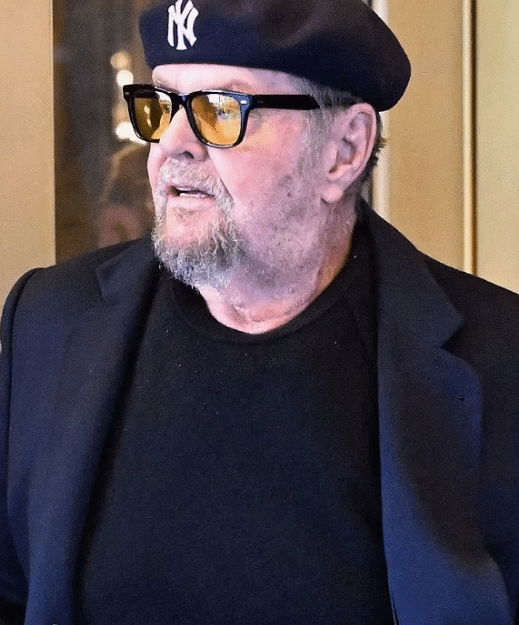
For people who first saw these movies during their original theatrical runs, the memories can be remarkably vivid.
Certain scenes became conversations at work the following morning. Certain lines were repeated for years. And actors such as Nicholson became associated not only with movies, but with particular chapters of viewers’ own lives.
The Performance That Brought Him His First Oscar
In 1975, Nicholson portrayed Randle McMurphy in One Flew Over the Cuckoo’s Nest.
The role became one of the defining performances of his career and earned him the Academy Award for Best Actor.
His McMurphy was rebellious, humorous, difficult, and deeply human.
For longtime film lovers, the performance remains an example of why Nicholson was so compelling at his peak. He rarely seemed as though he were simply delivering carefully prepared lines. There was often a sense that anything could happen once the camera began rolling.
That feeling of spontaneity became one of his trademarks.
From Chinatown to the Overlook Hotel
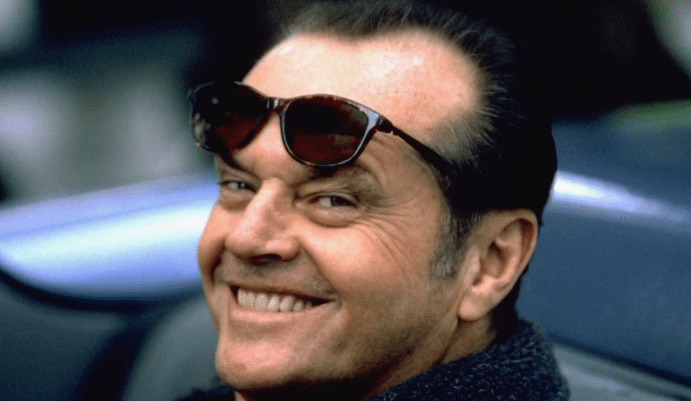
Nicholson’s career was never limited to one type of character.
In Chinatown, he played private investigator Jake Gittes, bringing a combination of confidence and growing unease to one of the most celebrated dramas of the 1970s.
Then came a role that introduced him to yet another generation.
In Stanley Kubrick’s The Shining, released in 1980, Nicholson played Jack Torrance, the isolated writer and winter caretaker whose descent into terror became one of the most recognizable performances in horror cinema.
Even people who never saw the film from beginning to end often recognize Nicholson’s expressions and scenes from it.
That is the unusual power of an iconic movie performance. It can become larger than the film itself.
A Career That Refused to Stay in One Lane
Just when audiences thought they understood the kind of actor Nicholson was, he often moved somewhere unexpected.
He could play frightening characters, romantic leads, troubled men, comic figures, authority figures, and eccentric outsiders.
In Terms of Endearment, his performance as Garrett Breedlove earned him the Academy Award for Best Supporting Actor. Years later, As Good as It Gets brought him another Best Actor Oscar.
Those victories gave Nicholson three Academy Awards in total: two for Best Actor and one for Best Supporting Actor. He accumulated 12 acting nominations over his career, an extraordinary record for a male performer.
Yet statistics alone do not explain his longevity.
Awards can document success, but they cannot fully capture why audiences remember someone.
Nicholson had something harder to measure: presence.
The Joker Before the Superhero Era Changed
Younger audiences may associate comic-book movies with sprawling cinematic universes and computer-generated spectacle.
But in 1989, Tim Burton’s Batman felt like an enormous cultural event of its own.
Nicholson played the Joker opposite Michael Keaton’s Batman, creating a theatrical, mischievous villain that became one of the era’s most recognizable movie characters.
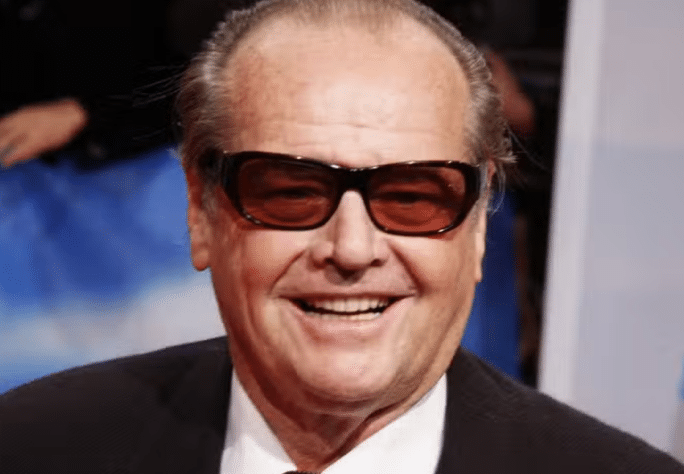
For moviegoers who remember the summer of 1989, the film was difficult to escape.
Batman logos appeared everywhere, from T-shirts to posters and toys. Nicholson’s Joker became part of that phenomenon.
Once again, he had managed to reach a new audience without simply repeating the work that had made him famous years earlier.
When Stars Still Carried a Little Mystery
For older audiences, Nicholson also represents an era when movie stars often maintained more distance from the public.
Fans saw them in films, magazine interviews, award ceremonies, and occasional television appearances.
They were not expected to share every meal, vacation, opinion, or private moment online.
That distance created mystery.
Nicholson’s off-screen reputation—his courtside appearances, dark glasses, mischievous humor, and unmistakable personality—added to his image without completely explaining him.
In many ways, he belonged to one of the last generations of movie stars whose public presence could still feel larger than everyday life.
Stepping Away From the Screen
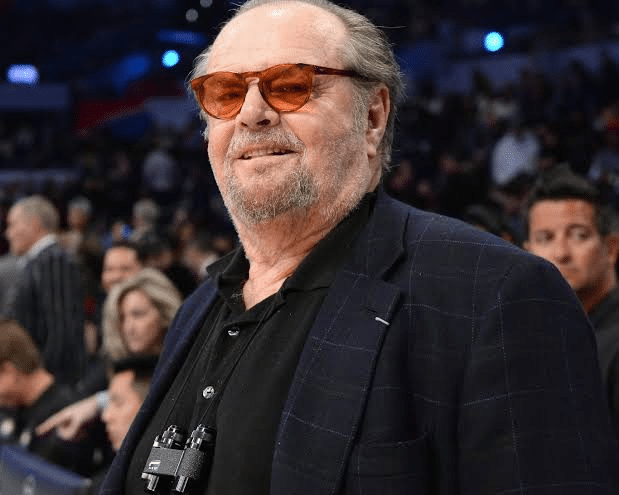
Nicholson gradually stopped making films after 2010. His later years have included relatively few public appearances compared with the height of his career.
That absence has only increased the nostalgia surrounding him.
When a performer remains constantly visible, audiences rarely have the chance to miss them.
Nicholson’s long period away from acting has had the opposite effect.
Older films have become the main way audiences continue to encounter him, preserving different versions of the actor at different ages.
A viewer can watch the restless young lawyer of Easy Rider, the troubled detective of Chinatown, the rebellious McMurphy, the terrifying Jack Torrance, or the older romantic lead of Something’s Gotta Give—all in the same weekend.
Cinema freezes those moments in time.
A Legacy That Belongs to Several Generations
Jack Nicholson’s career stretches across enough decades that different generations often remember him for entirely different movies.
Some first discovered him through Easy Rider.
Others think immediately of One Flew Over the Cuckoo’s Nest or The Shining.
For another generation, he will always be the Joker.
Still others remember A Few Good Men, As Good as It Gets, About Schmidt, Something’s Gotta Give, or The Departed.
That is a rare achievement.
Few performers manage to remain culturally recognizable while the industry around them changes so dramatically.
More Than a Birthday Milestone
Turning 89 is certainly worth noting, but Nicholson’s story is ultimately about more than a number.
It is about a career that coincided with some of the biggest changes in modern American cinema.
He arrived when Hollywood was reinventing itself, became one of its most distinctive stars, and remained relevant through several generations of moviegoing.
For longtime audiences, looking back at Nicholson’s career is also a way of looking back at their own history.
The movie theaters may be different now. The ticket stubs may have disappeared. The television guides and video stores may be gone.
But the performances remain.
And whenever Jack Nicholson’s unmistakable grin appears on screen again, it can still bring back the feeling of an era when going to the movies meant sitting in the dark, watching the curtain open, and having no idea what this unforgettable actor might do next.