Long before social media transformed every public appearance into an instant worldwide conversation, New York society had its own unmistakable cast of characters.
Their photographs appeared in newspapers, supermarket magazines, and glossy society pages. Readers studied the gowns, jewelry, hairstyles, and grand hotel ballrooms as though they were windows into another world.
Few women from that era understood the power of a memorable entrance better than the woman in this photograph.
She wore her platinum-blonde hair high, favored dramatic jewelry, and rarely selected an outfit that disappeared quietly into a crowd. Even in later life, she continued dressing with the same confidence that had made her a fixture of 1980s Manhattan.
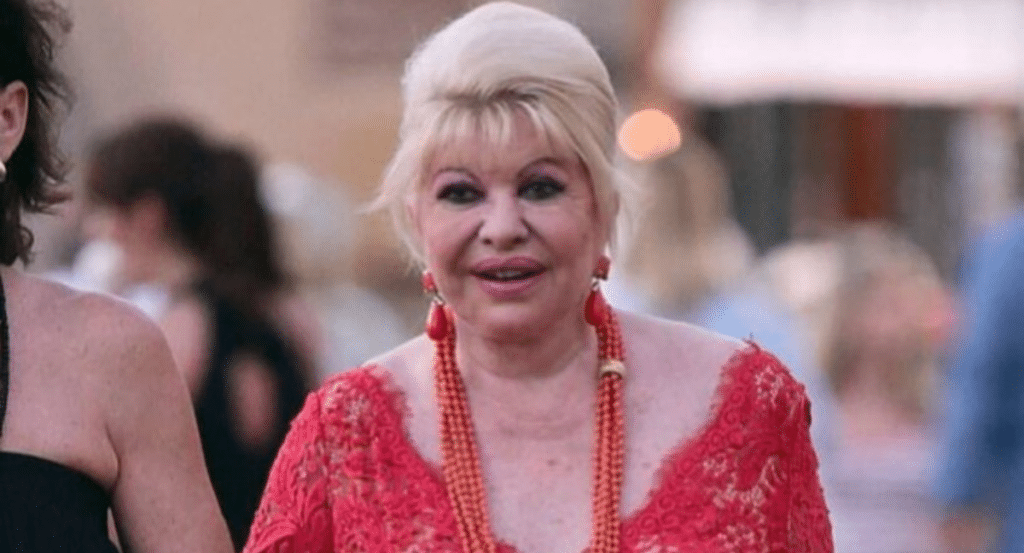
The woman in red is Ivana Trump.
Yet one important detail must be corrected before her story begins.
She was never a First Lady of the United States.
Ivana was Donald Trump’s first wife and the mother of his three oldest children. Their divorce was finalized in 1992, more than two decades before he entered the White House. Describing her accurately does not make her life less interesting. In fact, her true story is far richer than the mistaken title suggests.
A Woman Who Refused to Be Remembered Only as Someone’s Wife
Ivana Trump was a model, business executive, author, television personality, mother, and one of New York’s most recognizable social figures.
Her life stretched from communist-era Czechoslovakia to Canadian modeling assignments, Manhattan real estate projects, Atlantic City casinos, international television appearances, and a highly publicized career after divorce.
She became famous through her marriage, but she spent decades insisting that fame was not the only thing she had contributed.
video: Ivana Trump Through the Years
That determination may be the most revealing part of her legacy.
Ivana understood something many women of her generation eventually discovered: a marriage may shape a chapter of life without being allowed to define the entire book.
A Childhood Far From Fifth Avenue
Ivana Marie Zelníčková was born on February 20, 1949, in Gottwaldov, Czechoslovakia—the city now known as Zlín in the Czech Republic.
Her father encouraged her athletic abilities, particularly skiing, from an early age. The sport demanded discipline, balance, courage, and the willingness to begin again after a disappointing run.
Those qualities would remain visible throughout her adult life.
She became a skilled competitive skier and reportedly participated at the national junior level. Later claims that she had been an alternate for the Czechoslovak Olympic team could not be verified, so they should not be repeated as established fact. What is well documented is that skiing provided confidence, travel opportunities, and a glimpse of life beyond the restrictions surrounding her childhood.
Ivana also studied physical education at Charles University in Prague.
The young woman who would later be associated with lavish parties, marble interiors, and extravagant clothing therefore began with a foundation built upon physical training and personal discipline.
That contrast makes her journey even more remarkable.
Leaving Home and Beginning Again
As a young adult, Ivana moved westward and eventually settled in Canada.
She worked as a ski instructor and model, improving her English while learning how to navigate a culture very different from the one in which she had been raised.
Immigration stories are often described only through their successful endings.
The earlier days are more complicated.
There are unfamiliar streets, new customs, language mistakes, financial worries, and the persistent question of whether leaving home was the correct decision.
Ivana appeared to meet uncertainty with ambition.
Modeling gave her independence and introduced her to international travel, fashion, and influential social circles. By the mid-1970s, those opportunities brought her to New York—the city that would transform both her public identity and her future.
The Couple Who Came to Represent 1980s New York
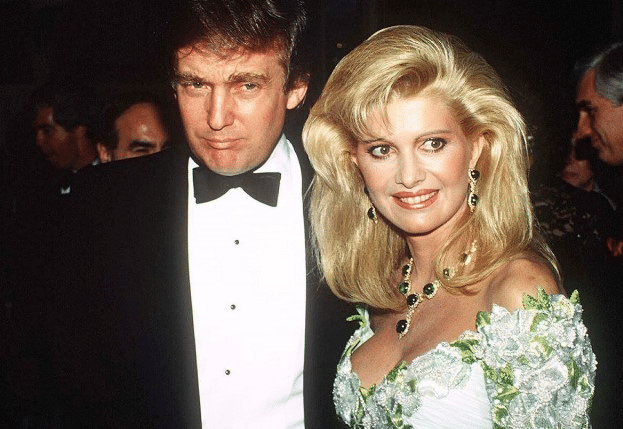
Ivana met real-estate developer Donald Trump in New York during the 1970s.
They married in April 1977 and soon became one of Manhattan’s most photographed couples. Their three children followed: Donald Jr. in 1977, Ivanka in 1981, and Eric in 1984.
To readers opening a magazine during the 1980s, the couple seemed to belong perfectly to the decade.
Everything appeared larger.
The buildings were taller.
The hairstyles had more volume.
Jewelry was worn proudly rather than discreetly.
Television celebrated wealth, aspiration, and the glamorous possibilities of life in a rapidly changing city.
Donald and Ivana appeared at charity events, premieres, formal dinners, and fashionable gatherings. Their clothing and surroundings reflected an era when luxury was not expected to whisper.
It announced itself.
Ivana’s signature blonde hair and confident wardrobe made her particularly recognizable. She understood visual identity long before the phrase “personal brand” became part of everyday business language.
People could identify her from across a ballroom.
That was not accidental.
She Was More Than a Society Hostess
The glamorous photographs could easily create the impression that Ivana’s role was limited to accompanying her husband at important events.
Her business responsibilities told a different story.
She served as vice president of interior design for the Trump Organization and supervised work connected with major properties. Her official publisher biography credits her with overseeing construction and design involving Trump Tower, the Grand Hyatt Hotel, and an Atlantic City casino project. She later held executive responsibility at Trump’s Castle and managed the Plaza Hotel in Manhattan.
These were not ceremonial titles attached to a famous spouse.
Hotels and casinos are complicated businesses.
They require decisions involving staffing, customer service, budgets, design, operations, marketing, maintenance, and the expectations of demanding guests.
The Plaza Hotel carried an additional emotional weight for New Yorkers.
Its location beside Central Park, grand public rooms, afternoon teas, and association with generations of visitors made it more than another building. It belonged to the city’s cultural memory.
Managing such a property required confidence.
Ivana had plenty of it.
The Look of Luxury in an Earlier Era
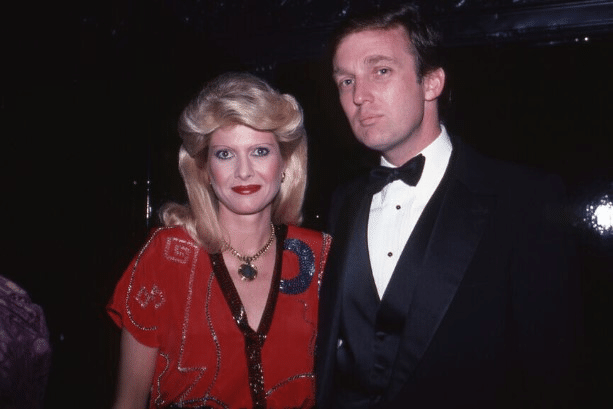
Ivana’s design instincts reflected the period in which she became famous.
Today, luxury interiors often emphasize pale colors, uncluttered rooms, and quiet minimalism.
The 1980s preferred drama.
There was polished brass, reflective glass, richly patterned fabric, marble, deep carpeting, elaborate floral arrangements, and lighting designed to make an entrance feel important.
For people who remember that decade, the style may stir memories of formal hotel lobbies, department-store holiday displays, and television dramas filled with powerful families living in enormous homes.
Ivana did not merely inhabit that visual world.
She helped create it.
Her taste was sometimes criticized for being excessive, but restraint was never the quality she intended to communicate.
She wanted spaces—and clothes—that people remembered.
Raising Three Children Inside an Unusual Household
Behind the hotels, magazine covers, and society photographs was a mother raising three children under extraordinary public attention.
Donald Jr., Ivanka, and Eric grew up surrounded by privilege, but Ivana often described herself as the parent responsible for establishing rules, schedules, and discipline.
In her 2017 memoir, Raising Trump, she reflected on motherhood, her upbringing in Czechoslovakia, and the lessons she attempted to give her children. Her publisher presented the book as a story of resilience, family, and the experience of raising three children who later entered public life themselves.
Many mothers from Ivana’s generation will recognize the balance she described.
A parent can be affectionate and demanding.
She may provide opportunities while expecting effort in return.
She may be proud of her children without protecting them from every consequence.
Wealth can purchase comfort, education, and travel.
It cannot automatically give a child patience, responsibility, or gratitude.
Those qualities must still be taught through repeated daily expectations.
Ivana regarded motherhood as one of the most important responsibilities of her life.
Years after her marriage ended, she continued describing her children as her greatest source of pride.
When a Private Marriage Became Public Entertainment
By the end of the 1980s, the Trump marriage was unraveling beneath extraordinary media attention.
The separation became front-page material for New York tabloids. Personal disagreements, legal negotiations, and rumors were presented almost like continuing episodes of a television serial.
For readers of that era, the coverage may be difficult to forget.
Before the internet provided constant updates, newspaper stands offered the morning’s dramatic development in enormous type. Commuters carried the story onto buses and subways. Television programs repeated it in the evening.
The couple’s divorce was finalized in 1992.
A marriage ending is difficult under ordinary circumstances.
A public divorce adds another burden.
The people involved must make legal and emotional decisions while strangers discuss which person has won, lost, behaved badly, or emerged with the better settlement.
Ivana could not prevent the public spectacle.
She could decide what to do afterward.
Reinvention After Divorce
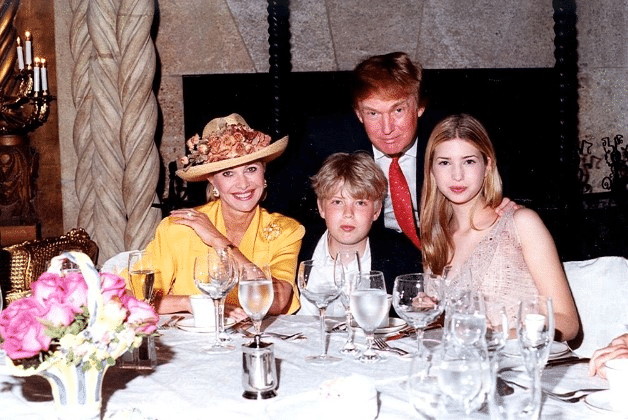
For many women of Ivana’s generation, divorce in middle age carried social and financial uncertainty.
A woman who had been introduced for years through her husband’s name might suddenly need to establish an independent identity.
Ivana responded by turning reinvention into her central message.
She launched fashion, jewelry, fragrance, and beauty ventures. Some of her products were sold through television shopping channels, where she could speak directly to customers rather than relying entirely upon traditional department stores.
Home-shopping television became a powerful retail force during the 1980s and 1990s.
Viewers could watch a host demonstrate clothing or jewelry, call a number, and order without leaving the living room.
For older customers, it combined entertainment with the familiarity of a trusted sales conversation.
Ivana’s personality suited the format.
She was animated, confident, and comfortable describing a product as something a woman deserved rather than merely needed.
She understood aspiration because she had spent much of her life selling a vision of it.
Writing About the Second Act
Ivana also became an author.
Her books included novels as well as The Best Is Yet to Come: Coping With Divorce and Enjoying Life Again, which encouraged readers to view the end of a marriage as a beginning rather than a permanent defeat.
She later wrote advice columns and launched a lifestyle publication before returning to her family story in Raising Trump.
The message behind these projects was consistent.
A woman could experience disappointment without surrendering her future.
She could build another career, enter another relationship, travel, dress boldly, and continue participating fully in life.
The advice may not have applied perfectly to every reader. Ivana possessed resources and connections unavailable to most women rebuilding after divorce.
But the emotional idea still resonated.
The end of one role did not require the end of ambition.
The Movie Appearance Many People Still Remember
Ivana’s identity as a glamorous divorced woman became so widely recognized that she made a memorable cameo in the 1996 comedy The First Wives Club.
The film starred Goldie Hawn, Bette Midler, and Diane Keaton as women who rebuild their lives after being left by their husbands.
Ivana appeared briefly as herself and delivered a playful line that became closely associated with her public image.
The moment lasted only seconds, but audiences loved it.
It showed that Ivana understood how the public viewed her and was willing to participate in the joke.
Self-awareness can be one of the most valuable qualities a public figure possesses.
Instead of pretending the divorce had never happened, she converted part of its mythology into entertainment.
A Style That Never Asked Permission
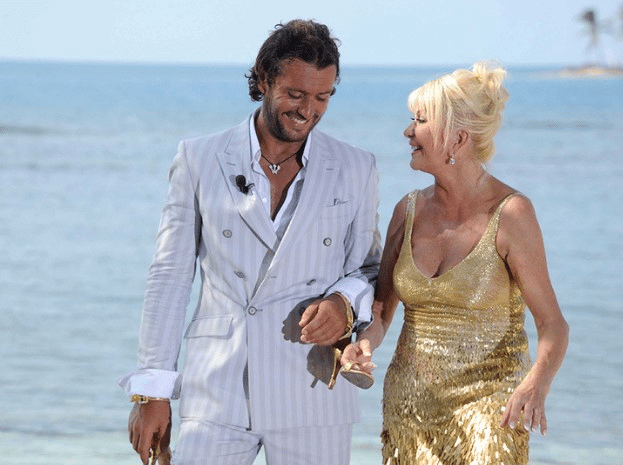
Ivana’s later wardrobe continued attracting attention.
She favored fitted dresses, bright colors, lace, sparkling embellishments, dramatic necklaces, and carefully arranged blonde hair.
Some observers criticized her for wearing styles they considered too youthful or elaborate for an older woman.
That criticism revealed more about society’s expectations than it did about Ivana.
Older women have often been encouraged to become visually quieter.
Colors are expected to soften.
Jewelry should become smaller.
Makeup should be restrained.
Clothes should avoid attracting attention.
Ivana appeared uninterested in following those instructions.
She did not dress to create the illusion that she was still 30.
She dressed according to the personality she had carried through every decade—bold, decorative, and impossible to overlook.
There is a meaningful difference between trying to defeat age and refusing to disappear because of it.
Why Fashion Becomes More Personal With Time
Young people often dress partly to discover where they belong.
They experiment with trends, observe friends, and adjust themselves according to the expectations of a workplace or social circle.
Age can bring a different freedom.
After decades of knowing which colors feel right and which clothes create confidence, a person may become less interested in outside approval.
That was the quality Ivana’s later photographs communicated.
Her style did not ask whether everyone understood it.
It reflected a woman who had already spent years being praised and criticized by strangers.
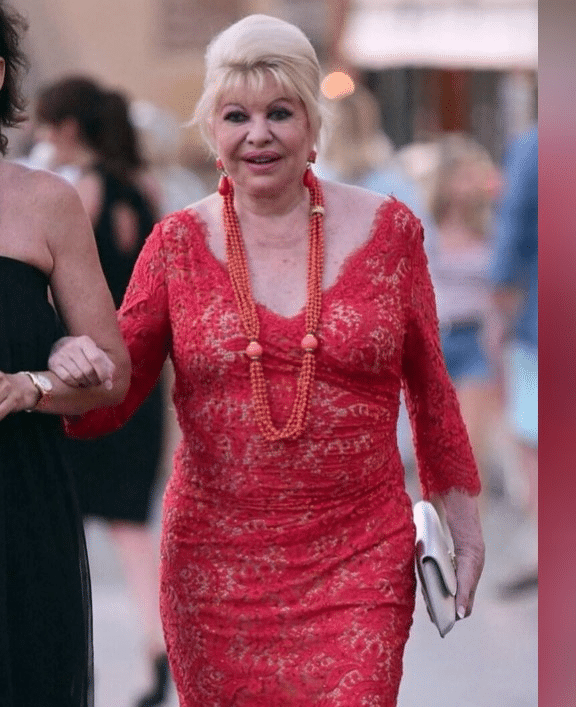
A red lace dress and coral-colored jewelry were not neutral choices.
They were declarations that she remained present.
Later Romance and a Wedding Filled With Personality
Ivana married several times during her life.
Her later relationships continued attracting attention, particularly her romance with Italian actor and model Rossano Rubicondi.
The couple married in 2008 during an elaborate celebration at Mar-a-Lago. Ivana was 59, while Rubicondi was 23 years younger.
Their marriage ended after less than a year, although their relationship continued intermittently afterward.
The story challenged the usual pattern through which older men and younger women had long been discussed in popular culture.
When the ages were reversed, the relationship received greater scrutiny.
Ivana did not appear embarrassed by the difference.
Whether the relationship was conventional seemed less important to her than whether it brought companionship and excitement into that chapter of life.
Older adults are sometimes treated as though romantic curiosity should gradually disappear.
Real life suggests otherwise.
The desire for companionship, affection, conversation, and shared adventure does not expire on a particular birthday.
The Woman Who Became a Character Without Becoming Fiction
By the 1990s, Ivana had become larger than the ordinary boundaries of celebrity.
Comedians imitated her accent and hairstyle.
Television programs invited her to appear as herself.
Her name could communicate glamour, divorce, resilience, and extravagance without requiring a long explanation.
That kind of recognition can be both useful and limiting.
The public character creates opportunities, but it can hide the private person beneath it.
Ivana occasionally played into the image because she understood its commercial power.
Yet no public persona can fully represent a life containing immigration, motherhood, business pressure, disappointment, aging, friendship, and grief.
The real woman was more complicated than the blonde hair and famous surname.
She Was Never the First Lady—And Did Not Need to Be
The misleading description attached to the original article may have resulted from confusion surrounding Ivana’s former marriage.
But accurate language matters, especially when publishing historical or political content.
Ivana and Donald Trump divorced in 1992.
He entered the White House many years later, with Melania Trump serving as First Lady.
Ivana did occasionally use humorous language suggesting that she was the “first” Trump wife, but that was wordplay—not a constitutional or ceremonial title.
Correcting the title does not reduce her importance.
Ivana’s public identity was established decades before presidential politics transformed the family name.
She had already been a New York celebrity, business executive, author, mother, and international personality.
Her story does not need a borrowed White House title to attract attention.
Growing Older in Full View of the Public
Aging is a private experience until a person becomes famous.
Then each new photograph may be compared with one taken decades earlier.
Normal changes are treated as surprises.
Women face especially contradictory expectations.
They are criticized for appearing older.
They may also be criticized for cosmetic choices intended to maintain a familiar appearance.
They are told to age naturally, but natural aging is rarely presented kindly in celebrity media.
There is no reliable way to satisfy such demands.
Ivana’s response seemed to be continuing according to her own preferences.
Her makeup remained dramatic.
Her hair remained recognizable.
Her clothes continued embracing color, lace, and ornament.
She did not owe the public a quieter version of herself.
A Final Chapter in Manhattan
Ivana continued living in New York, the city that had shaped so much of her adult identity.
Her Upper East Side townhouse reflected the same highly decorative taste seen in her clothing and earlier design work.
New York had changed enormously since her arrival.
The department stores, restaurants, hotel lobbies, and society pages of the 1970s and 1980s belonged increasingly to memory.
Ivana remained a visible connection to that earlier Manhattan.
She was part of an era when well-known social figures appeared regularly at charity galas and restaurant openings, and when a memorable dress could occupy an entire magazine page.
She died at her Manhattan home on July 14, 2022, at age 73. New York City’s medical examiner determined that her death resulted from accidental injuries following a fall.
The circumstances were sad, but they should not overshadow the many decades that came before them.
Remembering Her Without Turning Her Into a Political Symbol
Ivana’s surname eventually became inseparable from American politics.
Her own public life, however, was built primarily through business, fashion, family, society, publishing, and entertainment.
Readers may hold sharply different opinions about the Trump family.
A responsible biography does not require political agreement.
It requires accurate recognition of the person’s documented life.
Ivana was neither a First Lady nor merely a decorative spouse.
She worked within major hospitality and real-estate projects.
She raised three children who later entered business and public life.
She built commercial ventures after divorce.
She wrote books and transformed a difficult personal transition into a message of independence.
Those accomplishments can be acknowledged without turning the article into political praise or criticism.
A Face From a Vanished New York Era
The final photograph returns to the woman viewers remember most clearly.
Ivana wears a fitted red lace dress, long coral-colored necklaces, matching earrings, and a white clutch.
Her blonde hair is arranged in the high, carefully constructed style that became her signature.
She does not look like someone hoping to pass unnoticed.
That was never her goal.
For older readers, the image may bring back memories of another entertainment era.
Magazines were purchased at grocery-store checkout lines.
Society photographs arrived days or weeks after an event.
Readers recognized famous New York restaurants and hotels without ever having visited them.
Clothing was discussed not only because it was beautiful, but because it helped create a character.
Ivana Trump was one of those characters.
Yet she was also a real woman who crossed borders, entered competitive businesses, raised a family, endured public humiliation, and built another life after the marriage that first made her famous had ended.
The Timeless Icon Behind the Photograph
The woman in red was Ivana Trump.
She was born in Czechoslovakia, moved through Canada to the United States, became part of one of New York’s most famous couples, and established herself as a business executive and public personality.
She never served as First Lady.
She did something more personal.
She spent decades creating an identity that belonged to her.
Her taste was not quiet.
Her choices were not always conventional.
Her life contained success, disappointment, reinvention, motherhood, romance, and the constant pressure of public attention.
Not everyone admired her style.
No one could claim it lacked personality.
Perhaps that is the real lesson preserved by these photographs.
A woman does not become timeless by preventing the years from passing.
She becomes memorable by continuing to live unmistakably as herself while they do.