Some people seem to belong to history books.
Others step out of those books and live with such energy that history itself begins to feel unexpectedly modern.
Cayetana Fitz-James Stuart, the 18th Duchess of Alba, managed to do both.
She inherited one of Europe’s oldest aristocratic names, lived in palaces filled with centuries of art, and possessed an extraordinary collection of noble titles. Yet she was also known for bright clothing, spontaneous flamenco dancing, strong opinions, late-life romance, and an unmistakable refusal to disappear quietly from public view.
The rare candid photographs featured here show a very different side of that famous life.
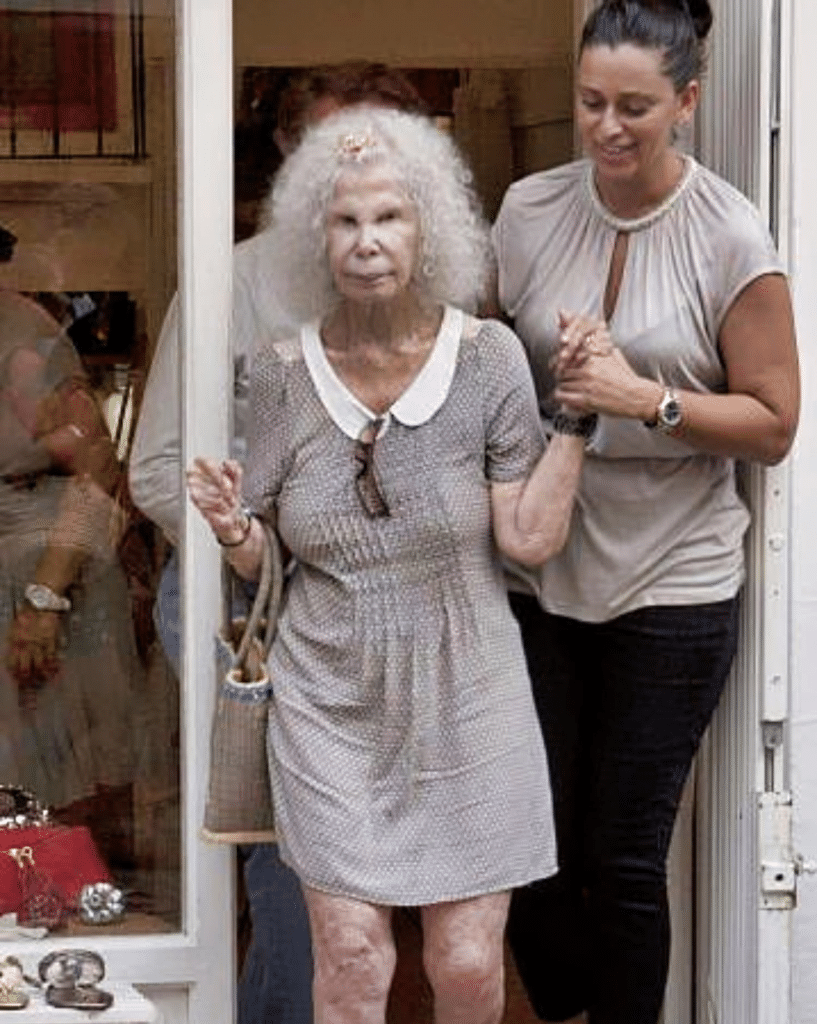
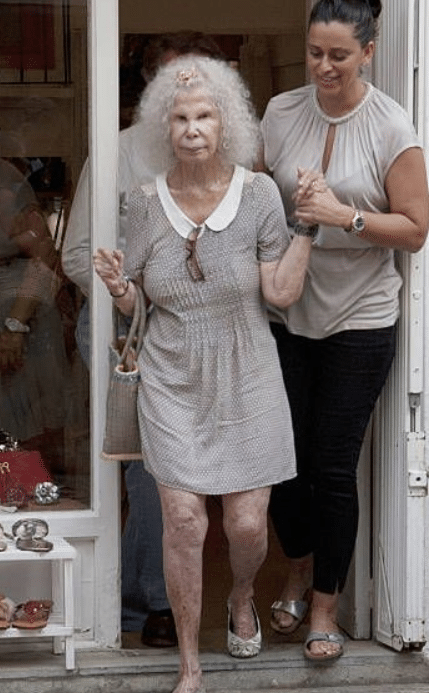
There are no jewels, ceremonial gowns, palace staircases, or formal portraits. Cayetana wears a modest gray day dress with a white collar and carries an everyday handbag. Another woman gently holds her hand as they step through a doorway.
It is an ordinary moment involving a woman who lived an extraordinary life.
A Familiar Face Outside the Palace Gates
The first image is memorable because it removes nearly every traditional symbol of aristocracy.
Cayetana is not standing beneath a family portrait or welcoming dignitaries into a grand reception room. She appears to be completing an ordinary outing, dressed for comfort rather than ceremony.
Her reading glasses hang from the front of her dress. A practical woven handbag rests over one arm, and another woman remains close beside her as they move through the doorway.
The photograph does not tell us where Cayetana had been or what she was thinking.
It cannot confirm whether she needed assistance throughout the day or whether the offered hand was simply an affectionate, courteous gesture between companions. A still image preserves only one fraction of a second.
That limitation is especially important when viewing older public figures.
A cautious step should not become an invitation to diagnose someone from a distance. Gray hair, changing mobility, or a different appearance are not stories of failure. They are ordinary parts of a long life.
For Cayetana, that life had already crossed nearly a century of European history.
Born Into One of Spain’s Great Historic Houses
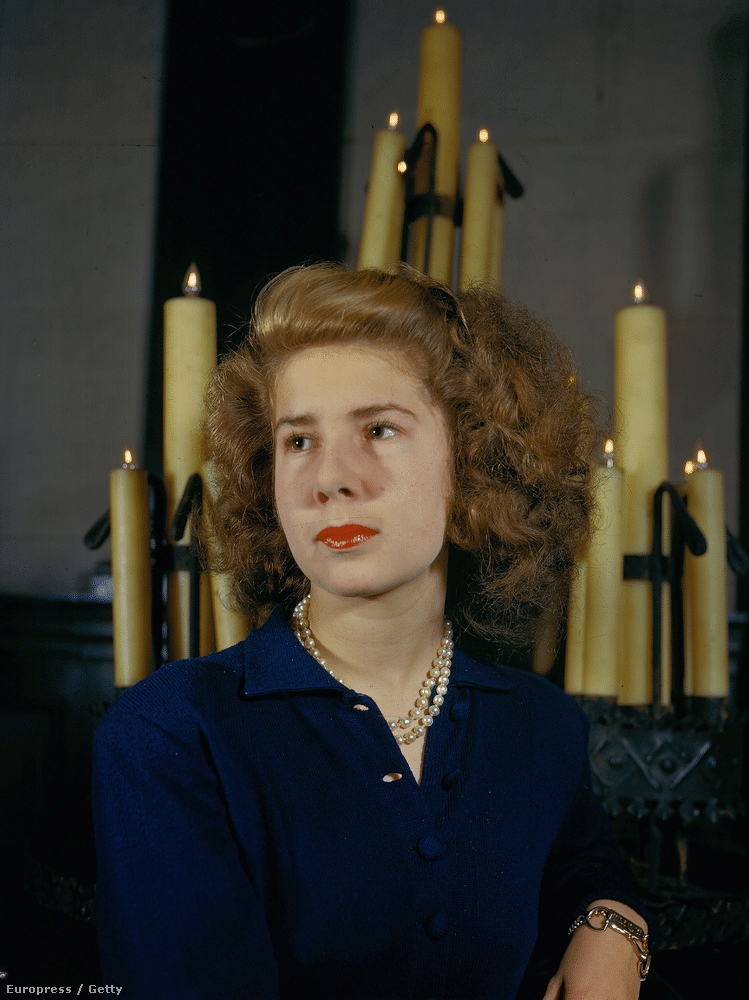
Cayetana was born in Madrid on March 28, 1926.
Her formal name was much longer than the name by which Spain came to know her, reflecting generations of aristocratic and family tradition. She was the only child of Jacobo Fitz-James Stuart, the 17th Duke of Alba, and María del Rosario de Silva.
Her birthplace was Madrid’s Liria Palace, the historic residence of the House of Alba.
From the beginning, Cayetana belonged to a family whose history stretched back to the 15th century. The House of Alba had been connected with Spanish monarchs, European courts, military campaigns, diplomacy, collecting, and cultural patronage for hundreds of years.
She eventually became the third woman to hold the Dukedom of Alba in her own right. Guinness World Records recognized her during her lifetime as the world’s most titled person. Reuters reported that she was a Spanish grandee 14 times and also held numerous dukedoms, marquessates, counties, and a viscountcy.
Those titles sounded impressive, but they also carried responsibility.
Cayetana did not inherit only names. She inherited historic buildings, valuable archives, major artworks, complex family traditions, and public expectations about how a duchess should behave.
She would spend much of her life balancing those expectations against an unusually independent personality.
A Childhood Divided Between Madrid and London
Cayetana’s early years did not unfold entirely within Spain.
Her father served as Spain’s ambassador to Britain, and she spent an important part of her childhood in London. During those years, she encountered a world of diplomacy, European royalty, political uncertainty, and social ritual.
Reuters reported that she dined with Winston Churchill and played with Princess Margaret while growing up in Britain.
For an American reader, it may be difficult to imagine such a childhood.
While other children collected paper dolls, listened to radio serials, or played in neighborhood streets, Cayetana was being introduced to figures whose names would later fill history books.
Yet wealth and position did not protect her generation from upheaval.
She grew up during the Spanish Civil War and the Second World War, years when familiar institutions appeared far less permanent than they might have seemed only a decade earlier.
Liria Palace was heavily damaged during the Spanish Civil War. Reconstructing the family home later became an important undertaking associated with Cayetana and her father. The Casa de Alba Foundation identifies the reconstruction of the palace as a central part of their modern contribution to the family’s artistic legacy.
That experience may have shaped her understanding of inheritance.
A palace was not simply something received.
It was something that could be lost, repaired, protected, and passed forward.
[image]https://beaware.fun/wp-content/uploads/2026/07/Screenshot_2820.jpg[/image]
The Wedding That Became a National Spectacle
In 1947, at the age of 21, Cayetana married Luis Martínez de Irujo y Artázcoz.
The ceremony took place in Seville Cathedral and became one of the most celebrated European social events of the postwar period. Thousands reportedly gathered along the route as the bride traveled by horse-drawn carriage.
Cayetana wore a gown designed by the celebrated Spanish couturier Cristóbal Balenciaga, accompanied by historic family jewels.
Reuters compared the scale of the celebration with the wedding of Britain’s future Queen Elizabeth II, which took place later the same year.
For readers who remember large society weddings appearing in Life, Look, and newspaper rotogravure sections, the event belonged to a familiar kind of glamour.
People studied the bride’s dress, the flowers, the arriving guests, and every visible detail of the ceremony.
There was no live social-media feed and no endless stream of telephone photographs. Images arrived through newsreels, newspapers, and magazines, allowing the celebration to retain a sense of distance and grandeur.
Cayetana and Luis went on to have six children—five sons and one daughter.
Motherhood became an important part of her life, though public fascination with her titles and social appearances sometimes overshadowed that family role.
The House of Alba Was More Than a Collection of Titles
The House of Alba’s cultural inheritance is among the most significant private collections associated with a European aristocratic family.
Today, important works and historic objects remain connected with three principal residences: Liria Palace in Madrid, Las Dueñas in Seville, and Monterrey Palace in Salamanca.
The Casa de Alba Foundation describes collections including paintings, sculpture, furniture, tapestries, books, documents, decorative art, and works associated with artists such as Goya, Rubens, Rembrandt, Titian, Renoir, Fra Angelico, and Van Gogh.
For Cayetana, living among such objects could not have been like visiting a museum.
They were part of the physical environment of family life.
Portraits represented ancestors rather than anonymous historical figures. Documents connected family history with major events in Europe and the Americas. Rooms that visitors might study for architectural significance also contained personal memories.
The distinction mattered.
Cayetana often emphasized that the family’s wealth was tied largely to historic assets rather than unlimited cash. Many of the properties and works were protected because of their cultural importance and could not simply be sold like ordinary possessions.
This was heritage on an enormous scale, but it was also a form of stewardship.
Each generation inherited the responsibility of preserving what earlier generations had assembled.
An Aristocrat Who Enjoyed the Modern World
Cayetana never appeared interested in becoming a silent caretaker hidden inside a palace.
She participated enthusiastically in contemporary social and cultural life.
Reuters reported that she welcomed figures such as Audrey Hepburn and Jacqueline Kennedy during their visits to Spain. In 1959, Liria Palace was made available for a major fashion presentation connected with Christian Dior and designer Yves Saint Laurent.
The image of movie stars and fashion figures entering a historic Madrid palace captures an important side of Cayetana.
She respected family tradition, but she did not believe history needed to be sealed away from modern culture.
Music, fashion, cinema, art, and society could enter the same rooms as ancestral portraits and rare manuscripts.
That mixture helped make her fascinating to the public.
She was neither entirely old-fashioned nor predictably modern.
She could wear a traditional Spanish mantilla at a formal celebration and then appear days later in colorful casual clothing that surprised conservative observers.
Seville Became the City Closest to Her Heart
Although Cayetana was born in Madrid and moved comfortably through international society, Seville held a special place in her life.
Las Dueñas Palace became her favorite home.
The residence, known for its courtyards, gardens, tiled passages, fountains, and orange and lemon trees, seemed ideally suited to her personality. It carried the grandeur of the House of Alba while also feeling deeply connected with Andalusian culture.
Cayetana loved flamenco, bullfighting traditions, the Feria de Abril, and the public celebrations of Seville.
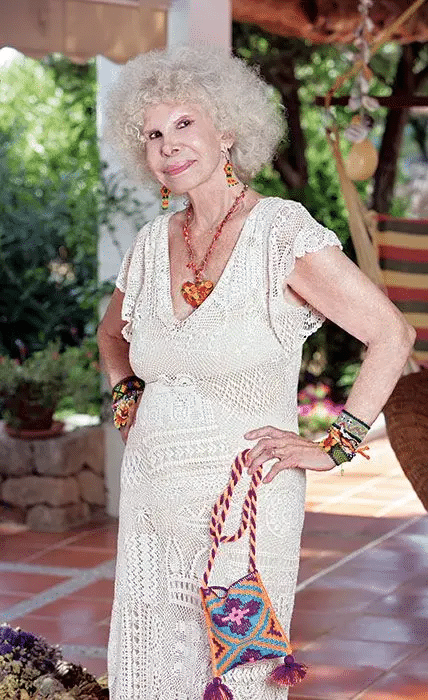
She did not merely observe those traditions from a palace balcony.
She participated in them.
Photographs taken across the decades show her wearing mantillas, attending festivals, dancing, meeting artists, and engaging with the public. Reuters described her as a devoted enthusiast of flamenco and Seville’s cultural life.
When she died in 2014, Seville lowered its flags and declared a period of mourning. City leaders described her connection with Seville as something that would remain part of the city’s memory.
Style Was One of Her Forms of Independence
Cayetana’s clothing became increasingly individual as she grew older.
She was photographed in embroidered garments, colorful prints, fishnet stockings, bright accessories, casual summer dresses, traditional Spanish clothing, and combinations that did not follow conventional rules for women of her age or position.
Some observers admired her freedom.
Others mocked it.
But Cayetana appeared largely unwilling to reorganize her life around public approval.
That attitude gives the candid photographs special interest.
The gray dress is modest and practical, but it still contains personality. The rounded white collar has an almost nostalgic quality, recalling day dresses once worn for shopping, visiting friends, or attending an informal lunch.
Older American readers may remember similar dresses in the closets of mothers and grandmothers.
They were comfortable enough for an ordinary afternoon but neat enough that the wearer still felt properly dressed before leaving home.
Cayetana’s later style did not always look traditionally aristocratic.
That may have been precisely the point.
She wore what pleased her rather than dressing continuously as a symbol of inherited rank.
Public Discussion of Her Appearance Often Crossed a Line
Cayetana’s face and body received enormous tabloid attention during her later years.
Some publications discussed cosmetic procedures as though they were public property. Photographs were placed side by side, and commentators treated ordinary physical changes as material for entertainment.
The original article follows part of that tradition by presenting assumptions about surgery and personal motivation as settled fact.
A more responsible approach recognizes the limits of public knowledge.
Unless a person has personally confirmed a medical procedure, outside observers should not treat photographs as proof. Even when someone discusses cosmetic treatment publicly, a picture cannot explain why a particular choice was made or how that person felt about it.
More importantly, Cayetana’s appearance should not overshadow the substance of her life.
She lived through civil conflict, restored historic property, helped preserve an important art collection, raised six children, experienced widowhood twice, entered three marriages, and remained culturally active into her eighties.
Her face was not the most interesting thing about her.
Her determination was.
Widowhood and an Unconventional Second Marriage
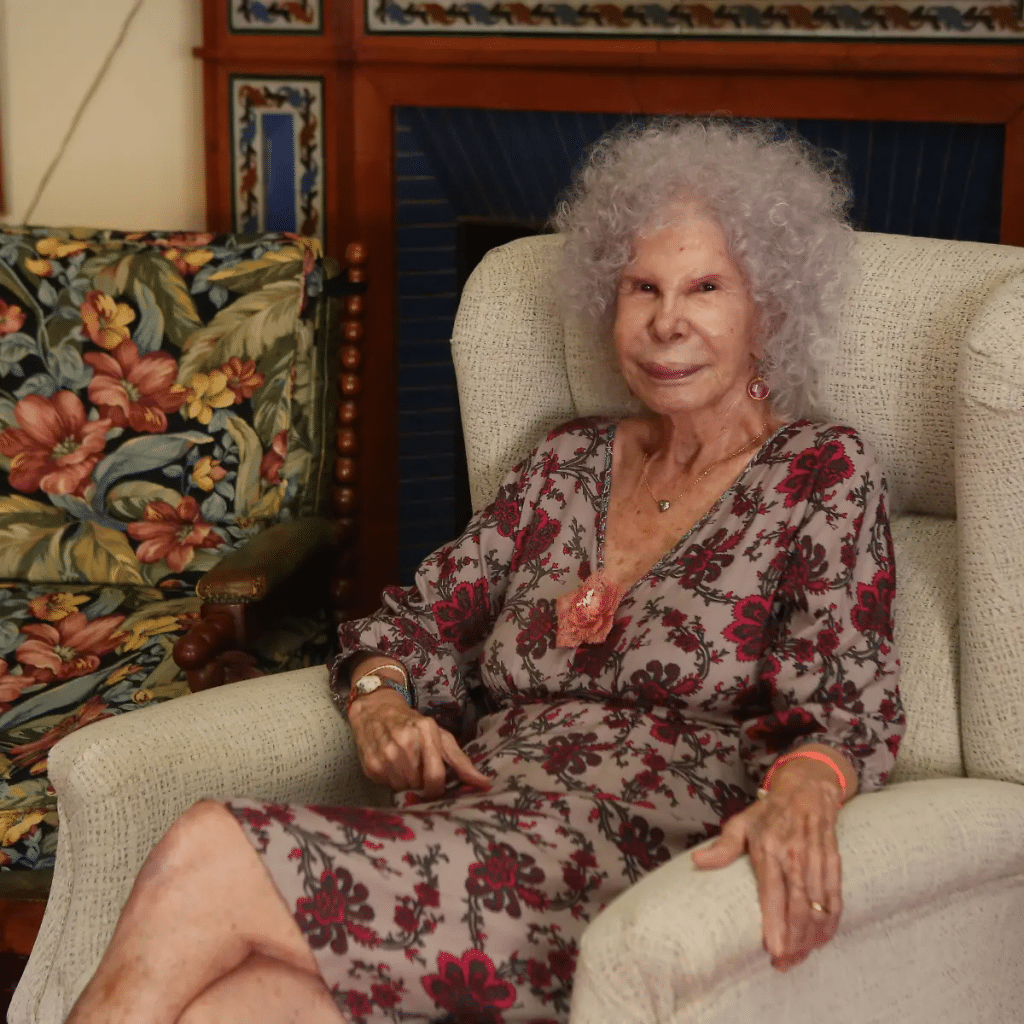
Cayetana’s first husband died in 1972.
Six years later, she married Jesús Aguirre, an intellectual and former Catholic priest who became closely involved in managing and preserving the House of Alba’s cultural heritage.
The marriage surprised parts of Spanish high society.
Aguirre did not come from the same aristocratic background, and his earlier life in the priesthood made the match particularly unexpected.
Yet Cayetana was never someone who allowed convention to make every important decision for her.
The marriage lasted until Aguirre’s death in 2001. Reuters notes that he had become her second husband after leaving the priesthood, adding another unusual chapter to a life repeatedly shaped by personal choices rather than predictable aristocratic custom.
For older readers, the relationship may recall a time when social divisions appeared more rigid.
Marriage across differences in class, profession, religion, or family expectation could provoke intense discussion.
Cayetana’s decision demonstrated that even a woman surrounded by centuries of tradition could choose companionship according to her own judgment.
A Third Romance Captured Spain’s Attention
Cayetana’s most publicly discussed romance began much later in life.
She formed a relationship with civil servant Alfonso Díez, who was approximately 24 years younger. Their courtship became a national story, discussed across newspapers, television programs, and magazines.
Some members of her family initially opposed the marriage, reportedly fearing that the relationship might affect the family fortune.
Díez formally renounced claims to her wealth, while Cayetana arranged for assets to be distributed among her six children before the ceremony.
They married at Las Dueñas Palace in Seville on October 5, 2011.
Cayetana was 85.
Outside the palace, crowds waited to see the newly married couple. Then came the moment that would define the celebration.
Cayetana removed her shoes and danced a few steps of flamenco before the cameras.
The image traveled around the world.
It was joyful, theatrical, and entirely consistent with the woman Spain believed it knew. Reuters later described the barefoot dance as one of the most memorable images from her final years.
Love Did Not Have an Expiration Date
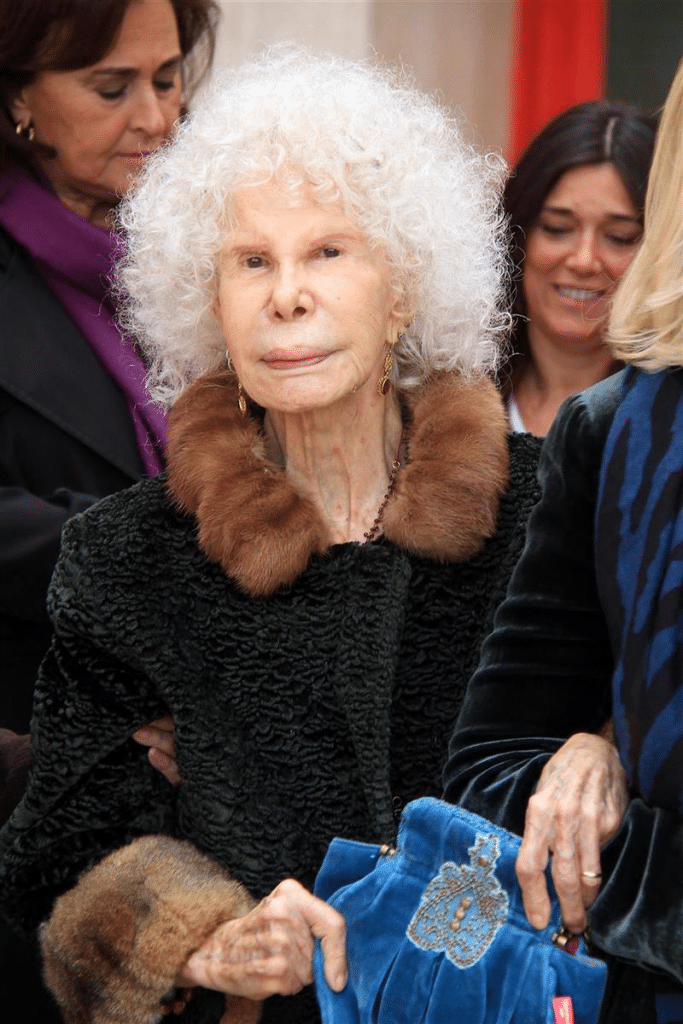
Cayetana’s third marriage became controversial partly because society often treats romance as though it belongs mainly to the young.
An older widow may be expected to remain quietly surrounded by family memories. A new relationship can be regarded as unnecessary, embarrassing, or somehow inappropriate after a certain age.
Cayetana rejected that assumption.
She did not appear to believe that grief required permanent loneliness or that family history should prevent new happiness.
Her marriage did not erase her earlier husbands.
Nor did it turn her into a young bride beginning life without a past.
It represented a different kind of beginning—one chosen by two mature adults who already carried long personal histories.
The criticism surrounding the age difference also revealed a familiar double standard.
Older men have often formed relationships with younger women without receiving the same level of astonishment directed toward older women who choose younger partners.
Cayetana’s response was characteristically direct.
She continued with the marriage.
The Famous Wedding Dance Became a Symbol
The barefoot flamenco dance mattered because it seemed to capture Cayetana’s entire public identity in a few seconds.
She was surrounded by inherited grandeur yet willing to remove her shoes.
She was 85 yet refused to behave as though joy had become undignified.
She had endured family objections and national debate, but she emerged before the crowd smiling.
The dance was not technically elaborate.
Its power came from spontaneity.
Many older adults understand that kind of pleasure. The body may move differently than it did at 25, but music can still awaken memories before the mind has time to object.
A familiar rhythm returns.
For a moment, the years seem less important.
Cayetana’s small dance carried that universal feeling into an unmistakably Spanish setting.
Behind the Titles Was a Mother of Six
Public accounts often describe Cayetana through numbers.
Her age.
Her titles.
Her palaces.
The estimated value of the family estate.
Yet the most enduring relationships in her life were personal rather than ceremonial.
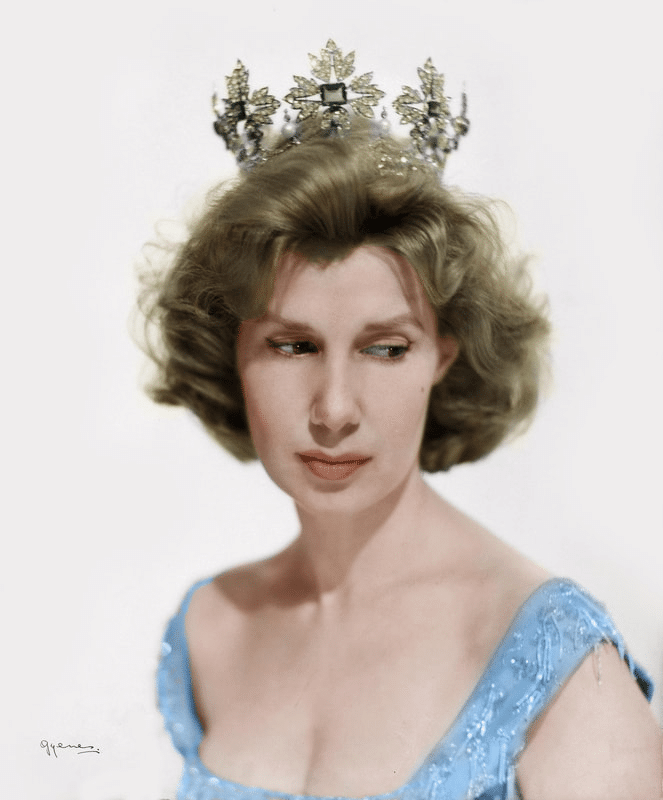
She had six children with Luis Martínez de Irujo: Carlos, Alfonso, Jacobo, Fernando, Cayetano, and Eugenia.
As in many large families, relationships were not always simple.
There were disagreements involving inheritance, marriages, public statements, and the responsibilities connected with the House of Alba. The family’s unusual wealth made those disagreements public in ways that ordinary families rarely experience.
Still, all six children were reportedly with Cayetana during her final illness at Las Dueñas Palace.
That detail offers a quieter ending than the headlines surrounding family disputes.
A woman who spent much of her life before cameras was ultimately surrounded by family inside the home she loved most.
Historic Wealth Is Not the Same as Ordinary Riches
Cayetana was routinely described as one of Europe’s wealthiest women.
Estimates varied widely because the House of Alba’s holdings included land, historic residences, archives, and artworks whose cultural significance made simple valuation difficult.
Many objects could not be treated like ordinary market assets. Restrictions existed because of their importance to Spain’s national heritage.
This distinction is often lost in celebrity coverage.
A palace may be extraordinarily valuable, but it also requires maintenance, staffing, conservation, security, and restoration. A famous painting may be worth millions, but selling it could mean permanently removing an important piece of family and national history.
Cayetana herself observed that people often confused assets with available cash.
Her life certainly included privileges unimaginable to most families.
But it also involved an institution larger than one individual.
The House of Alba had existed for centuries before her birth. Her role was to carry it through her lifetime and prepare it for the next generation.
The Collection Remains a Living Cultural Legacy
The treasures associated with the House of Alba continue to be displayed, studied, conserved, and presented through exhibitions.
The Casa de Alba Foundation describes its holdings as a collection developed across more than 500 years. The modern story includes Cayetana’s role in rebuilding Liria Palace and participating in the continuing development of the collection.
This may be her most enduring public contribution.
Clothing changes.
Magazine controversies disappear.
Even famous society weddings slowly become old news.
Art, architecture, books, and archives can speak across centuries.
A visitor entering Liria Palace or Las Dueñas today is not encountering only an aristocratic family’s possessions. The visitor is walking through layers of Spanish and European history preserved by generations of caretakers.
Cayetana became one of those caretakers.
Her colorful public personality sometimes obscured that quieter work.
The Final Portrait Restores a Sense of Ceremony
The last photograph presents Cayetana seated in a carved chair, wearing a rich purple dress with a decorative brooch.
Her white hair frames her face, while dark earrings and the deep color of the fabric give the portrait a dignified, formal quality.
A book or document rests in her hands.
The contrast with the candid doorway images is striking.
In one setting, she is a woman completing an ordinary outing in a comfortable day dress.
In the other, she appears as the head of a historic house, surrounded by visual reminders of tradition.
Both photographs are true.
Neither is complete.
That is the difficulty with public images. One frame can encourage viewers to believe they understand an entire person.
But Cayetana could be formal and playful, privileged and burdened, traditional and unconventional. She lived among priceless art yet seemed happiest dancing beneath the Andalusian sun.
Her Death Brought Seville to a Standstill
Cayetana died on November 20, 2014, at Las Dueñas Palace after a short illness.
She was 88.
Her six children and her husband were reportedly with her. Spain’s royal family sent condolences, flags in Seville flew at half-mast, and the city declared official mourning. Her body lay in state before a funeral at Seville Cathedral.
The public response demonstrated that she had become more than the holder of aristocratic titles.
She was a recognizable national personality.
People who had never entered one of her palaces felt that they knew her from decades of newspaper photographs, festival appearances, interviews, weddings, and family stories.
Some admired her.
Others disagreed with her privileges or choices.
Few found her forgettable.
Why These Candid Images Still Matter
The doorway photographs do not show Cayetana at her most glamorous.
That is exactly why they deserve attention.
They remind us that every historical figure also had ordinary afternoons.
She carried a handbag.
She needed to watch her step.
Someone beside her reached for her hand.
These details do not reduce her.
They bring her closer.
Older readers may recognize a mother, aunt, neighbor, or longtime friend in the image—the carefully chosen dress, the glasses kept within reach, and the quiet dignity of continuing to participate in life even when movement requires more patience.
Fame can create the illusion that public figures exist only during ceremonies.
Candid photographs restore the hours between them.
A More Respectful Way to Discuss Aging
The later years of famous women are too often presented as visual comparisons.
How different does she look?
What has changed?
Does she still resemble the young woman in an early portrait?
Those questions overlook the point of a long life.
Cayetana was not required to remain the 21-year-old bride photographed in 1947. She was allowed to become an 85-year-old newlywed dancing barefoot in Seville and an 88-year-old woman leaving a doorway with a companion’s hand in hers.
Aging is not an unsuccessful attempt to remain young.
It is evidence that a person continued living.
For Cayetana, those additional years contained art, travel, family, widowhood, rebuilding, argument, celebration, criticism, friendship, and unexpected love.
That is a far richer story than any discussion of her face.
The Aristocrat Who Refused to Become a Relic
Cayetana inherited a role shaped by centuries of tradition.
She could easily have remained hidden behind palace walls, appearing only for formal ceremonies and family announcements.
Instead, she became one of Spain’s most visible and unconventional public figures.
She attended festivals.
She wore whatever colors pleased her.
She argued publicly when challenged.
She married for companionship after widowhood.
And when people expected dignified stillness at her final wedding, she removed her shoes and danced.
That moment explains why Spain remembers her so vividly.
Her titles connected her with the past.
Her personality kept pulling her toward the present.
A Life Larger Than the Photograph
The woman stepping carefully through the doorway had lived through civil war, world war, social transformation, changing monarchies, the rise of television, the growth of celebrity magazines, and the beginning of the digital age.
She had watched Liria Palace rise again after destruction.
She had raised six children and buried two husbands.
She had protected works of art created centuries before her birth and entered a new marriage when much of society believed her romantic life should already be over.
No candid photograph could contain all of that.
It preserves only one quiet instant: a gray dress, a familiar white collar, a hand extended in support, and a woman continuing forward.
Cayetana Fitz-James Stuart may have held more titles than almost anyone of her generation.
But the legacy that made her unforgettable was never simply a list of inherited names.
It was the way she insisted on remaining entirely herself—inside the palace, before the cameras, and during the ordinary moments in between.