Released in 1968, “Time of the Season” by The Zombies remains one of the most distinctive and atmospheric songs of the late 1960s. More than five decades later, the track continues to fascinate listeners with its mysterious mood, sensual groove, and timeless psychedelic charm. In 2026, more than 55 years after its release, fans still describe it as one of the greatest songs of all time—and it is easy to understand why.
At a time when popular music was changing rapidly, “Time of the Season” stood apart. The late 1960s were filled with cultural tension, artistic experimentation, and social transformation. Rock bands were pushing beyond traditional pop formulas, exploring new sounds, deeper lyrics, and more adventurous studio techniques. Yet The Zombies created something that did not rely on loud guitars or overwhelming effects. Instead, the song used space, rhythm, and atmosphere to create its unforgettable identity.
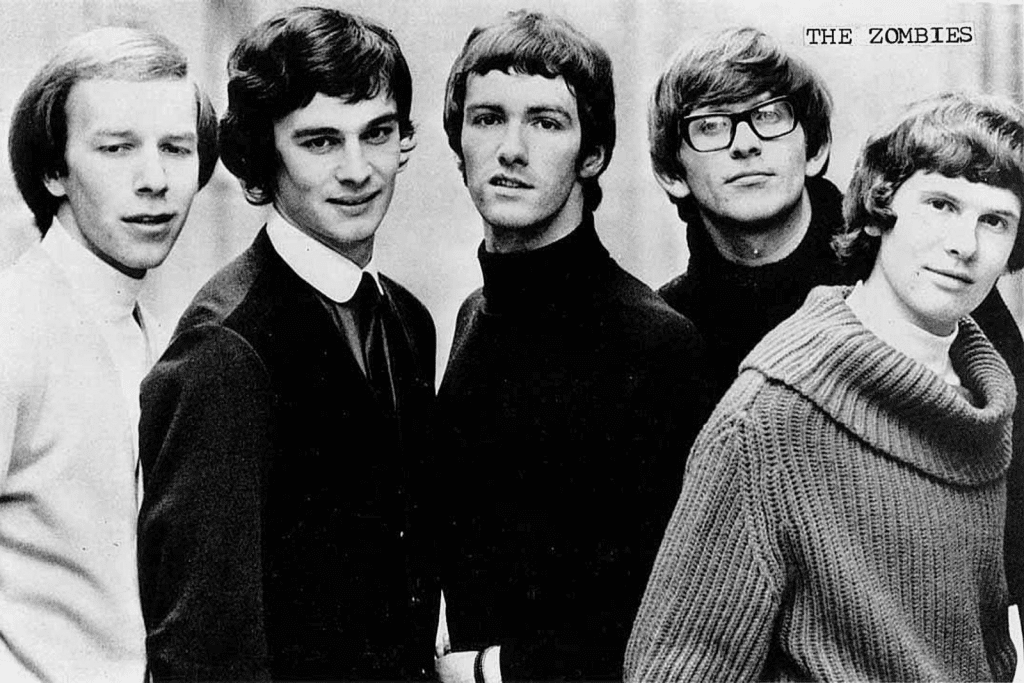
The Zombies had already earned attention during the British Invasion with earlier hits such as “She’s Not There” and “Tell Her No.” Formed in St Albans, England, in 1961, the band had a sound that was more refined and understated than many of their contemporaries. While other groups leaned heavily into blues-inspired energy, The Zombies brought jazz-influenced chords, elegant melodies, and polished arrangements into pop music.
Two members were especially important to the group’s creative identity: keyboardist and songwriter Rod Argent and lead vocalist Colin Blunstone. Argent’s musical sophistication gave the band its unique harmonic style, while Blunstone’s soft, breathy voice created an almost dreamlike quality. Together, they helped shape a sound that was smooth, haunting, and instantly recognizable.
“Time of the Season” was written by Rod Argent during the sessions for Odessey and Oracle, the band’s second and final studio album. Ironically, the song was created during a difficult period for The Zombies. The group was dealing with financial pressure, industry frustration, and internal exhaustion. In a way, the song emerged from uncertainty—but that tension may be part of what makes it feel so alive.
Recorded at Abbey Road Studios in 1967, the track captured the experimental spirit of the era without losing its simplicity. Its famous organ riff, built around a Vox Continental keyboard, gives the song a hypnotic pulse. The rhythm feels relaxed but irresistible, moving with a quiet confidence that still sounds fresh today. Blunstone’s vocal performance is equally essential. Rather than overpowering the listener, his voice draws them in, making the song feel intimate, mysterious, and almost conversational.
Although “Time of the Season” is often connected to psychedelic rock, it does not sound like a typical psychedelic anthem. There are no heavy walls of distortion or chaotic instrumental breaks. Instead, the song feels controlled, elegant, and deeply atmospheric. It captures the softer, more introspective side of the 1960s—the side associated with reflection, curiosity, identity, and emotional change.
At first, the song did not become an immediate global sensation. It received limited attention in the United Kingdom and took time to gain momentum in the United States. By the time it finally climbed the American charts in 1969, The Zombies had already disbanded. That twist makes the song’s success even more remarkable. The band’s biggest American hit arrived only after the group had already gone separate ways.
Eventually, “Time of the Season” reached the Top 10 in the United States and became one of The Zombies’ signature recordings. Its success also brought renewed attention to Odessey and Oracle, an album that had been overlooked when it first appeared. Over time, critics and fans began to recognize the record as one of the most beautiful and innovative releases of the psychedelic period.
Part of the song’s lasting power comes from its restraint. It does not chase drama; it creates mood. It does not shout for attention; it lingers in the mind. That subtlety has helped it age beautifully. In the same way that smart personal finance depends on patience and long-term value, the song’s reputation grew slowly but steadily. It became a cultural investment that continued to gain appreciation with each passing decade.
The legacy of “Time of the Season” can also be heard in later generations of artists. Its dreamy atmosphere, memorable bass line, and syncopated groove have influenced musicians across classic rock, indie, psychedelic pop, and even hip-hop. The song has appeared in films, television shows, documentaries, and playlists designed to evoke nostalgia, mystery, and the feeling of the late 1960s. Its sound has become a kind of musical shorthand for a time when the world seemed to be standing on the edge of change.
The personal stories behind the band also add to the song’s mythology. After The Zombies broke up, Colin Blunstone stepped away from music for a time and worked in insurance before returning to recording. Rod Argent went on to form the band Argent and found further success with songs such as “Hold Your Head Up.” Like many artists navigating the unpredictable business side of music, the members of The Zombies had to rebuild their careers after a moment of delayed recognition.
That delayed success makes “Time of the Season” a fascinating case study in music history. Sometimes a song does not reach its audience immediately. Timing, radio support, cultural shifts, and public taste can all affect whether a piece of art succeeds. Much like real estate, banking, cryptocurrency, or other financial markets, the music industry often rewards value only after time reveals it. “Time of the Season” is proof that some creations need the right moment to bloom.
In 2019, The Zombies were inducted into the Rock and Roll Hall of Fame, a recognition that confirmed their lasting impact on popular music. For many fans, “Time of the Season” remains the song that best represents their genius. It is elegant, strange, seductive, and unforgettable.
More than 55 years later, the track still feels alive. It carries the mood of the 1960s while remaining strangely timeless. For a band that had nearly disappeared when the song became a hit, “Time of the Season” became a musical resurrection. It preserved The Zombies’ legacy and gave the world one of the most hypnotic songs of its era.
Ultimately, “Time of the Season” is more than a classic rock hit. It is a reminder that subtle music can leave a powerful mark. Its groove still feels magnetic, its atmosphere still feels mysterious, and its emotional pull still reaches listeners across generations. That is why so many fans continue to call it not just a great song, but a true masterpiece.


