When The Osmonds released “Down by the Lazy River” in January 1972, many listeners were surprised by its force.
The group had already become known as a clean-cut family act with bright harmonies and television-friendly charm. But this song sounded different. It was louder, rougher, more urgent, and packed with an energy that pushed The Osmonds far beyond the soft pop image many people associated with them.
From the first beat, the track feels restless.
The guitars bite harder.
The vocals come with attitude.
The rhythm moves quickly, pulling listeners into a sound that was much closer to rock-pop than the polished family entertainment people expected.
That shift helped make “Down by the Lazy River” one of the group’s most memorable songs and one of the standout high-energy tracks of the early 1970s.
Even decades later, fans still talk about it as proof that The Osmonds were more versatile than many critics gave them credit for.
The Osmonds were ready to evolve

The Osmonds began as a family group from Ogden, Utah.
Brothers Alan, Wayne, Merrill, and Jay first gained attention as a barbershop-style act before becoming familiar faces on The Andy Williams Show during the 1960s. Their clean harmonies and wholesome image made them popular with television audiences.
But by the late 1960s and early 1970s, music was changing fast.
Rock was becoming heavier. Pop was becoming more adventurous. Young listeners wanted excitement, independence, and a stronger beat. Groups like The Jackson 5 showed that family acts could be polished, energetic, and commercially powerful. At the same time, rock bands were pushing radio toward a harder sound.
The Osmonds understood they needed to grow.
They did not want to be seen only as a cute family act or as background figures to Donny Osmond’s rising teen-idol popularity. They wanted to prove they could write, play, and perform with genuine power.
“Down by the Lazy River” became one of the clearest signs of that ambition.
A song about escape and freedom
The title may sound relaxed, but the song itself is anything but sleepy.
“Down by the Lazy River” carries a message of escape — a call to step away from pressure, worries, and expectations. The lyrics invite listeners to imagine a place where they can let go, feel free, and enjoy life without being controlled by the noise around them.
That theme fit the early 1970s perfectly.
The world felt tense. Young people were dealing with cultural conflict, political unrest, and social change. Music often became a release valve — a place where listeners could feel energy, freedom, and emotional relief.
The Osmonds delivered that feeling through a track that sounded almost rebellious compared with their earlier material.
It was not a quiet escape.
It was an explosion.
Merrill Osmond’s vocal power
One of the strongest parts of “Down by the Lazy River” is Merrill Osmond’s lead vocal.
He sings with an edge that surprises anyone who only knows The Osmonds from their softer pop moments. His voice carries grit, urgency, and command, pushing the song forward with confidence.
The group’s harmonies remain important, but they are used differently here.
Instead of sounding purely sweet, the harmonies add force. The call-and-response sections make the song feel almost like a live performance, as if the band is pulling the audience into the chorus with them.
That vocal arrangement gives the track a stadium-like energy.
It sounds big.
It sounds bold.
And it makes clear that The Osmonds were not afraid to challenge expectations.
A harder sound than fans expected
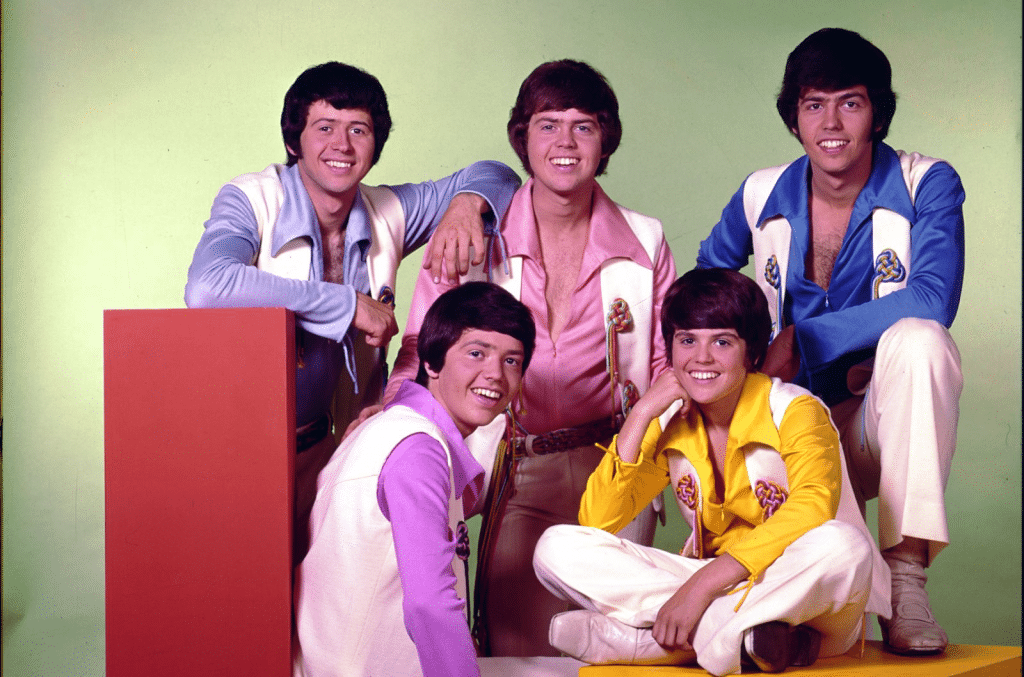
Production-wise, “Down by the Lazy River” marked a major step forward for the group.
The song leaned into electric guitars, aggressive drumming, and a driving arrangement that gave it a rock edge. It still had pop structure and family-band harmonies, but the overall sound was tougher than much of their earlier work.
That combination helped the track appeal to a wider audience.
Younger fans loved the energy.
Parents could still recognize the clean musicianship and strong melody.
Radio programmers found a song that fit pop formats while carrying enough punch to stand out.
For The Osmonds, this balance was important. They were not abandoning who they were. They were expanding what people thought they could be.
That is why the song became such an important turning point in their career.
A major chart success
“Down by the Lazy River” became a significant hit on both sides of the Atlantic.
It reached No. 4 on the Billboard Hot 100 in the United States and climbed to No. 3 on the UK Singles Chart. That kind of success helped confirm that The Osmonds were not just a passing television act. They were serious contenders in the pop and rock marketplace.
The song also helped open doors for bigger tours, broader recognition, and a stronger identity as a band.
In the entertainment business, chart performance matters. Radio play, record sales, touring demand, music publishing, and brand momentum can shape a group’s future. For The Osmonds, this single gave them credibility at a crucial time.
It proved they could compete in a changing musical landscape.
It also showed that a family group with a wholesome reputation could still deliver a track with real fire.
Why the song stood out in 1972
The early 1970s were packed with memorable music.
Rock bands were getting louder. Singer-songwriters were becoming more introspective. Soul and funk were shaping rhythm-driven hits. Pop acts were fighting to stay relevant as audiences became more demanding.
In that environment, “Down by the Lazy River” stood out because it blended several worlds.
It had the polish of pop.
The vocal discipline of a family harmony group.
The excitement of rock.
The simplicity of a catchy chorus.
That mix made it accessible without making it boring.
The song was not trying to be dark or complicated. It was built for energy, movement, and replay value. That is part of why people still remember it so fondly.
It captured a moment when pop music could be fun, loud, and confident all at once.
The Osmonds broke out of a narrow image
Before “Down by the Lazy River,” some critics saw The Osmonds as too clean, too safe, or too connected to television entertainment to be taken seriously as a rock-influenced act.
This song challenged that assumption.
It did not erase their family-friendly identity, but it added a new dimension. Suddenly, listeners could hear that The Osmonds had musical muscle. They could handle harder arrangements. They could bring intensity. They could write and perform songs that did not sound like simple bubblegum pop.
That mattered.
Artists often struggle when the public puts them in a box. The Osmonds used this track to push against that box and prove they had more range than many people expected.
The song’s lasting influence
Over time, “Down by the Lazy River” became one of the defining songs of The Osmonds’ catalog.
It still appears on classic hits playlists, oldies radio, and 1970s music compilations. Fans often point to it as one of the group’s most exciting recordings, a moment when their sound had real urgency and personality.
The track also helped show that family groups and teen-oriented acts could successfully move into more mature or rock-driven territory without losing their audience.
That idea would continue in later decades with other groups who balanced pop appeal with stronger instrumentation and more assertive songwriting.
The Osmonds were not the only artists to attempt that transition, but “Down by the Lazy River” remains one of the clearest examples from the early 1970s.
Why people still talk about it
Even now, the song has a spark that makes it easy to revisit.
It is not just nostalgia.
The energy still works.
The rhythm still moves.
The vocals still sound committed.
The chorus still sticks.
There is something refreshing about hearing a group known for polish cut loose with that much force. It feels like a band proving itself in real time.
That is why the song remains memorable more than fifty years after its release. It captures a moment when The Osmonds stepped out of expectations and delivered something bold.
Final thoughts
Released in 1972, “Down by the Lazy River” became one of The Osmonds’ most unforgettable songs.
It was high-energy, confident, and surprisingly edgy for a group many people had once considered purely wholesome pop. With strong vocals, driving guitars, tight harmonies, and a message of escape, the song helped redefine what The Osmonds could be.
It showed they could rock.
It showed they could evolve.
And it gave the early 1970s one of its most exciting pop-rock hits.
More than five decades later, “Down by the Lazy River” still feels alive — a reminder that sometimes the best way for an artist to grow is to surprise everyone.


