Some songs do not need five minutes to become unforgettable.
Little Peggy March’s “I Will Follow Him” runs for just over two and a half minutes, but from the moment it begins, it leaves a mark. The melody is bright, direct, and instantly recognizable. The rhythm moves with confidence, and the vocal performance carries a surprising strength that still catches listeners off guard decades later.
Released in 1963, the song became one of the defining pop records of its era. Peggy March was still a teenager when she recorded it, yet her voice sounded remarkably assured. There was no hesitation in her delivery. No uncertainty. She sang with the kind of clarity and power that made people stop and listen.
That youthful voice, paired with the song’s sweeping arrangement, helped turn “I Will Follow Him” into a timeless treasure.
Even today, it remains the kind of track many listeners can play again and again without growing tired of it.
A teenage voice that made history
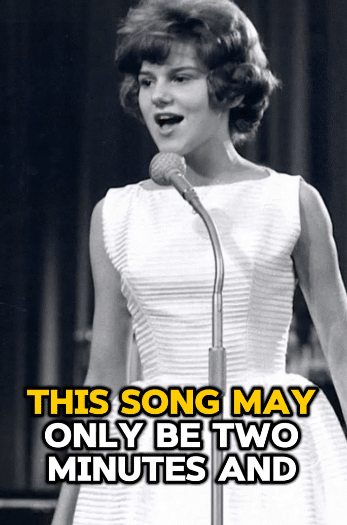
When “I Will Follow Him” reached No. 1 on the Billboard Hot 100, Peggy March made music history as the youngest female artist at the time to achieve that milestone.
That achievement alone would be enough to make the song important.
But its lasting appeal goes far beyond chart success.
Many songs reach No. 1 and then slowly fade from memory. “I Will Follow Him” survived because it had something special: a combination of innocence, confidence, melody, and emotional force.
Peggy March’s performance is one of the main reasons the song still works. She was young, but she did not sound overwhelmed by the music around her. Her voice rose above the arrangement with energy and conviction.
There is a purity in the recording that feels tied to the early 1960s, yet it never sounds weak or fragile. Instead, it carries a boldness that makes the song feel alive.
That is why people are often surprised when they learn how young she was.
Her voice had rare power.
Why the melody still stays in your mind
One of the great strengths of “I Will Follow Him” is its melody.
It is simple enough to remember after one listen, but strong enough to stay with you for years. The song builds gradually, creating a feeling of motion and emotional certainty. Each section seems to push forward naturally, leading into a chorus that feels almost impossible not to sing along with.
The rhythm gives the track its sense of determination.
The song is not slow or overly dramatic. It moves with purpose, matching the meaning of the lyrics. It is about devotion, commitment, and following someone without doubt. That theme could have sounded overly sentimental in the wrong hands, but Peggy March’s delivery gives it sincerity.
The arrangement also plays a major role.
The harmonies, orchestration, and steady beat create a sound that feels both polished and full of life. Nothing feels wasted. Every part of the song supports the central emotion.
That is why the track feels bigger than its short running time.
It ends quickly, but the melody continues echoing in the mind.
A song with international roots
Part of what made “I Will Follow Him” stand out was its musical background.
Before becoming Peggy March’s English-language hit, the melody had roots in European music. That gave it a slightly different flavor from many American pop songs of the early 1960s.
It sounded familiar enough for radio audiences to embrace, but different enough to feel fresh.
That blend helped the song cut through a crowded pop landscape. At the time, the music world was changing quickly. New voices, new styles, and new sounds were beginning to shape the decade. “I Will Follow Him” arrived with a clean, confident sound that immediately captured attention.
It was catchy, emotional, and easy to remember.
That combination made it perfect for radio.
The meaning behind the song
At its core, “I Will Follow Him” is a song about devotion.
The lyrics describe a love so strong that nothing can stand in its way. The singer is certain, committed, and completely focused on the person she loves.
There is an innocence in the message, but it does not feel empty.
Instead, the song captures the emotional intensity of young love — the feeling that one person can become the center of the world. That kind of certainty may seem simple, but it is also part of what makes the song powerful.
Listeners do not need a complicated story to understand it.
The emotion is immediate.
The melody carries the feeling before the words are even fully processed.
That is the secret of many great pop songs. They do not explain too much. They give listeners a feeling and let that feeling take over.
“I Will Follow Him” does exactly that.
A classic that found new life years later
Although the original 1963 recording remains the most iconic version, “I Will Follow Him” reached new audiences decades later.
One of its most famous revivals came through the film Sister Act, where the song was transformed into an energetic gospel-inspired performance. That version introduced the melody to younger generations and proved how adaptable the song really was.
The fact that it could work in a completely different musical setting shows the strength of the composition.
A weaker song might have belonged only to its original era. But “I Will Follow Him” could be reimagined and still feel joyful, powerful, and memorable.
That kind of flexibility is rare.
It is one reason the song continues to appear in nostalgic playlists, films, commercials, and classic music collections.
Why the original still matters
Even with later versions and revivals, Peggy March’s original recording has a charm that cannot be replaced.
There is something special about hearing the song as it first captured the public’s attention. The production reflects its time, but in the best way. It has the brightness, clarity, and optimism of early 1960s pop.
The original does not sound overworked.
It does not need modern effects or heavy production.
It simply works.
That is part of its beauty.
The song reminds us that great music does not always need complexity. Sometimes all it takes is a strong melody, a memorable rhythm, sincere lyrics, and a voice capable of carrying the emotion.
Peggy March had that voice.
And “I Will Follow Him” gave her the perfect song to show it.
A reminder of music’s lasting power
More than sixty years after its release, “I Will Follow Him” still feels special.
It may come from another era, but its emotional appeal remains easy to understand. People still respond to confidence. They still respond to melody. They still respond to songs that make them feel something quickly and clearly.
In a modern entertainment world shaped by streaming platforms, music rights, digital promotion, viral videos, and changing industry trends, songs like this remind us why certain classics survive.
They do not endure because of marketing alone.
They endure because people keep returning to them.
They become part of family memories, old radio moments, movie scenes, road trips, and playlists passed between generations.
That kind of legacy is more valuable than numbers alone.
Final thoughts
“I Will Follow Him” is short, but it feels complete.
In just 2 minutes and 33 seconds, it delivers melody, emotion, rhythm, harmony, and a vocal performance that still surprises listeners today.
Little Peggy March was just a teenager when she recorded it, but her voice carried a confidence far beyond her years. That rare combination of youth and power helped create one of the most memorable pop songs of the 1960s.
The track remains a timeless treasure because it does not try to be complicated.
It simply moves.
It lifts.
It stays.
And long after the final note fades, the song continues playing somewhere in the memory — proof that sometimes the shortest classics leave the deepest mark.


