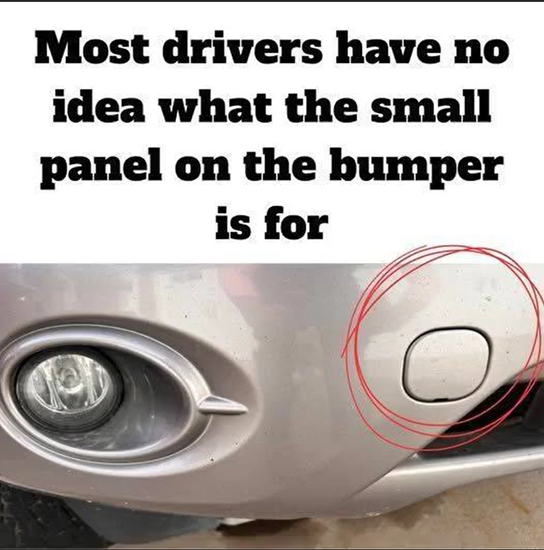
Have you ever noticed a small square or rectangular panel on your car’s front or rear bumper?
Most drivers see it and assume it is just part of the vehicle’s design. It blends into the bumper, usually matches the car’s paint color, and does not appear important at first glance. Some people think it is a sensor cover. Others believe it is simply a cosmetic detail.
But that tiny panel actually hides something useful.
Behind it is often the tow hook socket — a built-in attachment point designed to help your vehicle get pulled or towed safely when needed.
It may look like a minor feature, but during a roadside emergency, it can make a major difference.
What is a tow hook socket?
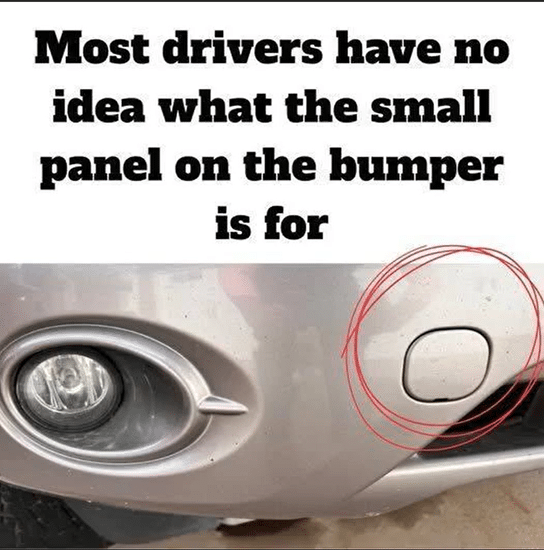
A tow hook socket is a reinforced threaded opening connected to the vehicle’s structure.
When your car needs to be pulled onto a tow truck, moved out of mud, or recovered from a difficult position, the tow hook socket provides a safe place to attach the towing hook.
This matters because cars are not meant to be pulled from random parts.
Tying a rope or chain around a bumper, axle, suspension piece, or plastic trim can cause expensive damage. Modern bumpers often contain sensors, wiring, plastic covers, and safety components that can break easily if used incorrectly.
The tow hook socket gives drivers and towing professionals a proper attachment point.
It is small, hidden, and easy to miss — but it is there for a reason.
Why automakers hide it behind a panel
Car manufacturers cover the tow hook socket with a small removable panel for three main reasons: appearance, protection, and convenience.
First, the panel keeps the bumper looking smooth. Instead of leaving an open hole visible on the front or rear of the car, automakers use a color-matched cover that blends into the design.
Second, the cover helps protect the socket from dirt, water, salt, and road debris. Without the panel, the socket could become clogged or corroded over time, making it harder to use during an emergency.
Third, the panel allows quick access when needed. In most vehicles, it can be removed carefully by hand or with a small flat tool. Once removed, the threaded socket is exposed and ready for the tow hook.
It is a simple example of practical automotive engineering: a safety feature hidden in plain sight.
Where is the tow hook stored?
The tow hook itself is usually not already attached to the bumper.
In many cars, it is stored in the trunk, cargo area, or tool kit. You may find it near the spare tire, jack, roadside emergency kit, or under a removable cargo floor.
It typically looks like a strong metal loop or hook with a threaded end.
That threaded end screws into the socket behind the bumper panel. Once installed properly, it becomes the secure attachment point for a tow rope, tow strap, or tow truck equipment.
Because every vehicle is different, it is a good idea to check your owner’s manual before you actually need it. The manual will show where the tow hook is stored, where the socket is located, and how the manufacturer recommends using it.
Many drivers only discover this information after they are already stranded, stuck, or waiting for roadside assistance.
How to use the tow hook correctly
Using a tow hook is usually simple, but it should be done carefully.
First, locate the small bumper panel. It may be on the front bumper, rear bumper, or both. Look for a square or rectangular outline.
Next, gently remove the cover. Be careful not to scratch the paint or snap the plastic tabs. Some covers pop out with light pressure, while others may need a small tool.
Then find the tow hook in your vehicle’s tool kit and screw it into the socket. Turn it clockwise until it is secure. It should be tight enough to hold safely, but you should avoid forcing it so hard that you damage the threads.
After that, attach the tow line or recovery strap according to proper towing procedures.
If a professional tow truck driver is helping, let them handle the connection. They will know how to attach the equipment safely and avoid damaging your vehicle.
Why you should not tow from the bumper
One of the biggest mistakes drivers make is trying to pull a vehicle from the wrong location.
A plastic bumper cover may look strong, but it is not designed to handle towing force. Pulling from the bumper can crack the cover, bend brackets, damage sensors, or even create safety issues that lead to costly repairs.
The same applies to suspension parts or other components not designed for towing.
A wrong attachment point can turn a simple recovery into an expensive insurance claim, repair bill, or roadside safety hazard.
The tow hook socket exists to prevent that.
It gives you a manufacturer-approved location that can handle the pulling force much better than cosmetic or fragile parts of the vehicle.
When might you need it?
You may never think about the tow hook socket until the day you need it.
Common situations include:
Getting stuck in mud, snow, or sand.
Sliding into a ditch.
Needing to pull the car onto a flatbed tow truck.
Moving a disabled vehicle a short distance.
Recovering a car after a minor roadside incident.
Transporting certain vehicles safely.
In these moments, the tow hook can save time, reduce damage, and help roadside assistance work more efficiently.
For drivers who care about personal finance, auto insurance costs, and avoiding unnecessary repair bills, knowing how this small feature works can be surprisingly valuable. One wrong towing attempt can damage the bumper or frame and cost far more than people expect.
Tow hooks and off-road driving
For off-road drivers, tow points are even more important.
Vehicles traveling through mud, sand, snow, or rocky terrain can easily get stuck. In those situations, safe recovery points are essential. Off-road vehicles may have stronger tow hooks, D-ring mounts, or recovery points designed for heavier pulling forces.
However, even then, proper use matters.
Recovery straps should be rated for the vehicle’s weight. The pulling angle should be controlled. People should stand clear of the line in case equipment fails. Sudden jerks or unsafe attachments can be dangerous.
A tow hook is useful, but it is not magic.
It must be used correctly.
Important safety tips
Before using a tow hook, always check your vehicle’s manual.
Some tow hooks are intended for low-speed recovery or loading onto a tow truck, not for long-distance towing. Others may have specific weight limits or installation instructions.
Keep the bumper cover in place when the socket is not being used. This helps protect the socket from corrosion and debris.
Inspect the tow hook occasionally. If it is rusty, cracked, bent, or missing, replace it before an emergency happens.
Do not assume every car has the same setup. Some vehicles have a front tow hook socket only. Some have rear access as well. Some may use different recovery points entirely.
When in doubt, call a professional towing service.
Paying for proper roadside assistance is almost always cheaper than damaging your car by guessing.
A small detail with a big purpose
That little bumper panel may seem unimportant, but it is actually a hidden access point to one of your vehicle’s most practical emergency features.
It protects the tow hook socket, keeps your car looking clean, and allows safe towing when needed.
Many drivers spend time learning about fuel economy, auto loans, insurance coverage, maintenance schedules, and tire pressure, but overlook simple features built into the car itself. The tow hook socket is one of those features worth understanding before trouble happens.
A few minutes of awareness can save stress, money, and damage later.
Final thoughts
The next time you walk around your car, look closely at the bumper.
That small square or rectangular cover is not just decoration.
In many vehicles, it hides the tow hook socket — a reinforced attachment point designed to help your car be moved safely during breakdowns, recovery situations, or roadside emergencies.
It is one of those features you may never need.
But if the day comes when your car is stuck, disabled, or waiting for a tow truck, you will be glad it is there.
Sometimes the most useful parts of a car are the ones most drivers never notice