SPAM is one of the most recognizable canned foods in the world.
Some people love it fried with eggs for breakfast. Others remember it from childhood meals, military stories, emergency food shelves, or quirky recipes passed around online. For many families, SPAM is more than a canned meat product. It is a symbol of convenience, survival, nostalgia, and creativity in the kitchen.
First introduced by Hormel Foods in 1937, SPAM arrived during a difficult period in American history. The country was still recovering from the Great Depression, and many families needed affordable, filling food that could last a long time without refrigeration.
SPAM offered exactly that.
It was inexpensive, shelf-stable, easy to prepare, and packed with protein. Over time, it became a household staple, a wartime ration, and eventually a global food icon.
But what is SPAM actually made of?
And why has this simple canned product remained popular for nearly a century?
The origin of SPAM
Hormel Foods, founded in Austin, Minnesota, in 1891, was already a major name in meat processing before SPAM was created.
During the 1930s, food companies were looking for ways to make meat more affordable and practical for everyday families. Fresh meat could be expensive and difficult to store, especially before modern refrigeration became common in every home.
Hormel developed SPAM as a convenient canned pork product that could be stored for long periods and prepared quickly.
It officially launched in 1937.
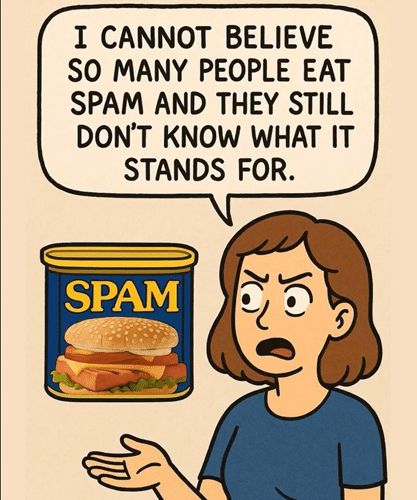
The name “SPAM” has inspired plenty of theories over the years. Some people claim it stands for “Specially Processed American Meat.” Others say it means “Shoulder of Pork and Ham.” However, the most commonly accepted explanation is that the name came from a combination of “spiced” and “ham.”
According to popular accounts, the name was suggested during a company naming contest and quickly became one of the most memorable brand names in food history.
Short, catchy, and easy to recognize, SPAM was built for the grocery shelf before modern branding became as competitive as it is today.
What is SPAM made of?
Despite all the mystery and jokes around it, SPAM has a fairly simple ingredient list.
Classic SPAM is made with pork, water, salt, potato starch, sugar, and sodium nitrite.
The pork provides the main protein. Salt and sugar contribute flavor. Potato starch helps bind the meat and gives the product its firm texture. Sodium nitrite helps preserve the meat and maintain its familiar color.
The mixture is prepared, sealed into cans, cooked, cooled, and labeled for distribution.
That canning process is one of the reasons SPAM became so successful. Because it does not require refrigeration before opening, it can be stored in pantries, shipped long distances, and used in places where fresh meat is difficult to access.
For households focused on budgeting, emergency supplies, personal finance, and saving money on groceries, shelf-stable foods like SPAM have long been practical options.
SPAM during World War II
SPAM became especially important during World War II.
Because it was durable, portable, and easy to ship, it was widely used as a military food supply. Soldiers needed meals that could survive long journeys, rough handling, and difficult conditions. Fresh meat was not always available, and refrigeration was limited.
SPAM helped fill that gap.
Millions of cans were sent to troops overseas, where it became a familiar part of military meals. For many soldiers, SPAM was not glamorous, but it was dependable. It provided calories and protein when food options were limited.
Civilians also relied on SPAM during wartime rationing. Fresh meat could be expensive, restricted, or hard to find, so canned meat became an important part of many household meals.
That era helped SPAM become associated with resilience, practicality, and survival.
Even after the war ended, many families continued buying it because it was affordable, convenient, and familiar.
How SPAM became popular around the world
One of the most interesting things about SPAM is how it became part of different food cultures around the world.
In Hawaii, SPAM is especially beloved. One of the most famous dishes is SPAM musubi, made with a slice of fried SPAM placed on rice and wrapped with seaweed. It is sold in convenience stores, restaurants, lunch counters, and homes across the islands.
In South Korea, SPAM became connected to postwar food culture and remains popular today. It is often used in budae jjigae, also known as army stew, a dish made with ingredients such as kimchi, noodles, vegetables, and processed meats. SPAM gift sets are also common during holidays.
In the Philippines, SPAM is often served fried with rice and eggs for breakfast. It is convenient, flavorful, and easy to prepare, making it a familiar comfort food for many households.
These global adaptations show why SPAM has lasted so long. It is simple enough to fit into many recipes, but distinctive enough to remain recognizable.
It can be sliced, fried, diced, grilled, added to rice, mixed into noodles, served in sandwiches, or used in creative fusion dishes.
Why people still buy SPAM today
SPAM has stayed popular because it offers three things many consumers value: convenience, affordability, and long shelf life.
In a busy household, opening a can and frying a few slices can create a quick meal in minutes. For people living in areas where fresh food is expensive or difficult to access, shelf-stable protein can be useful. For families preparing emergency supplies, canned goods remain practical because they can last for a long time when stored properly.
SPAM also benefits from nostalgia.
Many people grew up eating it with rice, eggs, noodles, sandwiches, or family recipes. The taste connects them to childhood, home, military memories, or cultural traditions.
At the same time, SPAM has become almost playful in modern food culture. Chefs and home cooks use it in unexpected ways, from fried rice and tacos to sliders and sushi-inspired dishes.
It is both ordinary and iconic.
That combination is rare.
SPAM in popular culture
SPAM has gone far beyond the pantry.
It has inspired festivals, cookbooks, merchandise, museum exhibits, and online food trends. The SPAM Jam Festival in Waikiki, Hawaii, celebrates creative dishes made with the product and draws large crowds of visitors and locals.
The word “spam” also became part of internet language, meaning unwanted or repetitive messages. That usage was famously inspired by a Monty Python sketch where the word “SPAM” was repeated again and again.
Few food products have had that kind of cultural reach.
Even people who have never eaten SPAM usually recognize the name.
That brand recognition has helped it survive changing food trends, including the rise of organic foods, fresh meal kits, plant-based diets, and health-conscious grocery shopping.
Is SPAM healthy?
SPAM can provide protein, but it is also high in sodium and fat compared with many fresh foods.
For that reason, it is best eaten in moderation as part of a balanced diet. People who are watching sodium intake, blood pressure, heart health, or processed food consumption may want to limit how often they eat it.
Still, SPAM’s role depends on context.
For some families, it is a quick comfort food. For others, it is part of cultural cooking. For emergency preparedness, it can be a useful pantry item. Like many processed foods, the key is understanding what it offers and how it fits into your overall diet.
It is not a mystery food.
It is a processed canned pork product with a long history and a loyal following.
Why SPAM still matters
SPAM’s story is about more than canned meat.
It reflects changing food habits, wartime necessity, global migration, family tradition, marketing, and innovation in food preservation. It shows how a product created for practicality can become part of culture.
Nearly a century after its launch, SPAM is still found in kitchens around the world. Some people love it. Some joke about it. Some are curious about it. But very few people are completely unaware of it.
That is what makes SPAM unusual.
It began as an affordable canned meat during a difficult economic era. It became a military staple during war. It entered global cuisine through history, adaptation, and creativity. Today, it remains a familiar product that continues to spark conversation.
Whether served with eggs, rice, noodles, seaweed, or in a creative modern recipe, SPAM has earned its place in food history.
Love it or not, that little blue-and-yellow can is one of the most enduring food icons ever made.