Buying a lake home often comes with surprises. Some are expected, like learning how to maintain a dock, manage shoreline landscaping, or budget for seasonal repairs. Others are more unusual—like looking into the water beside your pier and spotting a strange man-made object resting below the surface.
That was the situation one new lake homeowner described after discovering three unusual structures in the water near the pier. Each one appeared to be made from a crisscross stack of corrugated pipes wrapped in plastic netting and held down with bricks. At first glance, the objects looked confusing. They were clearly placed there on purpose, but their function was not obvious.
Were they traps? Construction materials? Something left behind by a previous owner?
The likely answer is much more practical. These underwater structures are commonly known as fish cribs, fish attractors, or artificial fish habitats. They are designed to give fish a safe place to hide, feed, and grow—especially in areas where natural underwater cover is limited.
What Is a Fish Crib?
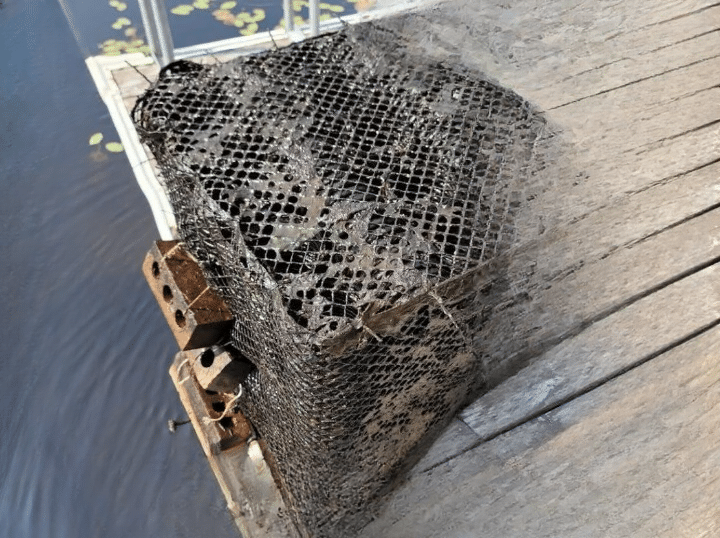
A fish crib is a man-made structure placed underwater to create shelter for fish and other aquatic life. It is meant to imitate the natural protection that fish would normally find around fallen trees, submerged branches, rocks, aquatic plants, or other underwater features.
In many lakes, natural cover is essential for young fish. Small fish are vulnerable to larger predators, and without places to hide, many do not survive long enough to mature. A fish crib provides a protected area where they can escape danger, find food, and grow in a safer environment.
Fish cribs can be made from many different materials. Some are built from logs, brush, rocks, or wooden pallets. Others use PVC pipe, corrugated tubing, recycled plastic, concrete blocks, or specially designed artificial reef materials. The exact design often depends on the lake, local regulations, available materials, and the goals of the project.
The object described near the pier—a stack of corrugated pipes wrapped in netting and weighted with bricks—fits the general idea of an artificial fish habitat. The pipes create openings and hiding spaces, the netting may help hold the structure together, and the bricks keep it from floating or shifting.
Why Would Someone Put This Near a Pier?
Placing a fish habitat near a pier can serve several purposes.
First, docks and piers often already attract fish because they provide shade and structure. Adding a fish crib nearby can make the area even more useful for aquatic life by creating extra shelter beneath the water.
Second, fish habitats can improve recreational fishing. When small fish gather around a structure, larger fish may also visit the area in search of food. This can make the spot more active and appealing for anglers.
Third, these structures can support the health of the lake ecosystem. A well-designed underwater habitat provides surfaces where algae, insects, and small organisms can grow. Those organisms become part of the food chain, supporting fish and other wildlife.
For a lake homeowner, finding one of these structures may seem strange at first, but it could actually be a sign that a previous owner, local conservation group, or fisheries program was trying to improve the underwater habitat.
Why Fish Need Underwater Shelter
A healthy lake is more than open water. Beneath the surface, fish depend on structure.
Natural lakes often contain fallen trees, submerged vegetation, rock piles, stumps, and uneven bottom features. These areas provide protection, feeding opportunities, and breeding support. But over time, natural habitat can disappear.
Shoreline development, erosion control, dredging, boat traffic, and property improvements can reduce the amount of natural cover available. When lakefront properties are cleared or maintained too aggressively, the underwater environment may become too open for young fish to thrive.
That is where artificial habitats can help.
By adding structure back into the water, fish cribs create small protective zones that support aquatic life. They are especially useful in lakes where the bottom is mostly sand, mud, or flat open space.
A Benefit for Homeowners and the Environment
For people who own lakefront property, healthy water matters. A balanced lake ecosystem can improve the overall outdoor experience, support fishing, and contribute to the long-term appeal of the property.
From a real estate perspective, lake homes are often valued not only for the house itself but also for the quality of the water, the shoreline, and recreational opportunities. Good habitat management can be part of responsible homeownership, much like maintaining a dock, reviewing property insurance, budgeting for repairs, or planning long-term personal finance decisions related to the home.
Of course, lake improvements should be handled carefully. In many areas, adding or removing underwater structures may require permission from local environmental agencies, lake associations, or property authorities. Before moving or disposing of a fish crib, a homeowner should check local rules and confirm whether the structure was placed legally or as part of a habitat program.
Why the Pipes and Netting?
The design may look unusual, but each part likely has a purpose.
Corrugated pipes create hollow spaces where small fish can swim through and hide. The ridges and openings increase surface area, which can attract algae and small aquatic organisms. Over time, this makes the structure more useful as a feeding area.
The plastic netting may help hold the pipes in place and create additional texture. It can also make the habitat more complex, giving fish more places to shelter.
The bricks are likely used as weights. Without them, lightweight plastic materials could float away, drift into boat lanes, or wash against the shoreline. Weighing the structure down keeps it stable on the lake bottom.
Together, these materials create a simple but effective artificial habitat.
Are Fish Cribs Safe?
When properly designed and placed, fish cribs can be safe and beneficial. However, placement matters.
They should not interfere with swimming areas, boat traffic, propellers, or dock maintenance. They should also be made from materials that are safe for aquatic environments. Items that contain chemicals, sharp metal, loose plastic debris, or materials that break down into harmful waste should not be used.
If a homeowner finds an unknown structure near a pier, it is wise to inspect it carefully from a safe distance and avoid pulling it apart without understanding its purpose. Contacting a lake association, local wildlife agency, or previous property owner can often provide answers.
A Hidden Tool for Conservation
Fish cribs are easy to overlook because most of their work happens out of sight. A person standing on the dock may see only a strange bundle beneath the water, but for fish, that structure can function like a small underwater neighborhood.
Young fish can hide inside it. Insects and small organisms can gather around it. Larger fish may patrol nearby. Over time, the structure becomes part of the lake’s living system.
These habitats are a reminder that conservation does not always require massive projects or expensive technology. Sometimes, a carefully placed structure beneath the water can help restore balance and support wildlife for years.
The Mystery Solved
So, what is the crisscross stack of corrugated pipes wrapped in netting and weighted down with bricks?
Most likely, it is an artificial fish habitat or fish crib.
It may look odd from above, but its purpose is meaningful. It helps provide shelter, supports the food chain, attracts fish, and strengthens the underwater ecosystem near the pier.
For a new lake homeowner, discovering something like this can be surprising. But instead of being a problem, it may be a quiet sign that someone cared about the lake’s health long before the home changed hands.
Beneath the calm surface, those strange-looking structures are helping fish populations thrive—one hidden shelter at a time.


