An Alabama firefighter’s dismissal has sparked widespread debate about workplace policies, personal expression, and whether grooming rules are always applied fairly.
Kay’Ana Adams, a firefighter in Mobile, Alabama, was reportedly fired just nine months into her role after officials raised concerns about a tattoo on the back of her head.
The detail that drew attention was not simply the tattoo itself, but where it was located—and whether it violated department policy.
Why the Tattoo Became an Issue
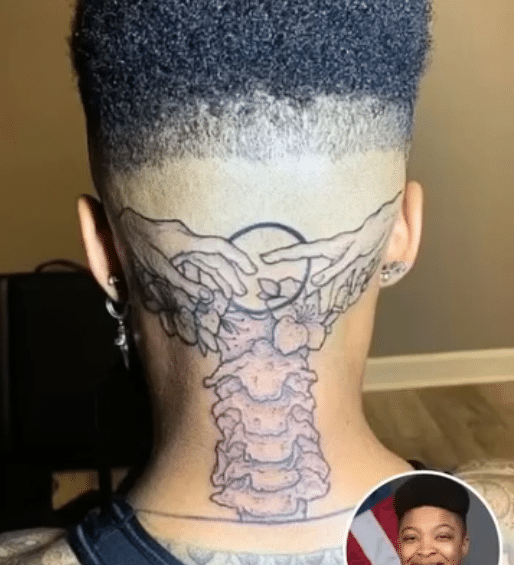
Adams got the tattoo in June 2022.
At the time, department rules reportedly prohibited tattoos on the face and neck, but did not specifically ban tattoos on the head. Believing she was following policy, Adams kept the tattoo covered beneath her hair.
However, after a complaint was filed, the department began looking into the matter.
As Adams attempted to grow her hair longer to keep the tattoo fully hidden, questions reportedly arose about whether her natural hair texture concealed it properly.
Then the policy changed.
The department updated its rules to ban all head tattoos.
The Day She Was Fired
According to reports, on November 10, 2023, a captain photographed Adams’ tattoo even though it was covered by her hair.
Hours later, she was fired.
For Adams, the tattoo was more than body art. It represented strength and resilience, especially after her diagnosis with scoliosis.
She has said she believes her termination was not only about the tattoo.
Claims of Retaliation and Bias
Adams had previously reported troubling behavior during training, including offensive jokes, sexist remarks, and comments involving nooses.
Two captains who supported her were also said to have faced retaliation.
Because of that history, critics argue the case raises bigger questions about workplace discrimination, hair bias, whistleblower retaliation, and how policies are enforced.
A Larger Debate
The controversy has moved beyond one tattoo.
Supporters of Adams say the case highlights how workplace rules can disproportionately affect certain employees, especially when natural hair and appearance standards are involved.
Others argue that fire departments have strict uniform and grooming policies for professionalism and safety.
Still, many believe the timing of the policy change and the circumstances surrounding her dismissal deserve closer scrutiny.
More Than Ink
Kay’Ana Adams’ case has become a symbol in a broader discussion about fairness, identity, and modern workplace expectations.
Whether viewed as a dispute over department rules or a deeper issue involving discrimination and retaliation, the story continues to raise an important question:
When does a workplace policy protect professionalism—and when does it become a tool for exclusion?


