A short but dramatic message has been circulating online claiming: “If you see a purple fence post, you better turn around.” The statement has sparked curiosity, confusion, and even concern among drivers and hikers who are encountering purple markings in rural and suburban areas.
At first glance, it sounds like a warning tied to danger or restricted access. But the real meaning is far more practical—and rooted in simple property law and signage systems rather than anything mysterious or threatening.
Why Purple Fence Posts Exist in the First Place
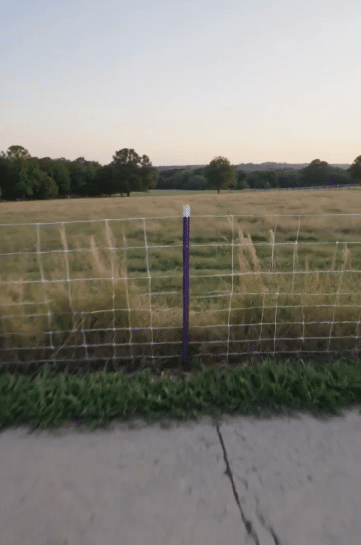
Purple paint or purple-colored fence posts are used in several regions as a legal “No Trespassing” marker.
Instead of relying only on traditional signs, some landowners use purple markings on fences, trees, or posts to clearly indicate that entry is not allowed.
This system is especially useful in rural areas where:
- Signs can be damaged by weather
- Signs may be stolen or removed
- Large properties need multiple boundary markers
- Landowners want a long-lasting visual warning
Purple is chosen because it stands out naturally in outdoor environments and is less likely to be confused with other common markings like white (survey), blue (utility lines), or red (danger/fire zones).
What the Purple Marking Actually Means
In most places where this system is used, a purple fence post or purple paint means:
- No trespassing allowed
- Private property boundary
- Entry without permission is prohibited
In simple terms, it’s not a supernatural warning or emergency signal—it’s a legal boundary marker.
If you see it on a fence line or property edge, it means you are approaching or entering private land where access is restricted.
Why People Think It Means “Turn Around Immediately”
The viral phrase “you better turn around” adds a dramatic tone that has helped the message spread quickly on social media.
However, the real intention behind purple markings is not to create fear—it’s to provide clear communication.
That said, turning around can be the right action in a practical sense, because continuing forward may lead you onto private property without permission.
So while the wording online is exaggerated, the safety advice is indirectly correct: respect the boundary and avoid entering.
Where This System Is Commonly Used
Purple paint laws or similar marking systems are used in several regions, especially in parts of the United States. The exact rules vary by state, but the general idea remains the same: purple markings serve as a legally recognized warning against trespassing.
In rural areas, this system helps:
- Farmers protect crops and livestock
- Landowners secure private land
- Reduce confusion where signage is limited
- Improve visibility of property boundaries
How to Recognize It Correctly
If you encounter a purple fence post or purple marking, here’s what to keep in mind:
- It usually appears on fences, trees, or posts at regular intervals
- It is often placed at eye level for visibility
- It may replace traditional “No Trespassing” signs
- It marks private property boundaries clearly and legally
Even if there are no signs nearby, the purple marking alone is often enough to indicate restricted access.
Why These Viral Posts Spread So Fast
Content like this goes viral for a simple reason: it feels like hidden knowledge.
A short warning such as “If you see this, turn around” triggers curiosity and urgency. People want to know what they’ve been missing in everyday life.
In reality, the explanation is often much simpler than the viral framing suggests.
Final Thoughts
Purple fence posts are not mysterious warnings or hidden danger signals. They are practical, legally recognized markers used to indicate private property and prevent trespassing.
While viral posts may exaggerate their meaning, the core message is still important: if you see one, it’s best to respect the boundary and avoid entering the area.
Sometimes what looks like a secret warning is really just a simple rule meant to protect property and avoid confusion.


