Before she became a rock legend, Janis Joplin was a young girl from Port Arthur, Texas, trying to survive in a world that often made her feel like she did not belong.
The woman in the photo is Janis Joplin—one of the most powerful and emotionally raw singers of the 1960s. She was born on January 19, 1943, in Port Arthur, Texas, and later became known for a fierce blues-rock style that helped reshape what people expected from women in rock music.
A Childhood Marked by Feeling Different
Janis grew up in a middle-class family in southeastern Texas. Her parents encouraged her interest in art and music, but even as a child, she stood apart from the people around her. She was curious, outspoken, creative, and unwilling to shrink herself just to fit into the expectations of her hometown.
School was not easy for her. Britannica notes that Joplin was bullied for her appearance, her strong opinions, her tomboy nature, and her beatnik style. That rejection stayed with her for years and helped shape the emotional intensity that later became part of her music.
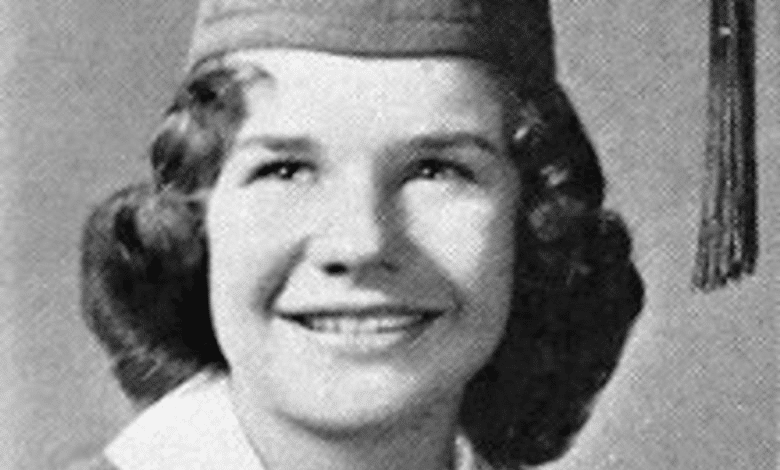
Instead of becoming quiet, Janis turned toward art, blues, and folk music. She found inspiration in singers such as Bessie Smith, Lead Belly, Odetta, and Big Mama Thornton—artists whose voices carried pain, strength, and truth.
Finding Her Voice
Janis attended Lamar State College of Technology and later the University of Texas at Austin, but traditional college life never fully contained her spirit. In 1963, she dropped out and began singing folk and blues in Texas clubs before eventually making her way toward San Francisco, where the growing counterculture scene offered more room for people who lived outside the usual rules.
Her voice was not polished in the conventional sense. It was rough, aching, soulful, and explosive. She used growls, wails, and raw emotional delivery in a way that made listeners feel every word. That honesty became her signature.
Janis did not simply sing songs.
She seemed to live inside them.
The Breakthrough That Changed Everything
Her major breakthrough came after she returned to San Francisco in 1966 and joined Big Brother and the Holding Company as the band’s lead singer. With Janis at the microphone, the group quickly became one of the most exciting acts in the San Francisco rock scene.
Then came the moment that changed her career: the Monterey Pop Festival in 1967. Joplin’s performance with Big Brother stunned audiences, especially her emotional version of “Ball and Chain.” Britannica describes that Monterey appearance as legendary, and PBS notes that her performances there helped establish her as a major new force in music.
Suddenly, the girl who had been mocked for being different was being celebrated for the very qualities others once criticized: her intensity, her freedom, her unconventional style, and her refusal to perform femininity in a safe or predictable way.
Fame, Pressure, and an Unforgettable Legacy
After Monterey, Janis Joplin became one of the defining voices of her era. Big Brother and the Holding Company’s album Cheap Thrills reached number one in 1968, and “Piece of My Heart” became one of her most recognizable songs.
But fame did not erase her pain. Behind the confidence, wild stage presence, and public image was a woman who still carried the wounds of rejection. She became a symbol of authenticity, yet she also struggled with loneliness, addiction, and the emotional cost of being constantly watched and judged.
In 1970, Janis was recording with the Full Tilt Boogie Band when she died in Los Angeles at age 27 from an accidental heroin overdose. Her final album, Pearl, was released after her death and topped the charts in 1971.
One of the songs from that album, “Me and Bobby McGee,” became her biggest hit. Britannica notes that Janis recorded it shortly before her death, and the single reached number one on the Billboard Hot 100 in March 1971.
Why People Still Remember Her
Janis Joplin’s career was brief, but her impact was enormous.
She helped open space for women in rock to be loud, emotional, messy, powerful, and fully human. At a time when female performers were often expected to be controlled and carefully packaged, Janis arrived with a voice that sounded like heartbreak and freedom colliding.
She was inducted into the Rock and Roll Hall of Fame in 1995 and received a Grammy Lifetime Achievement Award in 2005, honors that reflect her lasting influence long after her death.
But her legacy is not only about awards.
It is about every person who has ever felt too different, too loud, too emotional, or too unconventional to be accepted. Janis turned those feelings into art. She showed that what makes someone an outsider can also become the very thing that makes them unforgettable.
Final Thoughts
So, do you know who she is?
She is Janis Joplin—the misunderstood Texas girl who became one of the most unforgettable voices in rock history.
Her story is not just about fame. It is about rejection, resilience, self-expression, and the painful search for belonging. She was mocked before she was admired. She was underestimated before she was celebrated. And even though her life ended far too soon, her voice still echoes through generations.
Janis Joplin proved that true beauty is not about fitting in.
Sometimes, it is about refusing to disappear.


