Few actresses in film history carried the same combination of beauty, mystery, independence, and emotional depth as Claudia Cardinale.
For decades, she was remembered as one of the most breathtaking faces in European cinema. Her dark eyes, natural elegance, and commanding screen presence made her unforgettable in the 1960s, when Italian and international filmmakers helped shape a golden era of movie history.
But Cardinale’s story was never only about beauty.
It was about survival, artistic integrity, and the courage to remain herself in an industry that often tried to control women. Cardinale died on September 23, 2025, in Nemours, France, at the age of 87, leaving behind a career that stretched across more than six decades.
A Childhood Far From Hollywood
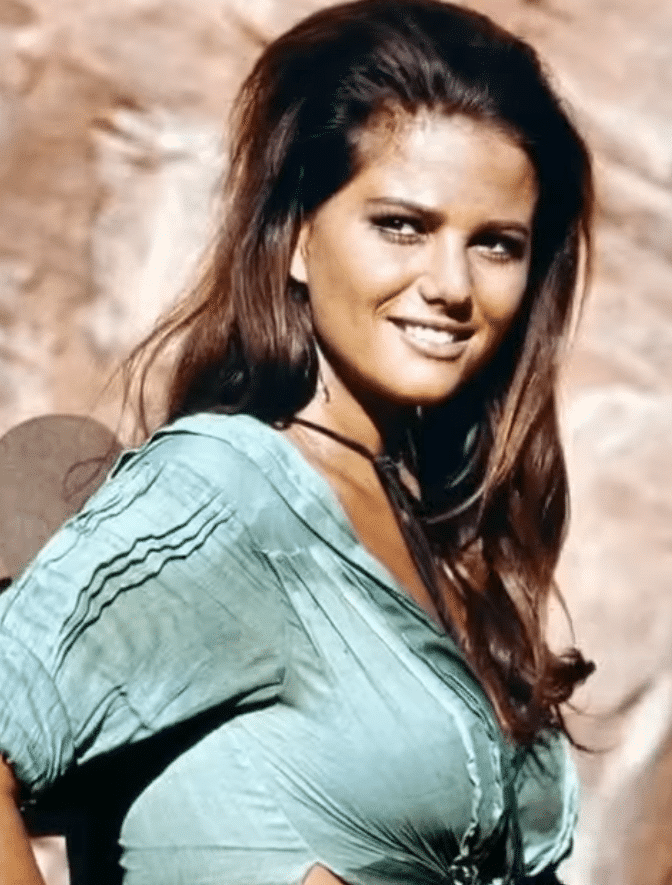
Claudia Cardinale was born in Tunis on April 15, 1938, to Sicilian parents. She grew up in a multicultural environment shaped by North African, Italian, and French influences. Before fame entered her life, she did not dream of becoming a movie star. She once imagined a quieter future, including the possibility of becoming a teacher.
Everything changed when she was still a teenager.
After being named the “most beautiful Italian woman in Tunis,” she won a trip to the Venice Film Festival. That trip placed her directly in front of the film world, and soon offers began arriving. Fame did not come because she chased it aggressively. In many ways, it found her before she fully knew what to do with it.
More Than a Beautiful Face
Cardinale’s early career could easily have trapped her in decorative roles. She was often praised for her looks, but her best performances quickly proved she had far more to offer.
Her rise became especially powerful in the early 1960s. In 1963, she appeared in Federico Fellini’s 8½ and Luchino Visconti’s The Leopard, two films now considered landmarks of European cinema. Reuters noted that those roles helped bring her international fame.
She later appeared in major international productions, including The Pink Panther and Sergio Leone’s Once Upon a Time in the West. Her filmography showed remarkable range: drama, comedy, westerns, historical epics, and art-house cinema.
Cardinale did not simply appear on screen.
She held the frame.
Hollywood Without Losing Herself
As her fame grew, Hollywood opened its doors. But Cardinale never fully surrendered to the machinery of celebrity.
She rejected the idea that success required giving up personal boundaries. Le Monde reported that she firmly refused nudity in film, including during discussions around Once Upon a Time in the West. Her decision was not about fear; it was about control over her own image and body.
That independence made her different.
In an era when actresses were often pressured to obey producers, studios, and public expectations, Cardinale protected her dignity. She understood that beauty could attract attention, but talent and self-respect would define her legacy.
Private Pain Behind Public Glamour
Cardinale’s glamorous image hid painful chapters.
Reuters reported that her early career was complicated by a secret pregnancy after what she described as an abusive relationship. She gave birth to her son Patrick in London in 1958 and, under intense pressure from the social and professional climate of the time, publicly presented him as her younger brother for years.
That truth gives her story a deeper emotional weight.
Behind the red carpets and magazine covers was a young woman navigating trauma, shame imposed by society, and a film industry that often cared more about image than personal suffering.
Her later openness helped reshape how many people understood her—not merely as a screen icon, but as a woman who endured and kept moving forward.
Reclaiming Her Own Life
Another defining chapter involved producer Franco Cristaldi, who played a major role in shaping her early career. But the relationship also involved control over her professional and personal life.
Reuters reported that Cardinale’s career suffered in the 1970s after she separated from Cristaldi and began a long relationship with filmmaker Pasquale Squitieri. Cristaldi reportedly encouraged others in the Italian film industry to distance themselves from her, creating a difficult period professionally and financially.
Still, Cardinale continued.
She worked in European cinema, appeared on stage, and maintained a career long after many stars of her generation had faded from view. Her resilience became part of her identity.
A Humanitarian Voice Beyond Cinema
Cardinale’s influence extended far beyond film.
UNESCO paid tribute to her humanitarian work after her death, noting that she had served as a UNESCO Goodwill Ambassador since March 2000 and used her platform to support education and the rights of girls and women.
The Claudia Cardinale Foundation, created in 2023 by the actress and her daughter Claudia Squitieri, also reflects her commitment to women’s rights, the environment, culture, and art.
That work matters because it shows the full shape of her legacy. Cardinale was not interested only in being remembered as beautiful. She wanted her public life to stand for something larger.
Beauty That Changed With Time
Viral posts often frame actresses through “then and now” comparisons, inviting people to react to aging as if it were shocking.
But Claudia Cardinale’s later years deserve a more respectful view.
Time changed her, as it changes everyone. Yet what remained was more powerful than youth: presence, intelligence, history, and authenticity. She represented a generation of performers who lived through enormous cultural change while refusing to let fame erase their humanity.
At 87, she was no longer the young woman audiences remembered from The Leopard or The Pink Panther. But she was still Claudia Cardinale—a woman whose face carried the memory of cinema, struggle, love, loss, and artistic courage.
Final Thoughts
Claudia Cardinale was once celebrated as one of the most beautiful women in cinema.
But her life proved that true beauty is not frozen in youth.
It evolves.
It becomes resilience after pain.
It becomes independence after control.
It becomes dignity after judgment.
It becomes a legacy that outlives the spotlight.
Cardinale’s transformation was not something to gasp at because age changed her appearance. It was something to admire because she remained herself through fame, pressure, personal hardship, and time.
Her films remain part of cinema history.
Her humanitarian work remains part of her moral legacy.
And her life reminds us that the most powerful kind of beauty is not the kind captured in a single photograph.
It is the kind built over a lifetime.


