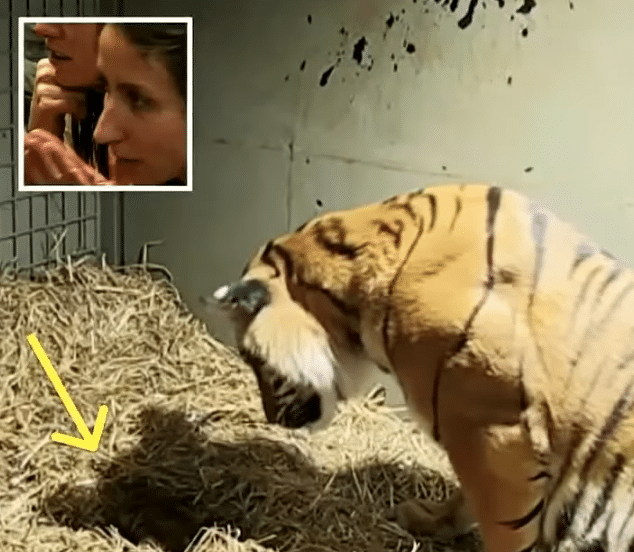
A dramatic online headline claims that a tiger mother gave birth to a lifeless cub and stunned bystanders with her reaction. But the source material points to a different, better-documented story: the remarkable birth and survival of two rare Sumatran tiger cubs at Australia Zoo.
Their names were originally Spot and Stripe, and their journey became known to viewers through the 2014 BBC documentary series Tigers About the House. The cubs were born at Australia Zoo in Queensland and were hand-raised by tiger expert Giles Clark during their earliest months. Streaming listings for the series describe Spot and Stripe as Sumatran tiger cubs born at Australia Zoo who spent their first four months in Clark’s care.
Today, those cubs are better known as Hunter and Clarence—two tigers whose lives continue to highlight the importance of conservation, expert animal care, and responsible breeding programs for critically endangered species.
A Rare Birth With Global Importance
The arrival of Sumatran tiger cubs is never just another zoo birth.
Sumatran tigers are among the most endangered big cats on Earth. Conservation estimates vary, but major organizations place the wild population in the low hundreds. Fauna & Flora estimates fewer than 600 remain in the wild, while ZSL describes the number as fewer than 400. Both identify habitat loss, poaching, and human-wildlife conflict as major threats.
That means every healthy cub born under a responsible conservation program carries genetic and educational value. These animals help keep attention on a species fighting for survival in the forests of Sumatra.
For Spot and Stripe, the beginning was delicate. Many big-cat cubs face risks in the first weeks of life, and young tigers require careful monitoring. Their early story drew attention because they were not simply cute cubs. They represented hope for a species under pressure.
The Cubs Who Became Hunter and Clarence
As the cubs grew, their names changed.
Spot became Hunter, and Stripe became Clarence. Australia Zoo now describes Hunter as one of the first Sumatran tigers born there, along with his brother Clarence.
Hunter’s journey was especially emotional because he was born with a congenital eye condition. According to Australia Zoo, he developed cataracts at only a few weeks old and received specialist care from top surgeons, but eventually lost his eyesight.
Despite that challenge, Hunter did not become a tragedy.
He adapted.
Australia Zoo says he remains confident and outgoing, living under specialized care with keepers who understand his needs. His story is a reminder that disability in animals does not erase quality of life when expert care, enrichment, safety, and patience are provided.
Clarence’s Role in the Future of the Species
Clarence’s story also continued in an important way.
Taronga Zoo Sydney announced that Clarence, born at Australia Zoo in 2013 and moved to Taronga in 2017, became the father of Sumatran tiger cubs there. In 2024, Taronga identified Clarence as the father of three rare cubs born to mother Kartika.
That detail matters because conservation breeding programs are built around genetic planning. The goal is not simply to produce cubs for public attention. It is to maintain healthy, genetically diverse populations that may support long-term survival efforts and public education.
Clarence’s offspring became part of that broader effort.
Why Their Story Went Viral
Animal stories often spread online because they combine emotion, danger, and hope.
A newborn cub is fragile. A rare tiger birth feels miraculous. A keeper caring for young predators inside a home is visually unforgettable. Add the reality that Sumatran tigers are critically endangered, and the story becomes even more powerful.
But that emotional pull also makes these stories vulnerable to exaggerated headlines.
The claim about a “lifeless cub” and a shocking maternal reaction is not supported by the provided source material. The verified story is still compelling without turning it into a misleading rescue scene. Spot and Stripe’s real journey included risk, expert care, disability, survival, and conservation impact.
That is more meaningful than clickbait.
The Human Role in Tiger Survival
The story of Hunter and Clarence also reveals the human side of wildlife conservation.
Behind every successful cub birth are veterinarians, keepers, nutrition specialists, conservation planners, and animal-care teams. These professionals monitor health, behavior, genetics, diet, enrichment, and long-term welfare.
For Hunter, specialized care became essential because of his blindness. For Clarence, his role in future breeding efforts gave his life broader conservation significance.
Still, zoo-based conservation is only one part of the picture. Wild tigers need protected habitat, stronger anti-poaching work, reduced human-wildlife conflict, and long-term protection of prey species. WWF notes that remaining Sunda tigers are found only in Sumatra, after the Bali and Javan tigers disappeared.
That reality makes the survival of every remaining tiger population urgent.
A Story About Resilience
Hunter and Clarence’s story continues to resonate because it is not perfect.
One cub grew up blind. Both required careful human involvement. Their species remains in danger. Their future depended on people making the right choices again and again.
Yet the outcome is hopeful.
Hunter continues to live with specialized care. Clarence has contributed to the next generation of rare cubs. Their early lives introduced viewers to the vulnerability and beauty of Sumatran tigers, while reminding the public that endangered animals need more than admiration—they need action.
Final Thoughts
The viral headline may suggest a shocking scene involving a lifeless cub, but the more accurate story is about two rare Sumatran tiger cubs who survived against serious odds.
Born at Australia Zoo, first known as Spot and Stripe, later renamed Hunter and Clarence, these brothers became symbols of conservation and care. Hunter’s blindness did not stop him from thriving under expert support, and Clarence later became part of the breeding future for his critically endangered species.
Their story is not just about a dramatic birth.
It is about what happens after birth: the quiet work, the difficult decisions, the long-term responsibility, and the people committed to protecting animals most of the world may never see in the wild.
In the end, Hunter and Clarence remind us that conservation is not built on one viral moment.
It is built on years of care, science, compassion, and the belief that even one fragile cub can matter.


