For Charli Worgan and her husband Cullen, the question often came in a much harsher form: “Why would you have children?”
Charli, an Australian mother and social media creator, lives with dwarfism. Cullen also has dwarfism, though reports note that the couple have different forms of the condition. Their family has drawn attention online not only because of their height, but because they chose to speak openly about pregnancy, genetic risk, parenting, and the criticism they faced from strangers. Charli’s Instagram account currently has more than 300,000 followers, where she shares family life, motherhood, and dwarfism awareness.
A Couple Facing Questions Most Parents Never Hear
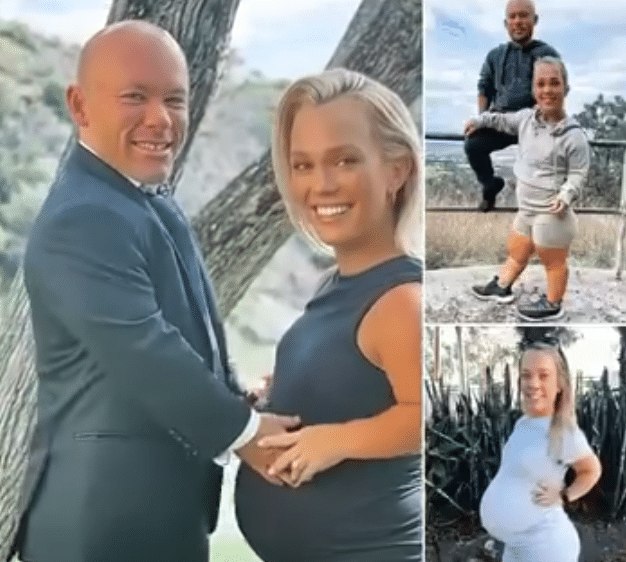
For many families, pregnancy announcements are met with excitement, congratulations, and baby-name questions.
For Charli and Cullen, each pregnancy carried joy—but also medical uncertainty.
Because both parents have forms of dwarfism, their children could inherit one parent’s condition, be born with average height, or inherit both genetic variations. Charli has explained publicly that one possible outcome, sometimes described in reports as “double dominant dwarfism,” could be fatal at birth.
That reality made every pregnancy emotionally complex.
Instead of simply celebrating the 12-week mark like many expectant parents, Charli described undergoing chorionic villus sampling, also known as CVS, to learn more about the baby’s genetic makeup. CVS is a prenatal diagnostic test that can identify certain genetic conditions, though medical guidance notes it is invasive and carries a small miscarriage risk.
What Dwarfism Means in Their Family
Dwarfism is not one single condition. It is a broad term that can describe many different genetic and medical conditions involving short stature.
Achondroplasia, one of the best-known forms, is caused by a change in the FGFR3 gene and affects bone growth, especially in the arms and legs. MedlinePlus notes that people with achondroplasia typically have short stature and that inheriting two altered copies of the gene can cause a severe form that is usually fatal before or shortly after birth.
Cullen has been reported to have geleophysic dysplasia, a rarer inherited condition associated with short stature and possible joint, skin, facial, and heart-related features; severity can vary widely among individuals.
That medical background helps explain why Charli’s pregnancies involved difficult decisions, testing, and long waits for results.
Parenthood Under Public Scrutiny
Charli has spoken honestly about the criticism she has received for choosing to have children.
Some strangers questioned whether she and Cullen should become parents at all. Others made assumptions about their children’s health, their parenting ability, or what life in a short-statured family must look like.
That kind of judgment is exactly why Charli began sharing more of her family’s life online.
Her posts offered people something rarely shown in viral headlines: the normal, messy, joyful, exhausting reality of parenting. Their home life includes school routines, sibling moments, tired mornings, funny family updates, emotional milestones, and all the ordinary chaos that parents everywhere recognize.
In other words, their family is unique—but parenthood itself is universal.
The Emotional Toll of Genetic Testing
One of the most powerful parts of Charli’s story is her honesty about prenatal testing.
For many parents, pregnancy is a time of excitement mixed with ordinary worry. For Charli and Cullen, the stakes felt much higher. Each test result could determine whether their baby had inherited one condition, another condition, neither, or a combination doctors believed might not be survivable.
That waiting period can be deeply emotional.
CVS is usually performed earlier in pregnancy than amniocentesis and can provide important genetic information, but medical organizations emphasize that patients should be counseled about its benefits, limits, and risks.
Charli’s openness helped many followers understand that her pregnancies were not casual or reckless decisions. They involved medical conversations, genetic testing, anxiety, hope, and love.
Welcoming Three Children
Charli and Cullen are now parents to three children: Tilba, Tully, and Rip. Reports have described their daughters as each inheriting one of their parents’ forms of dwarfism, while Rip’s arrival in 2021 was celebrated by the family after an anxious pregnancy journey.
When Rip was born, Charli shared the kind of message many mothers understand deeply: she was tired, emotional, and grateful. She also reminded followers that there is no single “correct” way to do motherhood.
That message resonated because it moved the conversation away from judgment and back toward humanity.
Every parent has fears.
Every parent makes difficult choices.
Every parent hopes their child will be safe, loved, and accepted.
Charli and Cullen’s journey may involve medical risks that many families never face, but the heart of their story is deeply familiar.
Why Their Story Matters
The attention around Charli and Cullen’s family says something important about the internet.
People are often quick to stare, comment, judge, and reduce a family to a headline. But when Charli shares her life directly, the story becomes fuller. She is not just “a woman with dwarfism.” Cullen is not just “a short-statured husband.” Their children are not medical outcomes.
They are a family.
Their story challenges the assumption that disability or genetic difference automatically defines a person’s quality of life. It also shows why respectful language matters. People with dwarfism are not curiosities or inspirational objects for strangers to debate. They are individuals with careers, marriages, children, challenges, humor, and personal choices.
Charli’s platform has helped educate many people by showing everyday life instead of allowing outsiders to control the narrative.
A Lesson About Love, Risk, and Respect
No family’s path is simple.
Some families face fertility struggles. Some face financial pressure, insurance concerns, medical decisions, genetic testing, pregnancy complications, or public judgment. Charli and Cullen’s story includes several of those realities at once.
But it also includes resilience.
They chose to build a family while understanding the risks. They chose testing, honesty, and openness. They chose to share parts of their lives so others could learn, even when that meant facing criticism.
Their story is not about proving that parenthood is easy.
It is about showing that families are more than statistics.
Final Thoughts
Charli Worgan and Cullen’s journey has captured attention because it is emotional, unusual, and deeply human.
Their pregnancies involved medical uncertainty. Their choices attracted public scrutiny. Their children brought joy, fear, exhaustion, and gratitude—the same complicated mixture that defines parenthood for so many families.
What makes their story powerful is not their height.
It is their honesty.
By sharing the realities of dwarfism, pregnancy, genetic risk, and motherhood, Charli reminds people that every family deserves to be seen with compassion before judgment.
And perhaps the most important lesson is this: there is no perfect version of parenthood. There is only love, responsibility, courage, and the daily choice to keep showing up for the people who matter most.