Released in 1966, “(You’re My) Soul and Inspiration” became far more than just another hit for The Righteous Brothers. At a time when critics questioned whether Bill Medley and Bobby Hatfield could thrive without legendary producer Phil Spector, the song proved they were capable of greatness on their own. While listeners were captivated by soaring vocals and raw emotion, the true story unfolded behind the studio doors, where the duo faced one of their most important challenges.
Rising from the Shadow
Months earlier, The Righteous Brothers had enjoyed monumental success with “You’ve Lost That Lovin’ Feelin’”, largely shaped by Spector’s iconic “Wall of Sound” production. That rich, layered approach became inseparable from their identity. So when Spector moved on, critics doubted whether Medley and Hatfield could create hits independently. Could they deliver the same emotional impact on their own?
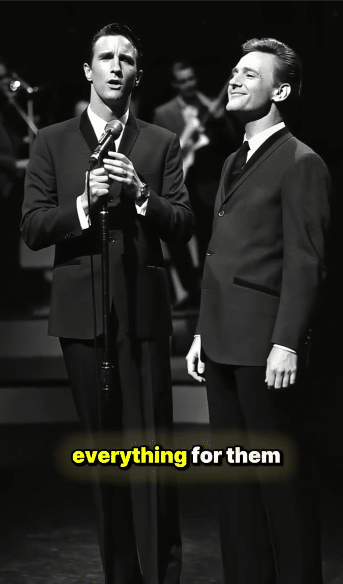
Enter the unfinished song by songwriting duo Barry Mann and Cynthia Weil. Recognizing its potential, Medley took a bold step: he produced the track himself. This was a major risk. Taking control of production meant that success—or failure—would rest entirely on their shoulders. But it also offered the opportunity to prove that their artistry and vocal chemistry were the true driving forces behind their music.
A Performance of Emotion
From the first notes, “(You’re My) Soul and Inspiration” establishes an atmosphere of longing and intensity. Medley’s deep baritone anchors the verses, balancing confidence with vulnerability. As the song unfolds, Hatfield’s soaring tenor enters, creating the dynamic tension that became the duo’s signature sound.
When Hatfield sings the chorus, the words feel less like lyrics and more like an honest confession. The emotional delivery resonates even decades later, demonstrating how authenticity and vocal power can surpass production techniques.
The arrangement retains some of the drama reminiscent of Spector’s work, yet it also introduces intimacy and personal expression. The track’s intensity builds naturally, drawing listeners into a narrative of love, devotion, and emotional connection.
Impact and Legacy
Released during a period of rapid change in popular music, the song’s focus on sincere romantic emotion set it apart. In 1966, many artists were experimenting with rebellion, youth culture, and new sounds. By contrast, The Righteous Brothers celebrated heartfelt expression, showing that powerful vocals and genuine emotion still had a place at the top of the charts.
The record quickly reached No. 1 on the Billboard Hot 100, a triumph not just commercially, but personally. It validated Medley and Hatfield’s ability to succeed independently, proving that their talent was more than the product of a famed producer. Their voices, chemistry, and artistry had always been the heart of their success.
Over the years, “(You’re My) Soul and Inspiration” has endured as a classic. It continues to feature in films, television, and curated playlists, reaching new generations of listeners. Its universal message—the comfort and meaning a loved one provides—resonates across decades, making it as relevant today as it was over fifty years ago.
The song also serves as a testament to an era when vocal performance took center stage. Medley and Hatfield’s interpretation reminds audiences that genuine emotion, technical skill, and authentic chemistry remain timeless elements of music that moves people deeply.
More Than a Hit
Today, “(You’re My) Soul and Inspiration” stands as one of The Righteous Brothers’ defining achievements. It symbolizes resilience, independence, and artistic vision. At a moment when doubt surrounded their future, they responded with brilliance—demonstrating that their music was theirs alone.
The track remains a powerful reminder that true artistry comes from heart and talent, not solely from production techniques. It is a performance defined by emotional honesty, soaring vocals, and the enduring ability to touch audiences worldwide.


