Fashion is never just about clothes. It reflects the way people live, work, express themselves, and respond to the culture around them. A new fashion evolution video from Mode, titled 100 Years of Men’s and Women’s Fashion, takes viewers through an eye-catching journey of style from 1915 to 2015.
The video compares men’s and women’s fashion across each decade, showing how trends changed over time. From formal suits and feathered hats to leather jackets, denim, oversized glasses, grunge looks, and modern minimalist outfits, the century-long transformation is both entertaining and revealing.
At first, most viewers notice the obvious changes: the cuts, colors, hairstyles, shoes, and silhouettes. But the deeper detail is how fashion gradually became less restrictive and more personal. Over the decades, people moved away from rigid social expectations and toward clothing that allowed more comfort, individuality, and self-expression.
1915: Formal fashion and strict silhouettes
The fashion of 1915 reflected a much more formal world. Women’s clothing often featured long dresses, structured shapes, and dramatic hats. Feathers, high necklines, and layered fabrics were common. While these outfits may look elegant in photos, they were not always practical or comfortable.
Men’s fashion during this period leaned heavily toward tailored suits, polished shoes, and formal accessories. The overall appearance was neat, serious, and structured.
Looking back, many people may admire the detail and craftsmanship of early 20th-century fashion. However, it is easy to understand why modern women are grateful that clothing has become more flexible. The heavy dresses and strict silhouettes of that era left little room for comfort or movement.
1925: The rise of the flapper era
By 1925, fashion had become more playful, especially for women. The flapper style introduced shorter dresses, looser shapes, and a sense of movement that matched the energy of the Jazz Age. Women’s clothing began to feel more modern, youthful, and expressive.
This decade marked an important shift. Fashion was no longer only about formality. It became connected to freedom, music, nightlife, and changing social roles.
Men’s fashion remained polished but included softer shapes and more relaxed styling. Still, the women’s looks of the 1920s often stand out because they represented a cultural turning point. The flapper dress was not just a trend; it was a symbol of independence.
1935: A smoother, sharper style
By the mid-1930s, both men’s and women’s fashion had become more refined. Men’s suits improved in fit, giving a sharper and more confident look. This was an era of classic tailoring, clean lines, and elegance.
Women’s fashion also embraced flattering silhouettes. Dresses often featured defined waists and graceful shapes that created a polished but feminine style.
This decade is a close match between men’s and women’s fashion. Men gained stronger structure and sophistication, while women’s outfits became timeless and elegant. It was a period when classic Hollywood glamour had a major influence on how people dressed.
1945: Practical, professional, and polished
The 1940s brought major changes because of World War II and its impact on daily life. Clothing became more practical. Women’s fashion often included structured suits, modest dresses, and wide-leg trousers. These styles reflected a time when women were taking on more public and professional roles.
The decade’s women’s fashion stands out because it balanced practicality and elegance. A woman could look professional, capable, and stylish without relying on overly decorative clothing.
Men’s clothing remained functional and traditional, but women’s fashion made a stronger statement during this period. It showed how clothing could reflect strength, work, and resilience.
1955: Leather jackets, color, and youth culture
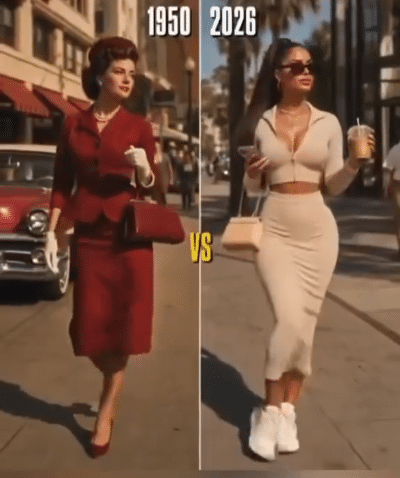
By the 1950s, fashion experienced a major style shift. Youth culture became more visible, and clothing started to reflect rebellion, music, and personal attitude.
For men, the leather jacket became one of the most iconic pieces of the decade. It represented cool confidence and a more casual approach to masculinity. This was the era of the greaser look, made famous by pop culture images of rebellious young men.
Women’s fashion became more colorful and polished, often featuring full skirts, fitted waists, and bright feminine styling. The decade created some of the most recognizable looks in American fashion history.
Both men and women had strong style moments in the 1950s, but the leather jacket remains one of the decade’s most lasting contributions.
1965: Bold color and modern shapes
The 1960s introduced brighter colors, shorter hemlines, and more experimental fashion. Women’s clothing became bolder and more youthful, with dresses inspired by mod culture and television style.
A hot pink dress from this era, for example, captures the confidence and energy of the time. It feels stylish, modern, and full of personality.
Men’s fashion also experimented, but not every trend aged well. Some beatnik-inspired looks, especially in unusual colors, can feel dated today. Still, the decade was important because it encouraged people to take more risks with clothing.
Fashion in the 1960s was no longer just about fitting in. It was about standing out.
1975: Denim, fringe, and flower-child influence
The 1970s brought denim, paisley prints, turtlenecks, fringe, suede, oversized glasses, and relaxed silhouettes. It was one of the most memorable decades in fashion because the styles were expressive and easy to recognize.
This was also a decade when casual fashion became more powerful. Jeans were no longer just practical clothing. They became a cultural statement.
Women’s denim looks from this period often feel especially strong. Full denim outfits, flared jeans, and relaxed styling reflected the free-spirited energy of the era.
Men’s fashion also embraced denim and leather, but the women’s looks often felt more complete and confident.
1985: Big hair, bold choices, and mixed results
The 1980s were unforgettable, though not always for the best reasons. Big hair, crimped styles, mullets, oversized shapes, bright colors, and dramatic makeup defined the decade.
Some people love the confidence of 1980s fashion. Others see it as one of the most chaotic style periods of the century. Either way, it was not subtle.
Both men and women took risks, but many of those risks now feel exaggerated. The decade remains fun to revisit in movies, music videos, and retro parties, but many people would rather not bring back every trend.
The 1980s may be remembered as bold, but they were also proof that more is not always better.
1995: Grunge and relaxed rebellion
The 1990s brought a completely different energy. Fashion became more casual, stripped down, and influenced by grunge culture. Flannel shirts, slip dresses, denim, boots, and darker tones became popular.
Women’s fashion in the 1990s often felt especially adventurous. It mixed softness with edge, creating looks that still inspire modern style today. Grunge allowed clothing to feel less polished and more personal.
Men’s fashion also became more casual, but women’s 1990s styling often had more range and attitude.
This decade helped move fashion away from perfection and toward authenticity.
2005: The early 2000s return to the spotlight
The early 2000s were full of low-rise jeans, layered tops, casual streetwear, and television-inspired style. Many people associate this era with teen dramas, pop stars, and red-carpet looks that were both playful and experimental.
At the time, some trends felt modern and exciting. Looking back, the decade can feel nostalgic, especially for anyone who grew up watching early 2000s television.
Jeans improved, casual outfits became more styled, and both men’s and women’s fashion began moving toward the more fitted looks that would define the next decade.
2015: Minimalism, better fit, and personal style
By 2015, fashion had become more flexible than ever. Fits were cleaner, colors were more intentional, and clothing became more adaptable to different body types, lifestyles, and personal preferences.
Modern fashion also became less controlled by strict rules. People could mix casual and formal pieces, wear denim in new ways, and express personality without being tied to one dominant trend.
Compared with earlier decades, 2015 fashion was more functional and more individual. Clothing could be stylish without being uncomfortable. It could be simple without being boring.
That may be the biggest change of all.
The real detail that changed over time
The most obvious fashion changes are easy to spot: shorter hemlines, different hairstyles, wider pants, leather jackets, denim trends, and bold colors. But the deeper change is freedom.
Over 100 years, fashion moved away from strict expectations and toward personal choice. Women gained more freedom to wear pants, casual clothing, professional outfits, and athletic-inspired styles. Men’s fashion also expanded, becoming less rigid and more expressive.
Today, personal style is no longer dictated as strongly by social convention. People can borrow from different decades, mix trends, shop vintage, invest in designer pieces, or choose affordable everyday fashion that fits their lifestyle.
Fashion evolution tells the story of cultural evolution. It shows how people became more comfortable expressing who they are.
Final thoughts
Mode’s 100 Years of Men’s and Women’s Fashion is more than a fun style comparison. It is a reminder that clothing reflects history, identity, confidence, and change.
From the structured outfits of 1915 to the cleaner, more personal styles of 2015, each decade tells its own story. Some trends deserve a comeback. Others are best left in old photographs.
But the biggest lesson is clear: fashion keeps changing because people keep changing.
And sometimes, the most important detail is not what people wore — it is what their clothing allowed them to become.


