If you’ve ever seen scissors with four holes, you might have assumed they were some strange craft tool or a novelty item. But these are not ordinary scissors. In fact, they are carefully designed children’s learning scissors that help kids develop fine motor skills safely while learning how to cut.
The unusual design — two holes for the child and two for an adult — is intentional. It turns a simple pair of scissors into an educational tool that allows kids to practice cutting with guidance and build confidence.
Child-Friendly Handles for Small Hands
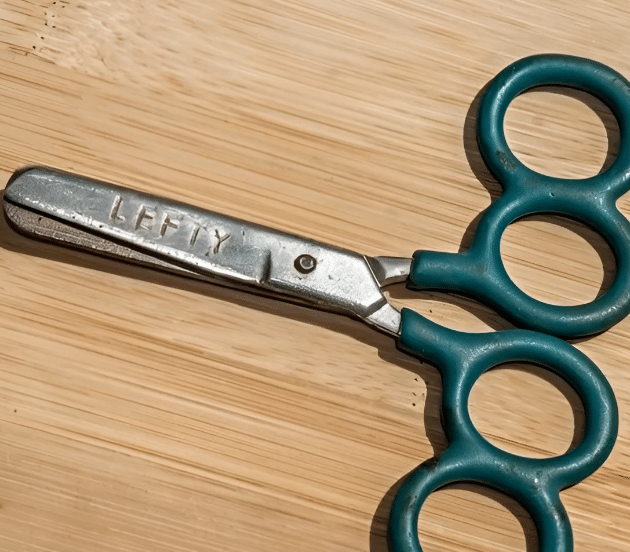
The primary pair of holes is sized for children’s fingers. This ensures a comfortable grip for small hands, helping kids control the scissors with less frustration.
The ergonomic design encourages proper finger placement and reduces fatigue, which is essential for children who are just learning hand-eye coordination.
Adult Assistance Holes
The second pair of holes is meant for a parent, teacher, or caregiver to place their fingers alongside the child’s. This feature provides hands-on guidance while cutting, allowing the adult to gently steer the scissors and teach the proper technique.
By using these holes, the adult can help the child:
- Maintain the correct cutting motion
- Apply appropriate pressure
- Avoid common accidents
This gradual guidance helps children gain independence while staying safe.
Safety Blades for Young Learners
Most of these scissors come with blunt or rounded tips. While they are functional enough to cut paper, construction paper, or craft materials, they minimize the risk of injury.
This safety feature makes the scissors ideal for preschool, kindergarten, or home craft activities, giving children freedom to explore cutting without the danger of sharp blades.
Durable and Lightweight Construction
These scissors are usually made from lightweight metal or reinforced plastic, making them sturdy enough to handle frequent use but light enough for young children to hold comfortably.
The materials are also designed to withstand repeated classroom or home use, even when small hands grip them tightly.
How These Scissors Help Children Learn
The four-hole design is more than just safety — it’s about skill development and confidence building:
- Fine Motor Skills: Cutting helps strengthen finger dexterity, bilateral hand coordination, and hand-eye control.
- Confidence: Kids can start with adult assistance and gradually learn to cut independently.
- Safe Practice: The design reduces the chance of accidents compared to standard scissors, making early learning less stressful.
- Classroom & Home Use: Perfect for guided craft activities, art projects, or learning sessions in preschools and kindergartens.
Step-by-Step: How It Works
- The child places their fingers in the primary pair of holes.
- The adult can insert their fingers into the secondary pair if guidance is needed.
- Together, the child and adult gently cut the paper or material.
- Over time, the child becomes more confident and can eventually cut independently.
This method combines hands-on teaching with a safe learning experience, helping children transition smoothly from beginner to confident cutter.
Why This Design Is Brilliant
Many people overlook the ingenuity behind these scissors. By incorporating adult guidance directly into the tool, manufacturers created a simple yet effective way to teach a fundamental skill while ensuring safety.
It’s a perfect example of design meeting education: a single pair of scissors that grows with the child’s ability, fosters independence, and supports guided learning without the need for constant verbal instruction.
Conclusion
Scissors with four holes are not a gimmick — they are a learning tool for young children. With child-sized handles, adult assistance options, safety blades, and durable construction, they are designed to teach cutting skills, build confidence, and develop fine motor coordination in a safe and structured way.
Next time you see these unusual scissors, remember: they are one of the smartest early learning tools disguised as a simple household item.


