Some old objects are easy to identify right away. Others look so unusual that they make people stop, stare, and ask the same question: “What in the world is this?”
At first glance, this item might look like a tiny dart, a miniature rocket, a small metal tool, or even something that came from an old workshop drawer. Because of its shape, some people may assume it was meant to be thrown at a dartboard. But if you tried using it that way, you would quickly notice one big problem: it was never designed to stick.
That is because this curious little object is most likely a vintage cap bomb, cap dart, or cap rocket — a small noise-making toy that was especially popular from the 1950s through the 1980s.
These toys were not made for scoring points on a board. They were made to create a loud popping sound when dropped, tossed, or struck against a hard surface. For many kids decades ago, that sharp little “pop” was part of the fun.
Today, however, finding one without its original packaging can be confusing. Its metal body, pointed shape, and aged appearance can make it look mysterious, unfamiliar, or even a little concerning. But in many cases, it is simply a nostalgic piece of vintage toy history.
What Is a Cap Bomb or Cap Dart?
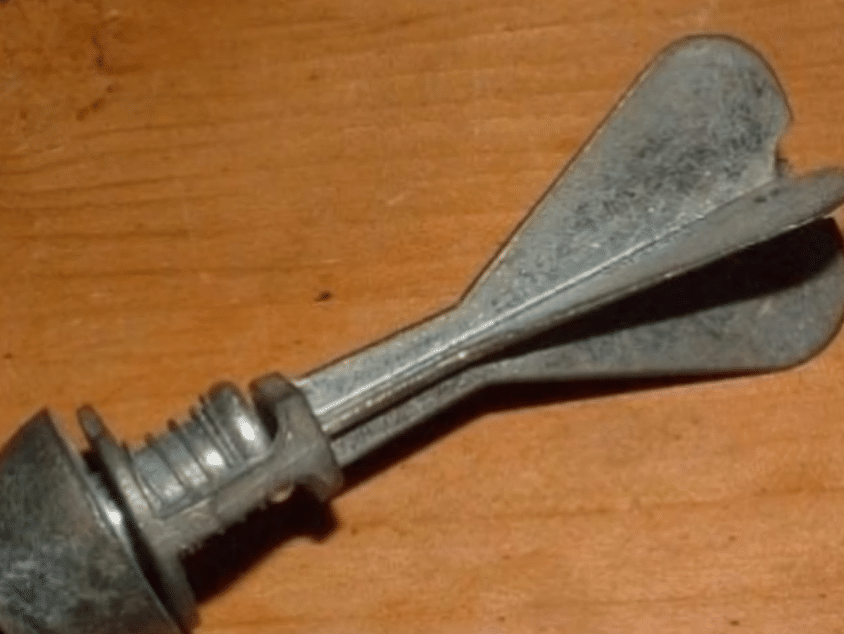
A cap bomb or cap dart is a small toy designed to work with paper caps, similar to the caps used in old-fashioned cap guns. When the toy hit a hard surface with enough force, the cap inside would make a quick popping sound.
Depending on the design, these toys came in several forms. Some looked like tiny rockets. Others resembled darts, missiles, grenades, or small metal projectiles. Because different toy companies made different versions over the years, collectors may refer to them by many names, including cap dart, cap rocket, cap grenade, metal cap rocket, cap missile toy, or impact cap toy.
The names may sound dramatic, but the purpose was simple: outdoor play, sound effects, and imagination.
For children at the time, a cap dart could become almost anything. It might be part of a pretend space mission, a backyard adventure, a cowboy game, or a make-believe battle between neighborhood friends. The toy itself was small, but the excitement came from the surprise sound it made on impact.
Why These Toys Were So Popular
Before smartphones, tablets, streaming platforms, and modern video games became part of everyday childhood, outdoor play looked very different. Kids often spent long afternoons outside with simple toys that left a lot of room for imagination.
A cap dart was the kind of toy that could turn an ordinary sidewalk, driveway, or backyard into an adventure zone. The loud pop made it feel exciting. It gave children the sense that something dramatic had happened, even though the toy itself was small and simple.
Many adults who grew up during the mid-20th century remember toys like these with nostalgia. They bring back memories of old toy stores, dusty garages, neighborhood sidewalks, summer evenings, and staying outside until the streetlights came on.
That is one reason collectors still search for vintage cap toys today. They are more than old metal or plastic objects. They are reminders of a different era of childhood.
How Did a Cap Dart Work?
The basic design was clever but simple. A small paper cap would be placed inside the toy, usually near the tip or impact point. When the cap dart landed on a hard surface, the force would strike the cap and create a sharp popping sound.
The idea was similar to a cap gun, but instead of pulling a trigger, the sound came from impact.
Some cap darts had a weighted body to help them land correctly. Others had fins, pointed tips, or rocket-like shapes to guide the direction of the fall. The goal was not accuracy like a real dart. The goal was impact.
That is why it would not work well on a dartboard. A dartboard is designed for pointed darts that stick into the surface. A cap dart was designed to hit, pop, and bounce or fall away.
So the joke makes perfect sense: “My first set of darts, but I couldn’t get them to stick in the dartboard.”
They were never that kind of dart.
What Does “Cap” Mean?
In this context, a “cap” is a small paper noise-maker used in classic toys. These caps were often sold in rolls or sheets and contained a tiny amount of material that made a popping sound when struck.
Many people associate caps with toy pistols from old cowboy games. Cap guns were once extremely common, and kids used them to create pretend sound effects during play. Cap bombs and cap darts used the same basic idea, but in a different shape.
Instead of placing the cap in a toy gun, the cap was placed inside the dart or rocket. When the toy hit the ground, the cap popped.
Because the word “bomb” is sometimes used in the name, the object can sound more alarming than it really was intended to be. In most vintage toy contexts, “cap bomb” simply refers to a toy that made a noise using a paper cap.
Why It Looks So Strange Today
Modern toys usually have bright colors, soft edges, safety labels, brand markings, and clear packaging. Vintage toys were often very different. Some were made of metal. Some had sharp-looking points. Some were built to be thrown, dropped, or banged against the ground.
By today’s standards, that kind of toy design can seem surprising.
After decades in a garage, attic, basement, or old toy box, a cap dart may look even more unusual. Paint can fade. Metal can rust. Plastic can crack. Labels can disappear. Without the original box or instructions, the object may look more like an unknown tool or small mechanical part than a children’s toy.
That is why these items often spark curiosity online. Someone finds one in an old drawer, takes a photo, and asks, “Does anyone know what this is?”
The answer is often a small piece of forgotten toy culture.
Are Vintage Cap Darts Safe?
Even though cap darts were sold as toys, old ones should be handled carefully. Paper caps create sound through impact, and age can make materials less predictable.
If you find a vintage cap dart, it is best not to test it, throw it, strike it, heat it, open it, crush it, or try to make it work again. This is especially important if the toy still contains old caps or appears rusty, damaged, or corroded.
A collectible item does not need to be functional to be interesting. In fact, trying to activate an old cap toy may damage it or create unnecessary risk.
The safest approach is to treat it as a display piece or collectible. Keep it away from small children, store it in a dry place, and avoid rough handling. If you are unsure whether it contains old caps, leave it alone and ask a knowledgeable collector or antique toy expert for help.
Why Collectors Still Like Them
Vintage cap bombs and cap darts remain interesting to collectors because they capture the style and imagination of older toy design. They represent a time when toys were often louder, rougher, simpler, and more mechanical.
Collectors may look for specific models, rare shapes, original packaging, or pieces from certain toy companies. A clean cap rocket with its original box may be more desirable than a loose, worn example. Condition, age, brand, rarity, and completeness can all affect collectibility.
For some people, these toys are valuable because of nostalgia. For others, they are fascinating because they show how much children’s products have changed over time.
Either way, a cap dart is more than just a strange metal object. It is a tiny reminder of backyard adventures from another generation.
The Real Answer Behind the Mystery
So, what is the object that looks like a dart but will not stick in a dartboard?
It is most likely a vintage cap dart, cap rocket, or cap bomb — a small toy designed to make a popping sound when it struck a hard surface.
It was not made for a dartboard. It was made for noise, surprise, and outdoor play.
Today, these little objects can look confusing, especially when found without instructions or packaging. But once you know their purpose, the mystery becomes much easier to understand.
What looks like a strange old dart is actually a piece of childhood history — one that made a lot of noise, created plenty of excitement, and now leaves people guessing decades later.


