Every so often, an unusual object turns up in an old toolbox, garage, or workshop and leaves everyone scratching their heads.
With its metal body, winding mechanism, and lack of any obvious purpose, a vintage chalk line is one of those tools that often puzzles modern observers. To someone unfamiliar with traditional construction methods, it may look like a broken gadget, a fishing reel, or a forgotten machine part.
In reality, this humble tool was once an essential piece of equipment for builders, carpenters, roofers, masons, and craftsmen around the world.
Long before laser levels and digital measuring devices transformed job sites, the chalk line was the fastest and most reliable way to create perfectly straight reference lines.
Today, these durable tools are prized by collectors and woodworking enthusiasts who appreciate both their practicality and their connection to a bygone era of craftsmanship.
What Is a Chalk Line?
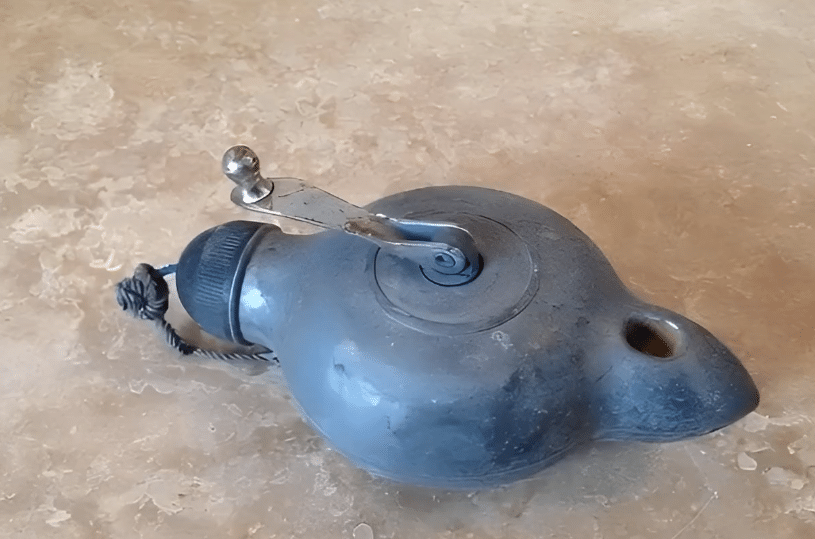
A chalk line is a specialized marking tool designed to create long, straight guidelines on flat surfaces.
Although the concept is simple, it solved a problem that builders faced for centuries: how to mark a perfectly straight line across a large distance quickly and accurately.
A traditional chalk line typically consists of:
- A metal or wooden case
- A spool of string or cord
- Chalk powder stored inside the housing
- A winding crank or reel mechanism
- A hook attached to the end of the line
The string becomes coated with chalk powder as it passes through the tool. When stretched tightly and snapped against a surface, it leaves behind a straight chalk mark that serves as a guide for construction or layout work.
How the Tool Works
The brilliance of the chalk line lies in its simplicity.
To use the tool, a worker first fills the container with powdered chalk. The string is then pulled out and secured at one end of the work surface.
Once stretched tightly, the line is lifted slightly and released.
The chalk-covered cord snaps back against the surface, instantly creating a crisp, straight guideline.
This process allows workers to mark long distances in seconds—far faster than attempting to draw a straight line by hand.
A Major Time Saver for Builders
Before modern measuring technology became available, efficiency on a job site depended heavily on practical hand tools.
A chalk line allowed builders to establish accurate reference marks for:
- Framing walls
- Installing flooring
- Laying roofing materials
- Aligning masonry work
- Cutting lumber
- Positioning siding
Instead of spending valuable time measuring and drawing lengthy lines manually, workers could create precise guides almost instantly.
For generations of tradespeople, it was an indispensable tool.
A History That Stretches Back Centuries
The concept behind the chalk line is far older than most people realize.
Ancient builders used cords coated with charcoal, pigments, or colored powders to create straight markings on stone, wood, and construction materials.
As building methods advanced, manufacturers developed enclosed chalk line reels that improved convenience and durability.
By the late nineteenth and early twentieth centuries, metal-bodied chalk lines had become standard equipment for professional tradespeople throughout North America and Europe.
Many of these early examples survive today and remain surprisingly functional.
Built to Last
One reason antique tool collectors admire vintage chalk lines is their rugged construction.
Unlike many modern tools made primarily from plastic, older chalk lines were often built from solid metal components designed to withstand years of demanding use.
Common materials included:
- Cast iron
- Brass
- Steel
- Tin-plated metal
- Hardwood accents and handles
The result was a tool capable of surviving decades of job-site conditions.
Many examples over a century old still operate smoothly today.
The Most Collectible Manufacturers
Several manufacturers became known for producing exceptionally well-made chalk lines.
Among the most sought-after names are:
- Stanley
- Keuffel & Esser (K&E)
- Goodell-Pratt
- Millers Falls
- Starrett
Collectors often search for tools that retain original paint, labels, patent markings, or packaging.
These details can significantly increase a tool’s historical interest and market value.
Why Collectors Love Vintage Chalk Lines
While originally designed for practical work, vintage chalk lines have developed a strong following among collectors.
Historical Significance
They represent a time when construction relied entirely on manual skill, precision, and craftsmanship.
Mechanical Ingenuity
Many antique models feature beautifully engineered winding systems that continue functioning decades after manufacture.
Decorative Appeal
Their industrial design makes them attractive display pieces in workshops, offices, garages, and rustic home interiors.
Connection to Traditional Trades
Every chalk line tells a story about the builders and craftsmen who once depended on it to create structures that still stand today.
What Are They Worth?
The value of a vintage chalk line depends on several factors.
Important considerations include:
- Manufacturer
- Age
- Overall condition
- Rarity
- Original finish
- Mechanical functionality
Typical market values often fall into these ranges:
- $10–$30 for common examples
- $30–$75 for desirable collectible brands
- $100 or more for rare, unusual, or exceptionally preserved specimens
Examples with original packaging or uncommon features can sometimes attract even higher prices.
How to Identify an Authentic Antique Chalk Line
If you discover one tucked away in an old toolbox, several clues can help determine its authenticity.
Look for:
- Cast-metal construction
- Patent dates
- Manufacturer stamps or logos
- Original winding crank
- Braided or cloth line remnants
- Natural aging and patina
Signs of honest wear often indicate decades of genuine use and can add to the tool’s historical appeal.
A Small Tool With a Big Legacy
At first glance, a vintage chalk line may seem like an unremarkable relic from the past.
Yet for generations of builders and craftsmen, it was one of the most important tools on the job.
Long before lasers, digital levels, and computerized measuring systems, this simple device helped create straight lines that guided the construction of homes, barns, factories, bridges, and countless other structures.
Its straightforward design, remarkable durability, and practical efficiency explain why so many examples have survived into the modern era.
Today, the vintage chalk line stands as a lasting tribute to the ingenuity and craftsmanship that built the world around us—one perfectly straight line at a time.


