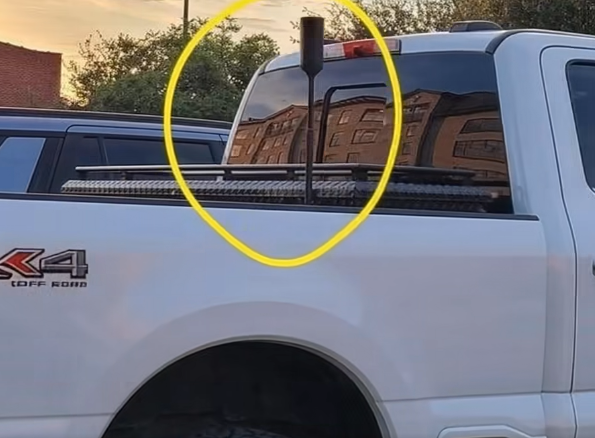
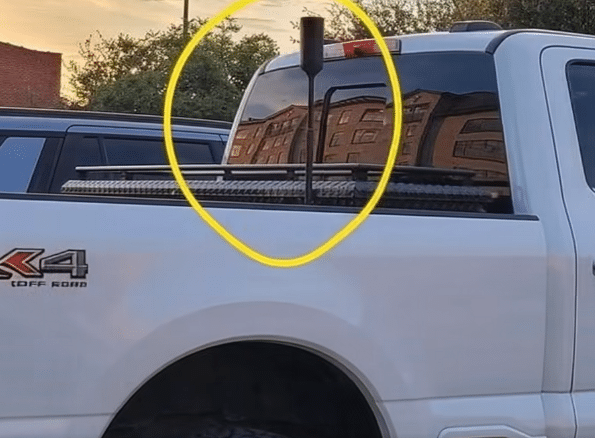
If you’ve ever been driving down the highway and noticed a tall rod mounted on the back of a truck, RV, or work vehicle, you may have assumed it was an old-fashioned CB radio antenna.
While that was often true years ago, many of those poles now serve a much different purpose.
Today, they’re commonly part of a mobile cell-signal boosting system designed to help drivers stay connected in places where cellular coverage is weak, inconsistent, or unreliable.
For people who spend long hours on the road, these systems can make a significant difference in communication, navigation, and safety.
Why Cell Signals Become a Problem
Modern smartphones are packed with advanced technology, but they still have limitations.
The internal antennas built into phones work well in cities and densely populated areas where cell towers are plentiful. However, coverage can quickly weaken when traveling through:
- Rural highways
- Mountainous regions
- Forested areas
- Desert landscapes
- Remote construction sites
- Agricultural areas
In these locations, smartphones may struggle to maintain a stable connection, leading to dropped calls, slow internet speeds, delayed messages, and unreliable GPS updates.
For professional drivers and frequent travelers, losing connectivity can become more than just an inconvenience.
How Vehicle Signal Boosters Work
The tall rod mounted outside a vehicle is usually an external antenna.
Because it is positioned higher than the phone inside the vehicle, it can capture weak cellular signals from distant towers more effectively.
The process works in three simple steps:
1. Signal Collection
The external antenna receives available cellular signals, even when they are extremely weak.
2. Signal Amplification
The captured signal is sent to an amplifier installed inside the vehicle.
The amplifier strengthens the incoming signal while helping maintain a stable connection.
3. Signal Distribution
The boosted signal is then rebroadcast inside the vehicle, allowing phones, tablets, mobile hotspots, and other connected devices to perform more reliably.
The result can include:
- Fewer dropped calls
- Faster data speeds
- Improved navigation performance
- More dependable messaging
- Better overall connectivity
Who Uses These Systems?
Cell-signal boosters have become increasingly popular among people whose work or lifestyle takes them beyond strong network coverage.
Common users include:
Truck Drivers
Long-haul truckers often travel through remote stretches of highway where maintaining communication is critical.
RV Owners
Many RV travelers enjoy exploring national parks, rural campgrounds, and remote destinations where cellular service can be limited.
Delivery Drivers
Reliable communication and GPS navigation help drivers stay on schedule and reach destinations efficiently.
Farmers and Ranchers
Agricultural operations frequently take place in rural areas where cellular signals may be weak.
Campers and Outdoor Enthusiasts
For adventurers exploring off-the-grid locations, improved connectivity can provide both convenience and peace of mind.
Designed for Modern Networks
Today’s mobile signal boosters are built to support modern cellular technologies, including LTE and many 5G-compatible networks.
Many systems can simultaneously support multiple devices inside the vehicle, making them useful for families, work crews, and mobile offices.
As more people rely on smartphones for navigation, business communication, streaming, and emergency contact, maintaining a dependable signal has become increasingly important.
Are They Worth the Investment?
Vehicle signal boosters are available in a range of configurations and price points.
Premium systems can cost several hundred dollars, depending on coverage area, performance, and installation requirements.
For occasional travelers, the expense may not be necessary. However, for people who spend significant time in low-coverage areas, many consider the added reliability well worth the investment.
The ability to maintain communication in remote locations can be valuable for both productivity and safety.
More Than Just a Pole
What appears to be a simple stick attached to the back of a truck is often a sophisticated communication tool.
Rather than serving as a traditional radio antenna, many of these systems help drivers stay connected when standard smartphone signals begin to fade.
So the next time you spot one of those tall rods on a truck or RV, you’ll know it’s probably doing much more than meets the eye—helping turn remote roads into connected journeys.