A police misconduct case that shocked viewers nationwide is once again drawing attention after resurfacing online, highlighting how a routine traffic stop escalated into a violent confrontation that ultimately ended an officer’s career and led to a prison sentence.
The incident involved former officer Christine Newman and 46-year-old Cherish Faria during a January 16 traffic stop that began over a revoked driver’s license. What followed would later become the center of a criminal investigation, civil lawsuit, and major public backlash over police accountability.
Routine Traffic Stop Quickly Escalated
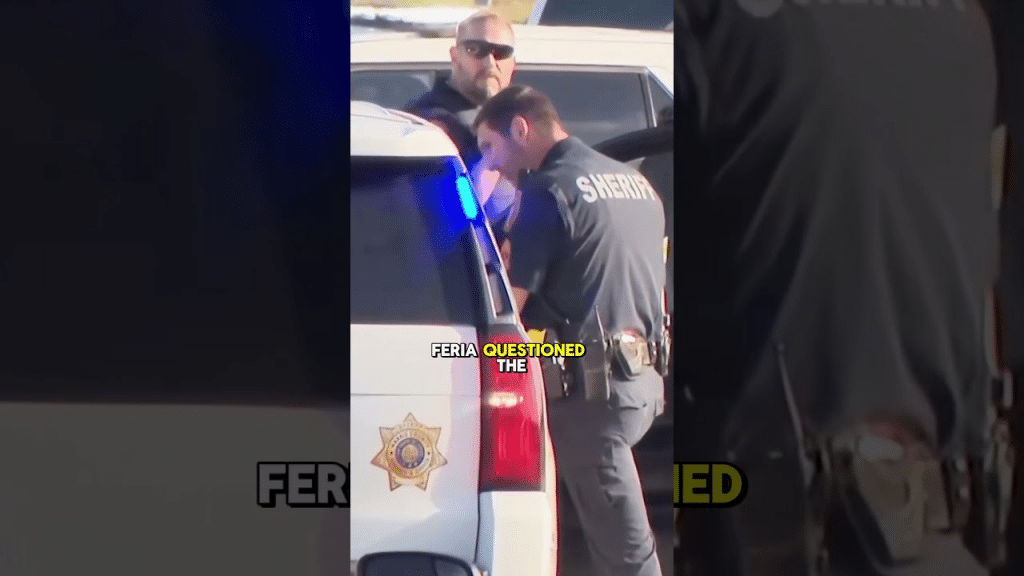
According to court records and footage reviewed during the investigation, Officer Newman stopped Faria near Highway 40 after discovering her driver’s license had been revoked only days earlier.
Newman instructed Faria to step out of the vehicle, but the situation escalated after Faria questioned the order and requested that a supervisor come to the scene.
Investigators later identified that moment as the turning point that transformed the encounter from a routine stop into a violent confrontation.
Authorities say Newman forcibly removed Faria from the vehicle, threw her to the ground, and restrained her during the arrest process.
A second officer later arrived on scene and deployed a stun gun while attempting to gain control of the situation.
Force Continued Even After Handcuffs
What drew the strongest criticism, however, was what allegedly happened after Faria had already been restrained.
According to video footage and findings presented during legal proceedings, Faria was struck, dragged by her hair, and had her head slammed against a police vehicle while handcuffed and under control.
The footage quickly became central evidence in both civil and criminal investigations.
Faria was transported to a hospital after the incident, where doctors evaluated her for neck and back injuries sustained during the arrest.
Following medical treatment, she remained in custody for three days before eventually being released.
Department Criticized Over Initial Response
Public outrage intensified after details emerged regarding the department’s initial handling of the case.
Despite the existence of footage documenting the arrest, Newman reportedly received only a brief suspension during the early stages of the investigation.
Even more controversial, the department later named her “Officer of the Month” after the incident — a decision that sparked widespread criticism once the video became public.
Attorneys representing Faria argued the commendation reflected deeper systemic problems involving police oversight and internal accountability.
Critics claimed the department failed to properly evaluate the use-of-force allegations despite clear evidence showing a restrained individual being subjected to continued violence.
Independent Investigation Changed the Case
The trajectory of the case shifted dramatically after Faria filed a civil lawsuit and outside investigators reviewed the evidence independently.
Authorities eventually concluded that Newman’s actions during the traffic stop crossed the line from misconduct into criminal behavior.
Investigators specifically focused on the treatment of Faria after she had already been handcuffed and no longer posed a threat.
Newman was ultimately terminated from the police department, permanently ending her law enforcement career.
Criminal charges were later filed, moving the case beyond internal discipline and into the court system.
Former Officer Sentenced to Five Years
Following legal proceedings, Newman was sentenced to five years in prison for her actions during the arrest.
In addition to the prison sentence, the court permanently banned her from serving in any law enforcement role in the future.
Legal analysts noted that the combination of incarceration and a lifetime policing ban represented one of the more severe consequences imposed in a recent police use-of-force case.
Observers also pointed out that the sentence reflected the court’s determination that the assault on a restrained detainee warranted punishment beyond simple termination or suspension.
Case Sparks Broader Accountability Debate
For Cherish Faria, the ruling provided a measure of legal accountability after years of legal battles and public scrutiny.
However, the case continues fueling wider discussions about police oversight, departmental review systems, and how misconduct allegations are handled internally before criminal charges are considered.
Critics argue the timeline between the original incident and the eventual prosecution exposed major failures within the department’s disciplinary process.
The fact that Newman received recognition while the case was still under review has remained one of the most controversial aspects of the entire incident.
As renewed attention surrounds the case online, many see it as a powerful example of how independent investigations and public evidence can reshape outcomes in police misconduct cases.


