Spotting a large cluster of bees gathered on a tree branch, fence, car, or even outside a home can be alarming for many people. The sight of thousands of buzzing insects packed tightly together often causes immediate panic, leading some to consider calling emergency services or trying to remove the swarm themselves.
But according to bee experts and environmental advocates, there is usually no reason to panic.
In many cases, these swarms are simply migratory honeybees temporarily stopping to rest during their journey to a new nesting location. While the appearance may look intimidating, experts explain that these bees are often far less aggressive than people assume.
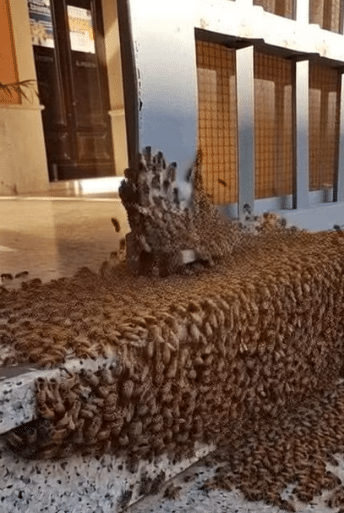
A bee swarm typically forms when a colony becomes too large and part of the hive leaves with a queen bee to establish a new home elsewhere. During this transition period, the bees may gather together in a temporary cluster for several hours or even up to a day while scout bees search for a suitable permanent location.
Because the bees are focused on protecting their queen and conserving energy during migration, they are generally calm and unlikely to attack unless seriously disturbed.
That is why specialists strongly advise people not to spray, hit, burn, or attempt to destroy a resting swarm.
Many experienced beekeepers say the best approach is simple: keep a respectful distance and allow the bees time to move on naturally.
Environmental experts also stress the critical importance of protecting bee populations worldwide. Bees play a vital role in pollinating crops, flowers, and plants that support both ecosystems and global food production.
Without pollinators like honeybees, many fruits, vegetables, nuts, and agricultural products would become extremely difficult to grow. Scientists have repeatedly warned that declining bee populations could create serious consequences for biodiversity, farming, and food security.
In recent years, concerns about habitat loss, pesticide exposure, climate change, and disease have contributed to increased awareness about bee conservation efforts around the world.
Some animal welfare advocates recommend placing a shallow tray or plate containing sugar water near an exhausted swarm if the bees appear weak or inactive. The sugar solution can provide temporary energy while the insects prepare to continue their journey.
However, experts caution that people should never attempt to handle swarms directly without proper training or protective equipment. If bees settle in unsafe areas such as inside homes, schools, or heavily populated public spaces, local beekeepers or professional bee relocation specialists are often the safest option.
Unlike extermination services, many bee rescue organizations carefully relocate swarms to safe environments where colonies can continue surviving and pollinating naturally.
Interestingly, migratory bee swarms have become increasingly visible online through viral photos and videos shared on social media. While some viewers react with fear, others see these moments as reminders of how important pollinators are to the environment and everyday life.
Beekeepers often describe swarming as one of nature’s most fascinating survival behaviors — a temporary pause during the creation of a new colony and a new beginning for thousands of insects working together.
So if you ever encounter a massive group of bees clustered together outdoors, experts say the most important thing is not to panic.
In many cases, the bees are simply resting, conserving energy, and preparing to continue their journey.
And while the sight may seem frightening at first, these tiny creatures play an enormous role in supporting life on Earth.


