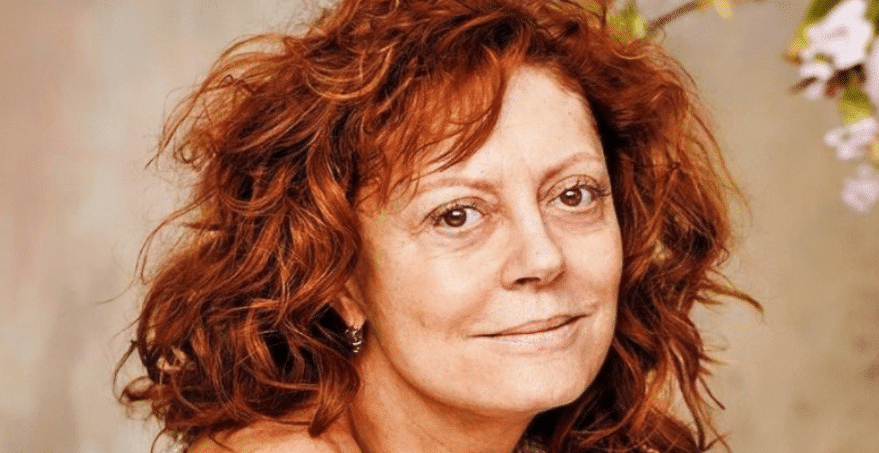
With her expressive eyes, unmistakable red hair, and quietly commanding screen presence, Susan Sarandon has remained one of American cinema’s most distinctive performers for more than five decades.
She never followed the traditional path expected of a Hollywood leading lady. Instead, she chose complicated women, unconventional stories, and roles that allowed her to explore courage, vulnerability, humor, and moral uncertainty.
Born Susan Abigail Tomalin on October 4, 1946, she is now 79. The passing years have not diminished the qualities that made audiences notice her in the first place. Her warmth, intelligence, and willingness to take creative risks remain central to her appeal.
For older moviegoers, looking back at Sarandon’s remarkable journey can feel like turning through a treasured family album. Her films evoke midnight screenings, neighborhood theaters, video-store weekends, and an era when memorable characters often stayed with audiences long after the credits ended.
Growing Up in a Large New York Family
Sarandon was born in New York City and grew up in Edison, New Jersey. As the eldest of nine children, she became familiar with responsibility at an early age.
Her childhood did not suggest that she would eventually become an Academy Award-winning actress. She attended Catholic schools and later studied drama at the Catholic University of America in Washington, D.C.
Her entrance into filmmaking happened almost unexpectedly. She accompanied her then-husband, Chris Sarandon, to an audition for the 1970 film Joe. Although he did not receive a role, she did.
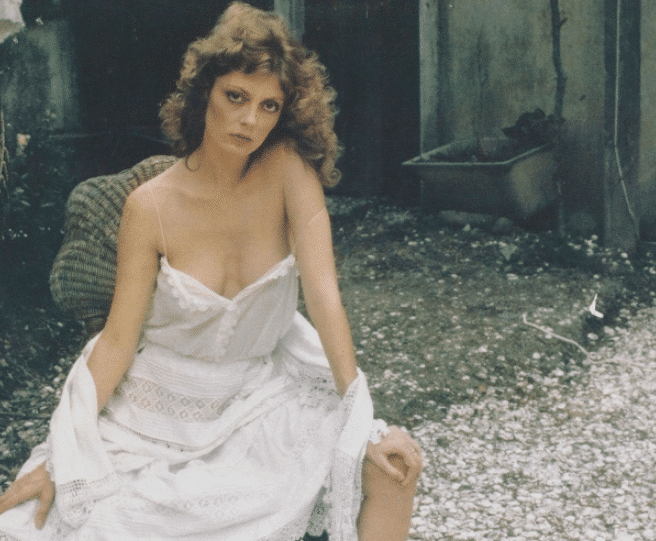
The opportunity introduced her to a rapidly changing American film industry. The polished studio system of earlier decades was giving way to grittier stories about social tension, generational conflict, and ordinary people navigating uncertain times.
Sarandon’s naturalistic acting suited that new landscape. She did not seem manufactured by a studio publicity department. She appeared thoughtful, independent, and emotionally accessible—qualities that would become increasingly valuable as her work developed.
The Midnight Movie That Created a Cult Following
A defining early role arrived in 1975 when Sarandon portrayed Janet Weiss in The Rocky Horror Picture Show. The musical comedy was not an immediate mainstream success, but midnight screenings gradually transformed it into an enduring cultural phenomenon.
Audiences arrived wearing costumes, repeated familiar lines, and turned every showing into a communal celebration. For many teenagers and young adults, the movie offered a rare place where eccentricity felt welcome.
Sarandon’s Janet begins as an innocent young woman who enters an unfamiliar mansion on a stormy night. By the end, she has experienced a dramatic awakening. The character’s transformation allowed Sarandon to balance comedy, vulnerability, and growing confidence.
The movie introduced her to generations of viewers who may not have encountered her more serious work. Decades later, its theatrical screenings continue to attract devoted audiences.
For anyone who attended those midnight gatherings during the 1970s or 1980s, seeing Sarandon as Janet can instantly bring back memories of crowded theaters, handmade costumes, and young people finding a community in the dark.
Atlantic City Revealed Her Dramatic Depth
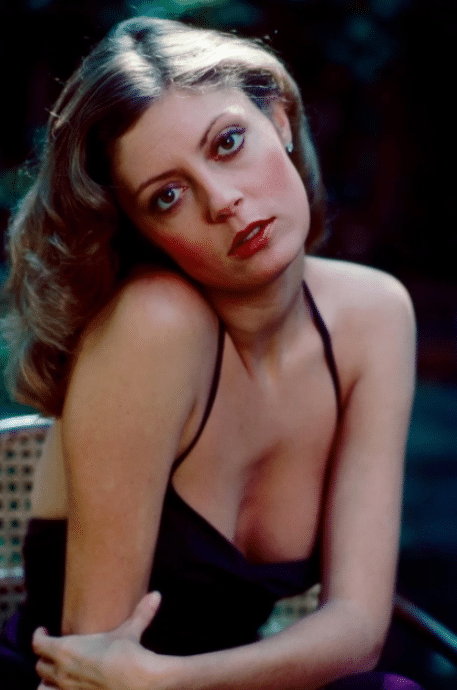
Sarandon’s performance in Atlantic City marked an important artistic breakthrough. Directed by Louis Malle and released in 1980, the film placed her alongside Burt Lancaster in a melancholy story set against a seaside city undergoing redevelopment.
She portrayed Sally Matthews, a determined casino worker hoping to become a dealer in Monte Carlo. Sally possesses ambition, yet her circumstances repeatedly pull her into disappointment and danger.
Sarandon avoided turning the character into a simple victim. She gave Sally humor, intelligence, longing, and a sense of guarded hope. Her work earned her first Academy Award nomination for Best Actress.
The film also preserved an unforgettable image of old Atlantic City. Aging buildings stood beside new casinos, reflecting a nation caught between faded traditions and uncertain modern promises.
Sarandon’s understated performance matched that atmosphere. She showed that she could hold the screen without theatrical gestures, allowing quiet reactions to carry the emotional weight.
From Bull Durham to a Road-Movie Landmark
During the 1980s, Sarandon continued choosing roles that resisted easy classification. In The Witches of Eastwick, she joined Cher and Michelle Pfeiffer in an imaginative comedy featuring Jack Nicholson. Her character begins shy and restrained before discovering a far more confident side of herself.
Then came Bull Durham in 1988. Playing Annie Savoy opposite Kevin Costner and Tim Robbins, Sarandon helped create one of cinema’s most beloved baseball films.
Annie was intelligent, sensual, funny, and unapologetically independent. Sarandon delivered the dialogue with the rhythm of someone who fully understood the character’s philosophy about baseball, romance, and personal reinvention.
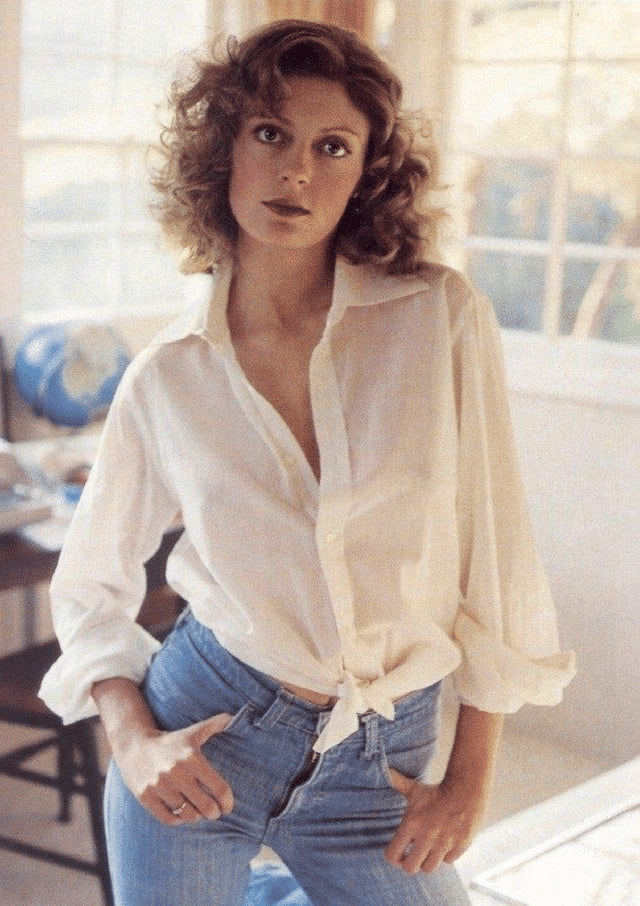
Yet her portrayal of Louise Sawyer in Thelma & Louise became the role that permanently secured her place in popular culture. Released in 1991 and directed by Ridley Scott, the movie paired her with Geena Davis for a road journey that began as a weekend getaway and became a powerful story about friendship and freedom.
Louise appeared practical and controlled, but Sarandon gradually revealed the pain and devotion beneath that composure. Her chemistry with Davis gave the film its heart.
Both actresses received Academy Award nominations, while Callie Khouri won for her original screenplay. The movie remains a cultural landmark more than three decades later.
The Long Road to an Academy Award
By the mid-1990s, Sarandon had accumulated several acclaimed performances and multiple Oscar nominations. Her work in Lorenzo’s Oil showed a mother’s relentless determination, while The Client cast her as a lawyer protecting a frightened child.
Her long-awaited Academy Award arrived in 1996 for her portrayal of Sister Helen Prejean in a deeply challenging prison drama.
The role required extraordinary restraint. Sarandon portrayed a nun attempting to offer spiritual guidance while confronting questions about guilt, responsibility, compassion, and justice.
She did not ask audiences to accept easy answers. Instead, her performance created room for discomfort and reflection. That moral complexity made the role one of the most demanding and respected achievements of her filmography.
The Academy’s official records confirm that Sarandon received the Best Actress honor at the 68th Academy Awards.
The victory represented the culmination of years spent choosing substance over predictability. She had reached Hollywood’s highest stage without giving up the qualities that made her work unique.
An Independent Voice Beyond the Movie Screen
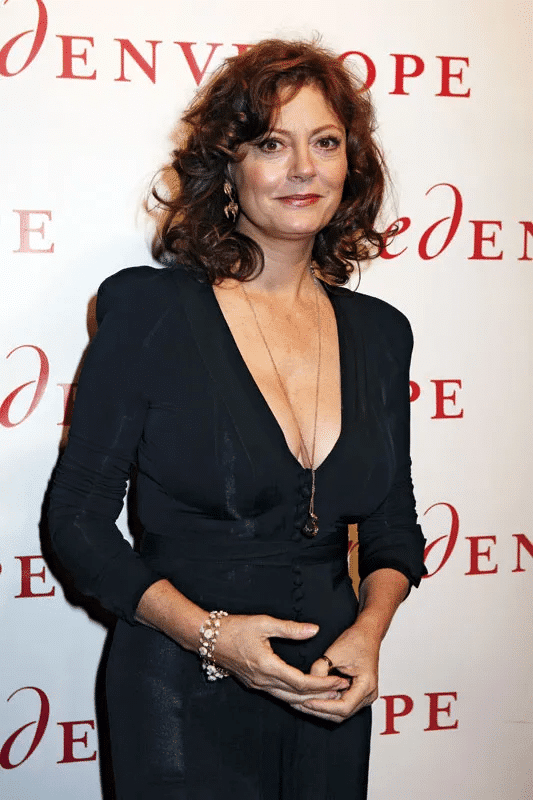
Sarandon has also become known for expressing strong opinions on humanitarian and political issues. Her public positions have sometimes attracted praise and sometimes controversy, but she has rarely softened her views simply to remain popular.
In 1999, she became a UNICEF Goodwill Ambassador, supporting efforts related to children and vulnerable families around the world. She has also supported women’s rights, humanitarian relief, environmental causes, and campaigns addressing poverty.
That public advocacy mirrors the independence found in many of her characters. Sarandon has repeatedly been drawn to women who question authority, challenge expectations, or refuse to accept the roles assigned to them.
She is also a mother of three: Eva Amurri, Jack Robbins, and Miles Robbins. Her family has provided an important counterbalance to the demands of filmmaking and public attention.
Now a grandmother as well, she continues to approach aging with humor and curiosity. She has rejected the idea that women must become invisible as they grow older, choosing instead to remain active, expressive, and open to new experiences.
Conclusion: Why Susan Sarandon Still Captivates Audiences
Susan Sarandon’s enduring appeal cannot be explained by beauty alone. Hollywood has introduced audiences to countless glamorous performers, but few have combined intelligence, warmth, courage, and unpredictability in quite the same way.
From Janet Weiss and Annie Savoy to Louise Sawyer, Marmee, Sister Helen Prejean, and Bette Davis, she has created women who feel complicated and fully human.
Her face has naturally changed across five decades, but the qualities behind it remain familiar: the knowing smile, the steady gaze, the suggestion that her character understands more than she is saying.
For longtime fans, recognizing Susan Sarandon in photographs from different eras is not difficult. Her hairstyles and fashions may change, yet her distinctive presence remains.
She has never needed to remain frozen in youth to hold an audience’s attention. Her greatest strength has always been something more durable—the courage to keep evolving while remaining unmistakably herself.