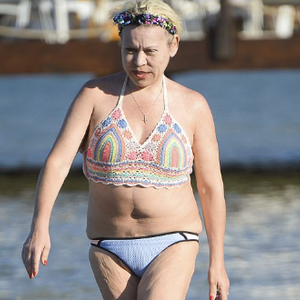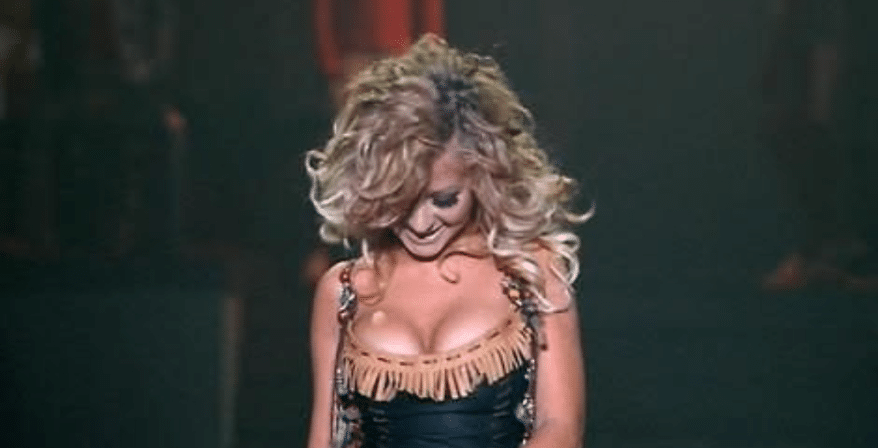
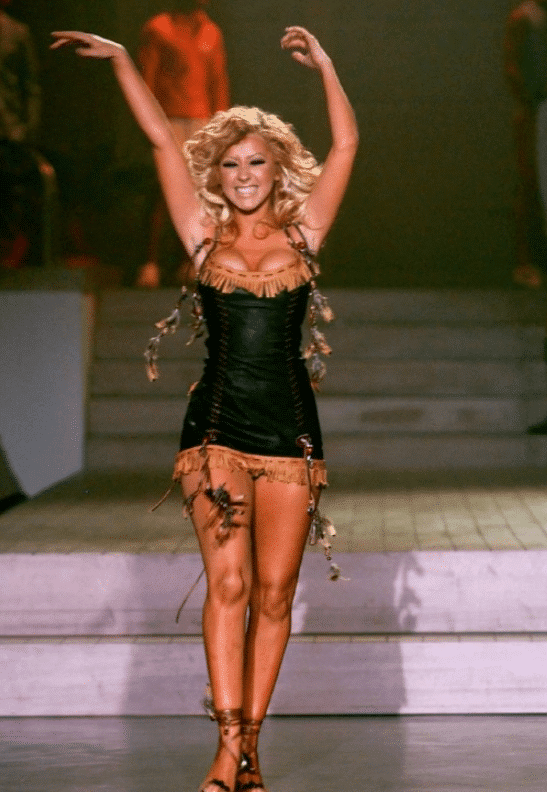
With enormous blonde curls, dramatic eye makeup, and a fringed leather dress, this young performer brought concert-level energy to a Milan runway more than two decades ago.
The photographs do not show a casual outing, despite the original headline. They capture Christina Aguilera performing during the Dsquared2 Spring/Summer 2005 menswear presentation in June 2004.
Aguilera was 23 and enjoying one of the most creatively adventurous periods of her career. Her voice was already recognized around the world, while her evolving fashion choices made nearly every appearance a pop-culture event.
The Milan performance united two industries that were becoming increasingly connected: popular music and high fashion. It also captured a defining feature of Aguilera’s career—her determination to keep changing before the public could place her in one permanent category.
A Powerful Voice Emerged From Pennsylvania
Christina María Aguilera was born in Staten Island, New York, in 1980. She spent part of her childhood in Pennsylvania and demonstrated unusual vocal ability at an early age.
As a young performer, she appeared on television talent programs before joining The All-New Mickey Mouse Club. The cast included several future stars, among them Britney Spears, Justin Timberlake, Ryan Gosling, and Keri Russell.
Those early television years provided intensive experience. Aguilera learned choreography, studio performance, camera awareness, and the discipline required to deliver polished entertainment on a demanding schedule.
Her voice, however, remained her greatest advantage.
Even as a child, she could produce a surprisingly rich and forceful sound. Listeners frequently compared her vocal power with that of performers many years older.
“Genie in a Bottle” Introduced Her to the World
Aguilera’s self-titled debut album arrived in 1999.
Its first major single, “Genie in a Bottle,” became a global hit and reached the top of the Billboard Hot 100. Additional successes—including “What a Girl Wants” and “Come On Over Baby”—established her as one of the leading new pop performers of the era.
Her early image reflected the carefully coordinated style of late-1990s popular music. Shimmering makeup, fitted tops, colorful music videos, and elaborate choreography helped define the period.
Behind that packaging was a serious vocalist who wanted greater creative control.
Aguilera’s debut brought commercial success and a Grammy Award for Best New Artist. Yet she soon began moving beyond the youthful image that had introduced her to mainstream listeners.
“Stripped” Marked a Fearless Reinvention
Released in 2002, Stripped represented a major turning point.
The album explored independence, insecurity, resilience, family conflict, and self-acceptance. Its varied production moved through pop, rock, R&B, soul, and Latin influences.
“Beautiful” became one of Aguilera’s most enduring recordings. Its message of dignity and self-worth connected with listeners who had felt judged, excluded, or uncertain about their place in the world.
“Fighter” transformed disappointment into strength, while “The Voice Within” encouraged listeners to trust themselves during difficult moments.
The album’s visual presentation was equally bold. Aguilera adopted the nickname “Xtina,” experimented with darker hair, and rejected the polished uniformity of her debut era.
Some of her choices attracted criticism. Still, the willingness to provoke discussion helped establish her as an artist interested in more than maintaining a safe commercial image.
Milan Fashion Week Became Her Next Stage
In June 2004, Aguilera appeared during the Dsquared2 Spring/Summer 2005 menswear show in Milan.
Canadian twin designers Dean and Dan Caten had built a reputation for combining precise tailoring with denim, streetwear, outdoor references, and theatrical presentation.
Their runway shows were never intended to be quiet displays of clothing. Music, celebrity appearances, choreography, and humor were essential parts of the experience.
Aguilera fit naturally into that world.
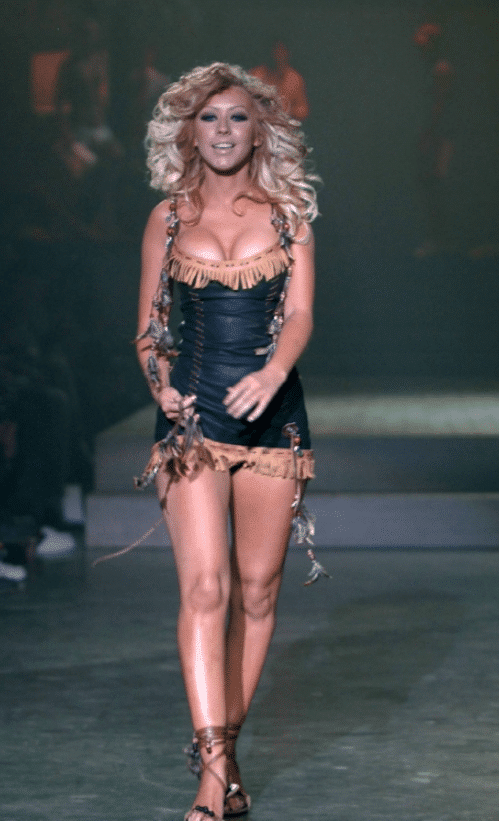
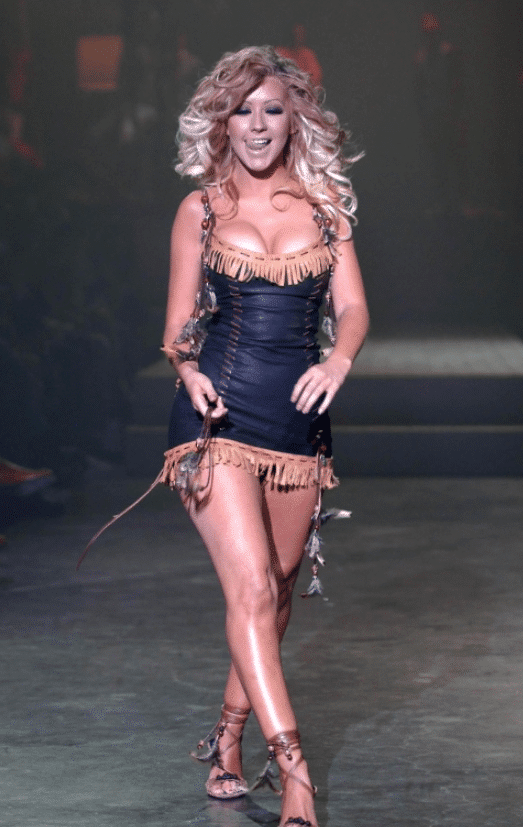
She entered wearing a fitted dark leather dress decorated with fringe and metallic details. Her voluminous blonde curls and smoky makeup created a rock-inspired image that matched the collection’s rebellious attitude.
The runway became a concert stage, and the traditional separation between model, musician, and performer temporarily disappeared.
A Fashion Moment That Belonged to the Early 2000s
The photographs capture a period before social media delivered fashion shows instantly to millions of phones.
In 2004, runway images traveled through magazines, television reports, newspapers, and early entertainment websites. A major celebrity appearance could give an international presentation attention far beyond the fashion industry.
Aguilera’s participation represented the growing relationship between luxury design and popular music.
Performers needed memorable visual identities for videos, tours, and award ceremonies. Designers benefited from stars who could bring clothing into mainstream conversation.
Dsquared2 understood that exchange particularly well. Its founders built runway spectacles that treated fashion as entertainment rather than a private industry event.
Aguilera did not merely sit in the front row. She became part of the presentation.
The Difference Between Costume and Storytelling
Aguilera’s fashion transformations were sometimes dismissed as attempts to attract attention. That interpretation overlooks how closely her styling followed her musical development.
Her debut era used youthful pop imagery. Stripped introduced rougher textures and rebellious details. Back to Basics later embraced old Hollywood silhouettes, pinup-inspired hair, and the atmosphere of jazz clubs.
Each visual change helped announce a new creative chapter.
The leather-and-fringe Milan look belonged to the final stretch of the Stripped period. It retained the era’s toughness while hinting at the polished glamour that would soon follow.
“Back to Basics” Revealed Another Christina
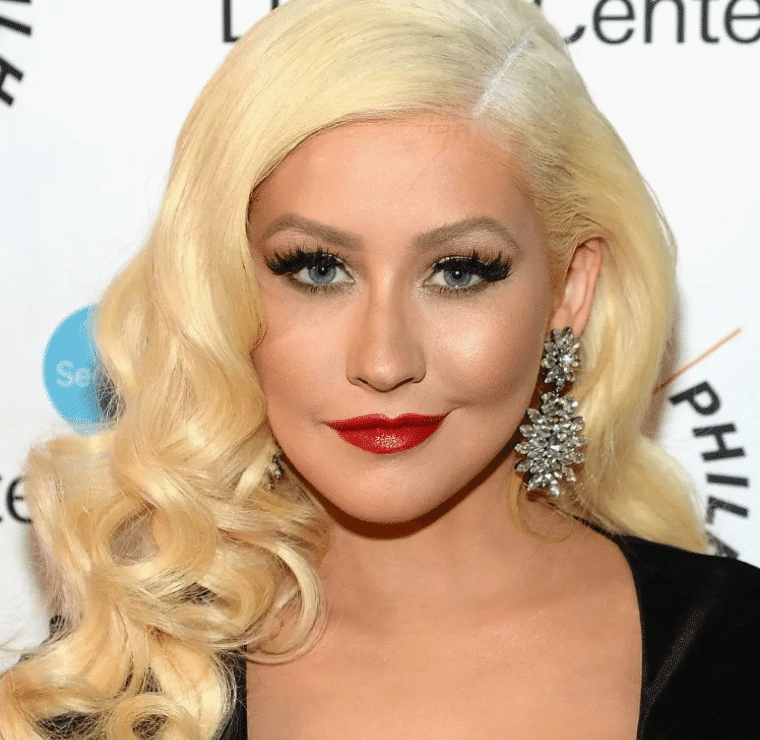
In 2006, Aguilera released Back to Basics, a double album inspired by jazz, blues, soul, and music from earlier generations.
Her appearance changed again. Platinum waves, red lipstick, tailored suits, and classic gowns replaced much of the raw styling associated with Stripped.
Songs such as “Ain’t No Other Man,” “Hurt,” and “Candyman” introduced vintage influences to a contemporary pop audience.
The transformation demonstrated that Aguilera did not view reinvention as rejection. She carried the vocal confidence developed during earlier eras into a more polished musical setting.
Her powerful delivery remained the connecting thread.
From Movie Musicals to Television Mentorship
Aguilera expanded into film through Burlesque in 2010, appearing alongside Cher.
The movie allowed both performers to combine acting with elaborate musical numbers. Its soundtrack gained a devoted following, particularly among listeners who appreciated theatrical pop and powerhouse vocals.
Aguilera later became one of the original coaches on NBC’s The Voice. Sitting beside artists from different genres, she offered contestants advice drawn from her own experience with auditions, live performance, criticism, and public expectations.
The program introduced a more conversational side of her personality. Viewers saw the professional knowledge behind the glamorous stage image.
She also continued releasing English- and Spanish-language music, reconnecting with the bilingual side of her early career.
Christina Aguilera’s Voice Remains the Constant
At 45 in 2026, Christina Aguilera has spent most of her life performing professionally.
Her official biography credits her with more than 75 million records sold worldwide. She has achieved No. 1 singles across three consecutive decades and collected multiple Grammy Awards.
Those numbers are impressive, but they do not fully explain her longevity.
Aguilera remained relevant because she treated change as part of the work. She allowed one era to end, accepted the risks of starting another, and trusted that her voice could connect every transformation.
The 2004 Milan photographs are not images from a casual afternoon away from the stage. They show a performer completely at home on one.
Beneath the enormous curls, leather fringe, and theatrical makeup is an artist learning how to control her own story—and preparing, once again, to become someone new.