When actress Eliza Coupe attended the Los Angeles premiere of Netflix’s The Residence in March 2025, photographs of her quickly traveled across entertainment websites and social media.
Some commenters focused on her slim appearance, dramatic eye makeup, short bangs, and oversized glasses. Others used unfairly sensational language to describe how different she looked from her years on Scrubs and Happy Endings.
Coupe soon responded. She said that widely circulated photographs had been heavily altered and shared her own images to show how she actually appeared. Her message was direct: she knew herself better than strangers studying a photograph.
The episode raised a larger question about celebrity culture. Why do viewers feel entitled to diagnose, criticize, or explain a woman’s appearance based on a handful of pictures?
Coupe’s real story is far more interesting than an unflattering headline. It is the story of a gifted comedian, a candid conversation about body image, and a career filled with memorable characters.
Eliza Coupe Found Comedy Far From Hollywood
Born in Plymouth, New Hampshire, in 1981, Eliza Coupe grew up in a small New England community with two brothers.
She participated in hockey and other physical activities during her younger years. Growing up around athletic boys helped build toughness, but Coupe has also explained that comparisons within that environment influenced how she viewed her own body.
Performance offered another outlet.

After high school, she attended the California Institute of the Arts, where she developed her theatrical skills. She later trained in improvisational comedy, an art form requiring quick thinking, close listening, and complete commitment to unexpected ideas.
Coupe began attracting professional attention during the mid-2000s. Her early work included live comedy, television appearances, and a one-woman stage production.
That background explains the fearless energy she later brought to television. Even when playing a tightly controlled character, Coupe could suggest that comic chaos was always waiting just beneath the surface.
“Scrubs” Introduced Her to Television Viewers
Coupe joined Scrubs during its eighth season as Dr. Denise Mahoney, sometimes called “Jo” by another character.
Denise was blunt, intensely confident, and not particularly interested in conventional bedside warmth. At Sacred Heart Hospital, where nearly everyone had an eccentric personality, she still managed to stand out.
Coupe avoided making Denise one-dimensional. Behind the character’s hard exterior was a young physician learning how to connect with patients and colleagues.
Her dry delivery worked especially well against the show’s more emotional characters. A raised eyebrow or clipped reply could become the funniest moment in a scene.
Scrubs originally arrived in 2001 and became known for balancing imaginative comedy with surprisingly heartfelt hospital stories. By the time Coupe joined the cast, viewers already had strong attachments to the program.
Entering an established ensemble can be difficult. Coupe succeeded by creating a character who felt different from the familiar doctors while still belonging in their unusual world.
Why Denise Mahoney Remains Memorable

Many sitcom characters are built around one recognizable joke. Denise initially seemed to be defined by her tough manner, but Coupe gradually revealed vulnerability without changing the character completely.
That balance made Denise believable.
She could misunderstand an emotional situation, realize she had gone too far, and then attempt to improve without suddenly becoming a different person. Coupe found comedy in that awkward growth.
Although she appeared during the final portion of the original series, Denise became one of its most recognizable later additions.
For longtime viewers, Coupe’s Scrubs years may recall an era when network television still operated on weekly schedules and fans waited months for a favorite program to return.
“Happy Endings” Revealed Her Full Comic Range
In 2011, Coupe began playing Jane Kerkovich-Williams on ABC’s Happy Endings.
Jane was organized, competitive, energetic, and convinced that nearly any situation could be improved through planning. Her husband, Brad, played by Damon Wayans Jr., often matched her enthusiasm while helping soften her more intense impulses.
The character could have become exhausting in less skillful hands. Coupe made Jane hilarious and strangely lovable.
Her physical comedy was fearless. Her line delivery was fast and precise. Most importantly, she understood that Jane’s need for control came from affection for her family and friends.
Although Happy Endings lasted only three seasons during its original ABC run, it developed a devoted following. Viewers continued discovering it through streaming, and calls for a reunion became part of the show’s enduring story.
For many fans, Jane—not Denise—is the role that first comes to mind when they see Coupe.
A Career Built Around Strong, Unusual Women
Coupe continued selecting characters who were intelligent, outspoken, and difficult to categorize.
In Future Man, she portrayed Tiger, a battle-hardened fighter from another timeline. The comedy combined science fiction, action, and absurd humor, giving Coupe another opportunity to use her physical and improvisational talents.
She also appeared in Quantico, Benched, Pivoting, Murderville, and So Help Me Todd.
In 2025, she joined the ensemble of The Residence, a mystery-comedy set inside the White House. Coupe portrayed Margery Bay Bix, a junior senator attending an important state dinner when the evening takes an unexpected turn.
The Netflix production gathered an extensive cast around a playful whodunit. It was at the show’s Los Angeles premiere that photographs of Coupe generated an uncomfortable wave of public commentary.
Instead of allowing the conversation to proceed without her, she answered in her own voice.
Coupe Said the Circulating Images Were Altered

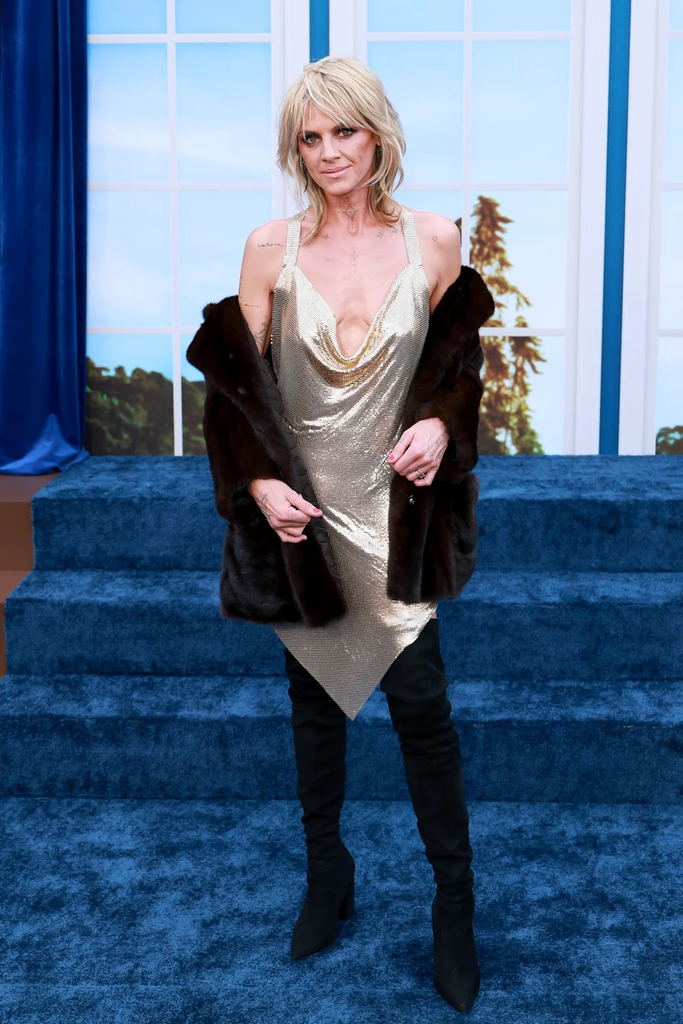
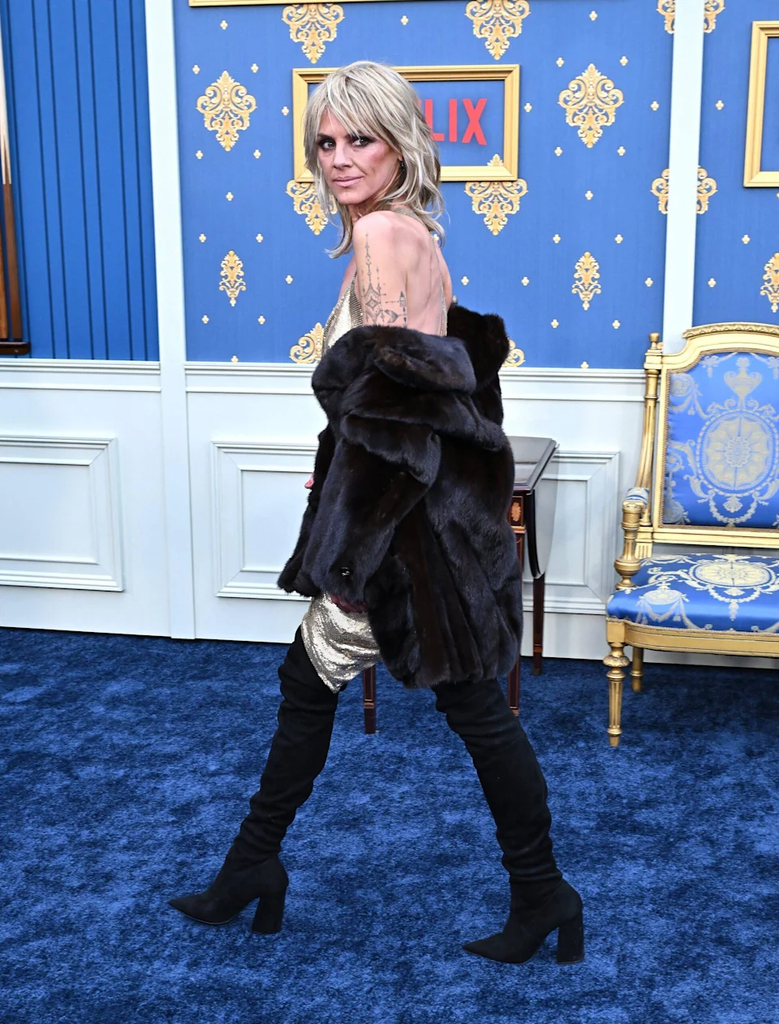
The red-carpet photographs showed Coupe wearing a shimmering gold dress beneath a dark coat. She completed the look with smoky eye makeup, bold glasses, and short, uneven bangs.
The styling represented a noticeable departure from Jane’s polished wardrobe on Happy Endings. That did not justify strangers making medical assumptions or treating a changing appearance as public evidence.
Coupe said that some widely shared images had been “wildly altered.” She posted selfies and videos, emphasizing that these offered a more accurate view.
Her response matters because cameras are not neutral witnesses. Lighting, lenses, angles, makeup, image compression, and digital editing can all affect how a person appears.
A single photograph also says very little about someone’s health.
Concern may sound kinder than criticism, but public speculation can still be invasive—particularly when it involves a person who has previously discussed body image.
Her Earlier Comments About Food and Body Image
In a candid 2017 interview, Coupe spoke about long-standing difficulties involving food, anxiety, physical appearance, and digestive sensitivities.
She described following a highly individualized plant-based eating routine because many ingredients caused discomfort. She also discussed yoga, stretching, breathing exercises, early-morning routines, and cold showers.
Those comments should be understood as one person describing her own experience—not as a medical program for readers to copy.
Foods and wellness practices affect people differently. Restrictive eating can also create nutritional risks when undertaken without appropriate support. Anyone experiencing digestive symptoms, significant weight changes, anxiety around food, or body-image distress should consider speaking with qualified medical or mental-health professionals.
The source article connects certain foods and routines with youthful appearance and hormonal regulation. Those broad claims should not be presented as established facts without strong clinical evidence.
Coupe’s most valuable contribution was not offering a universal formula. It was speaking honestly about the complicated relationship between Hollywood expectations, physical comfort, and self-perception.
Why Appearance-Based Headlines Cause Harm
Words such as “unrecognizable” and “shocking” are often used to attract clicks. They encourage readers to compare current photographs with carefully selected images from years earlier.
That comparison is rarely fair.
People age. Hairstyles change. Makeup changes. Camera technology changes. A performer may gain or lose weight for countless private reasons—or appear different simply because a particular photograph captured an unusual moment.
When coverage treats normal variation as a spectacle, it reduces a complete person to a before-and-after image.
Coupe deserves to be discussed as an actress and comedian, not as a puzzle for strangers to solve. She has spent nearly two decades creating characters with intelligence, precision, and remarkable comic timing.
Eliza Coupe’s Real Transformation Is Creative

At 45 in 2026, Eliza Coupe has traveled from New Hampshire theater to improvisational comedy, network sitcoms, action-heavy science fiction, and a stylish streaming mystery.
Her appearance at one premiere does not erase that body of work. Nor does it provide the public with enough information to make responsible conclusions about her private well-being.
The strongest response to her photographs is also the simplest: respect her explanation.
Fans may remember Denise Mahoney’s blunt confidence or Jane Kerkovich-Williams’ perfectly organized chaos. Those performances remain funny because Coupe brought intelligence and humanity to characters who could easily have become caricatures.
That is the transformation worth celebrating—the journey from a young stage performer to one of television comedy’s most distinctive voices. Clothes, hair, and makeup will continue to change. Genuine talent is much harder to alter.