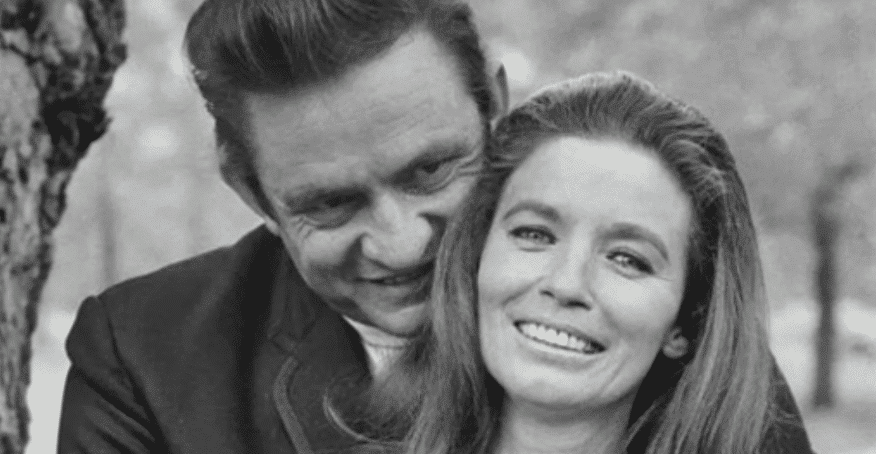
Some love stories arrive wrapped in polished promises. Others are shaped by long highways, crowded theaters, private struggles, and second chances. The story of Johnny Cash and June Carter belonged firmly to the second kind.
To millions of Americans, Cash was the unmistakable Man in Black—a towering figure with a deep voice, a steady guitar, and songs that seemed to understand ordinary people. Yet behind that commanding presence stood a man who openly acknowledged his faults.
When he reflected on June’s devotion, his message was strikingly simple: she loved him despite everything, including the qualities he sometimes found difficult to accept in himself.
Their marriage was never a picture-perfect Hollywood fantasy. That may be precisely why it continues to resonate.
Two Country Music Lives Crossed in 1956
Johnny Cash and June Carter first met backstage at Nashville’s Grand Ole Opry in 1956. At the time, both performers were building remarkable careers while navigating complicated personal lives.
June already belonged to country music royalty. As a member of the Carter Family tradition, she had grown up surrounded by songs, instruments, radio appearances, and touring schedules. Humor came naturally to her, and audiences appreciated the warmth she brought to every stage.
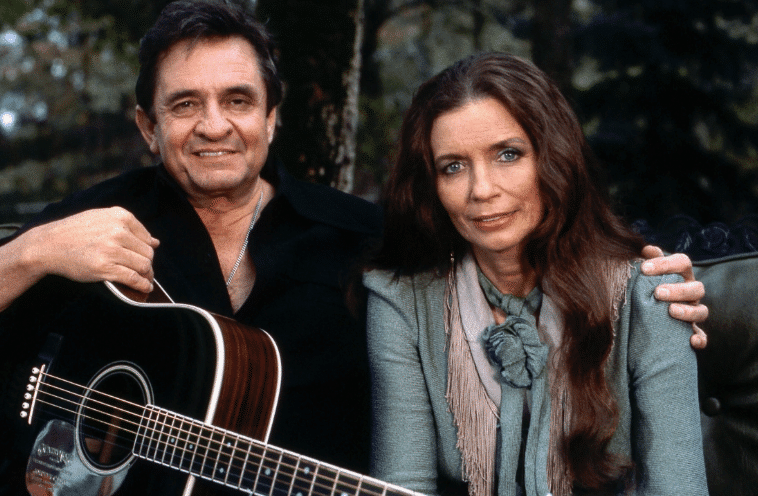
Cash was emerging as one of the most distinctive voices of his generation. Recordings such as “I Walk the Line” and “Folsom Prison Blues” had introduced listeners to a performer who sounded unlike anyone else on the radio.
Elvis Presley had reportedly spoken to June about Cash before their first meeting. Still, nothing could quite prepare her for the imposing young singer dressed in dark clothing, carrying himself with a mixture of confidence and nervous energy.
Cash later recalled being captivated by her almost immediately.
A Musical Partnership Built on Natural Chemistry
The connection between Johnny and June did not begin as a tidy romance. They spent years working together, traveling with touring shows, and learning how their personalities fit onstage.
Their musical chemistry was obvious. Cash’s low, weathered delivery balanced beautifully against June’s brighter voice and playful timing. When they sang together, listeners heard something that could not be created through studio technique alone.
The pair recorded memorable duets, including “Jackson,” which became one of the defining country performances of the 1960s. Their exchanges felt lively and personal, almost like a conversation between two people who knew each other’s rhythms by heart.
American families heard those songs on kitchen radios, car stereos, and living-room record players. The voices of Johnny and June became part of the nation’s musical furniture—familiar, comforting, and instantly recognizable.
Why Their Duets Still Feel So Genuine
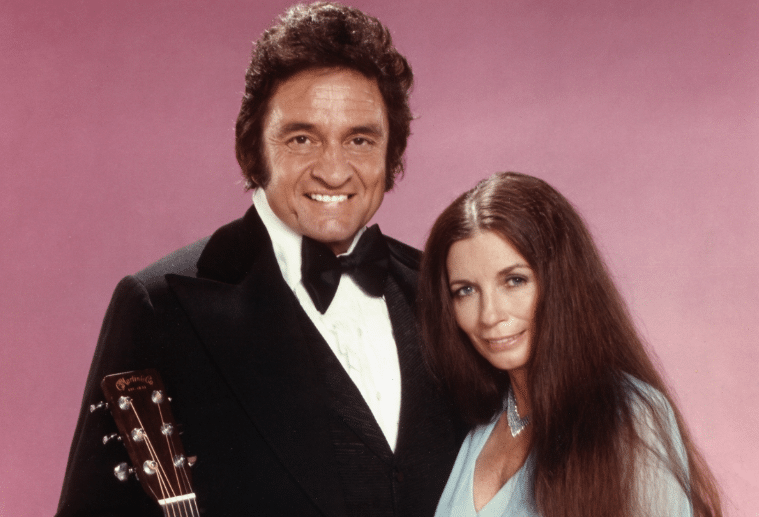
What made the partnership special? Neither performer tried to overpower the other.
June brought humor and lightness to Cash’s solemn presence. Cash gave their performances emotional weight. Together, they found a balance between tenderness and mischief.
Even listeners who knew little about their private relationship could sense the affection underneath the music. A raised eyebrow, a shared smile, or a perfectly timed reply often communicated as much as the lyrics.
The Difficult Years Behind the Famous Voice
By the mid-1960s, Cash’s career was soaring, but his private world had grown increasingly troubled. The pressure of constant touring, exhausting schedules, and substance dependence took a serious toll.
June saw both sides of the man audiences admired. She knew the confident entertainer who could command an arena, but she also understood the vulnerable person behind the curtain.
Popular retellings sometimes reduce June to the woman who “saved” Cash. The reality was more complicated. Recovery ultimately required Cash to accept responsibility, seek support, and keep choosing a healthier path.
June offered encouragement, honesty, and stability. She did not erase his problems, nor did affection magically resolve every struggle. What she provided was companionship during a long and uneven journey.
That distinction matters. Their story is moving because improvement came through effort, accountability, faith, professional help, and a supportive family—not because romance served as an instant cure.
Love Without Pretending Everything Was Easy
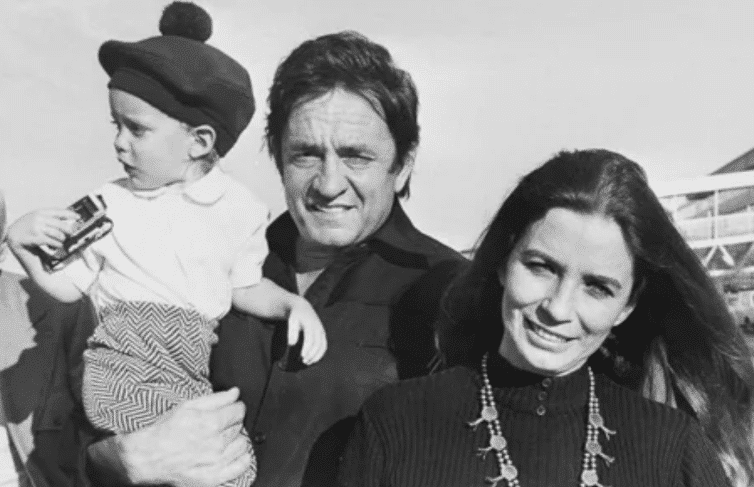
June’s loyalty did not mean ignoring harmful behavior. She could be compassionate while remaining strong. Those qualities made her much more than a supporting figure in someone else’s biography.
She had her own career, her own family heritage, and her own creative voice. Her influence on American country music began long before her marriage to Cash and continued throughout their life together.
A Proposal in Front of Thousands
After years of touring and performing together, Cash proposed to June during a concert in London, Ontario, in February 1968.
The moment unfolded before thousands of spectators. Rather than arranging a private candlelit scene, Cash asked one of life’s biggest questions beneath the bright lights of a public stage.
June initially appeared surprised, but she accepted. The couple married in Franklin, Kentucky, on March 1, 1968.
It was a new beginning, though not the end of every difficulty. Marriage brought its own responsibilities, and Cash still faced periods of personal struggle. Nevertheless, the two remained together for more than three decades.
Their son, John Carter Cash, arrived in 1970. Over time, the Cash-Carter household became a gathering place for children from earlier marriages, musicians, relatives, and friends.
More Than a Marriage: An American Musical Legacy

Johnny and June became one of country music’s best-known couples, but their appeal reached far beyond Nashville.
They represented a familiar American contradiction: toughness paired with tenderness. Cash sang about prisoners, workers, faith, loneliness, and regret. June helped reveal the humor and warmth behind his stern public image.
Their careers unfolded during an era when families often gathered around one television set. Viewers watched them perform on The Johnny Cash Show, where country traditions shared the stage with folk, gospel, rock, and contemporary voices.
For older fans, those appearances can unlock vivid memories. Perhaps it was a Saturday evening in a wood-paneled living room. Maybe the coffee was still warm, the children were finally quiet, and Cash’s deep opening notes filled the house.
Music does that. It stores pieces of our lives and returns them when a familiar melody begins.
Their Final Chapter in 2003
June’s health declined in her later years, and her passing came in May 2003. Cash followed several months afterward, in September.
Their closeness in those final months added another emotional chapter to a relationship that had already inspired songs, books, documentaries, and films.
Yet their legacy cannot be measured only by its ending. It lives in recordings where their voices still answer one another. It appears in old concert photographs and television clips. Most of all, it survives in the memories of listeners who grew older alongside their music.
A Love Story Remembered for Its Honesty
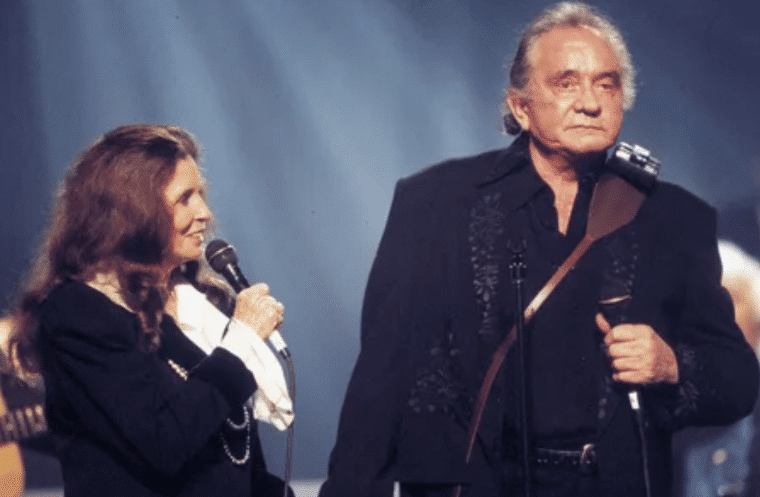
Johnny Cash and June Carter did not offer America a flawless fairy tale. They gave audiences something more recognizable: a relationship marked by laughter, responsibility, disappointment, resilience, and renewal.
Cash’s most revealing words about his wife were powerful because they contained gratitude. He knew that June had witnessed the person behind the legend and remained present through many seasons of change.
Their journey reminds us that lasting love is rarely one grand gesture frozen in time. It is more like an old song—carried through changing years, sometimes quiet, sometimes imperfect, yet somehow still capable of bringing us home.