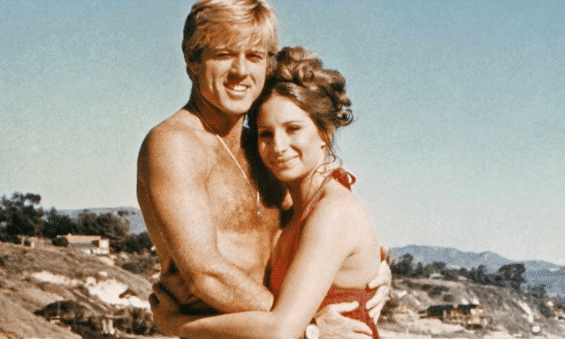
More than half a century has passed since these two Hollywood stars created one of cinema’s most memorable love stories.
The actors are Barbra Streisand and Robert Redford, photographed together in scenes from the 1973 romantic drama The Way We Were.
Their characters could hardly have been more different. Katie Morosky was outspoken, politically committed, and determined to challenge injustice. Hubbell Gardiner possessed charm, talent, and an effortless confidence that allowed him to move comfortably through life.
Their attraction seemed undeniable, yet the qualities that brought them together also exposed the differences that would eventually pull them apart.
That emotional contradiction helped turn The Way We Were into far more than another Hollywood romance. It became a story about memory, political conviction, personal compromise, and the painful realization that love does not always erase incompatibility.
Two Stars at Remarkable Moments in Their Careers
When The Way We Were arrived in theaters, Streisand and Redford were already major stars.
Streisand had earned acclaim on Broadway before making an extraordinary transition to movies. Her performance as Fanny Brice in Funny Girl brought her the Academy Award for Best Actress and established her as one of the most distinctive performers of her generation.
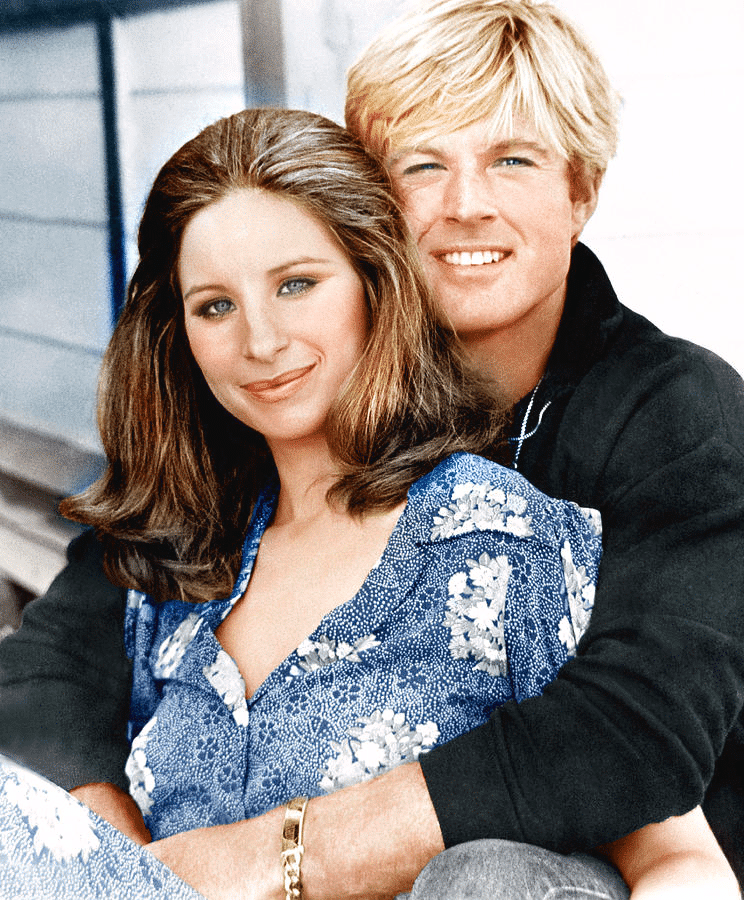
Her combination of dramatic vulnerability, comic timing, and unmistakable singing talent made her unlike anyone else in Hollywood.
Redford followed a different path.
After working in television and theater, he became one of the defining leading men of late-1960s and 1970s American cinema. His work in Butch Cassidy and the Sundance Kid had already made him an international favorite.
He possessed the appearance of a traditional movie star, but his quiet performance style often suggested more beneath the surface. Redford could communicate uncertainty or emotional distance without delivering a long speech.
That restraint made him an ideal contrast to Streisand’s expressive intensity.
Katie and Hubbell Could Not Have Been More Different
The film begins by establishing the differences between Katie Morosky and Hubbell Gardiner.
Katie cares deeply about politics and social justice. She is serious, determined, and unwilling to remain silent when she believes something important is at stake.
Hubbell is talented and intelligent, but he moves through the world with greater ease. His social confidence opens doors that Katie must push against with all her strength.
She recognizes his gift as a writer and believes he could accomplish more. He admires her passion but does not always share her willingness to confront the world.
Their relationship is built upon fascination as much as compatibility.
Katie sees possibility in Hubbell. He sees an emotional courage in her that he may not possess himself. Each is drawn toward something the other represents.
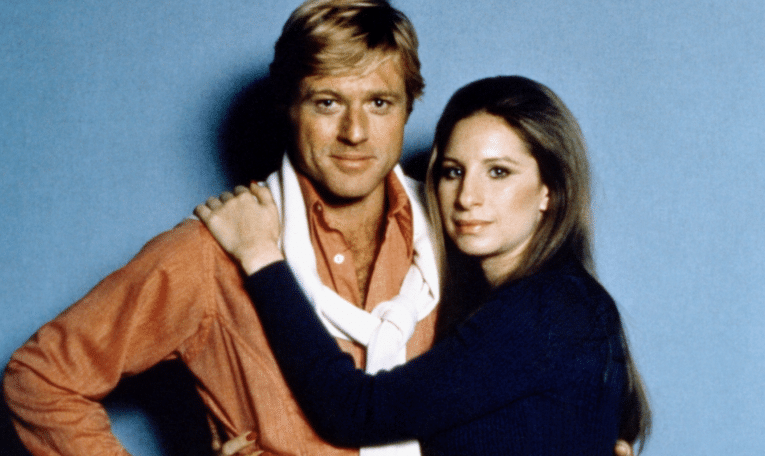
Yet attraction cannot make their fundamental differences disappear.
That tension gives the story its emotional honesty. The movie does not ask viewers to decide which character is entirely right. Instead, it shows how two good people can love each other while wanting very different lives.
A Romance Set Against a Changing America
The Way We Were unfolds across several significant periods of American history.
The story moves from the years before World War II through the war and into postwar Hollywood. Political changes are not simply part of the background; they directly affect the central relationship.
Katie’s activism shapes the way she understands the world. For her, political beliefs are inseparable from personal character.
Hubbell is less comfortable with confrontation. He has ambitions as a writer, but he is also tempted by the security and success that can come from avoiding difficult battles.
The Hollywood blacklist era places their differences under even greater pressure.
During that period, suspicion and political accusations damaged careers throughout the entertainment industry. Writers, actors, and directors could lose their livelihoods because of their beliefs, associations, or refusal to cooperate with investigations.
Within the film, those pressures force Katie and Hubbell to confront questions that extend beyond romance. What principles are worth defending? How much compromise is acceptable? Can a relationship survive when two people answer those questions differently?
Chemistry Built From Contrast
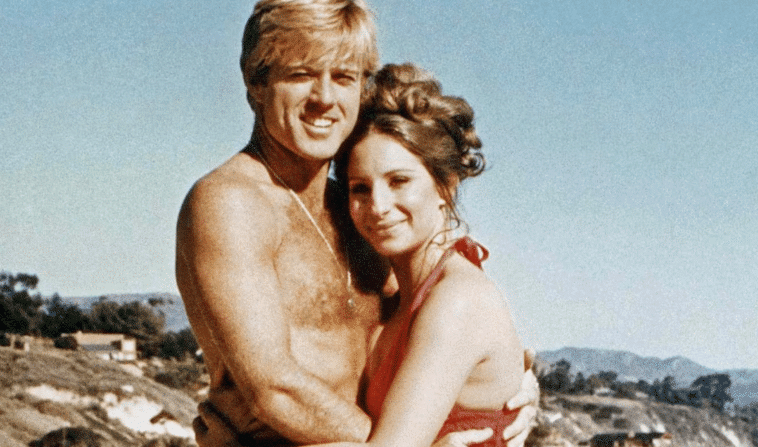
Streisand and Redford’s performances work because they do not attempt to erase the distance between their characters.
Katie’s emotions are close to the surface. She argues, questions, hopes, and loves with complete commitment.
Hubbell is more guarded. He often communicates through a look, a pause, or something left unsaid.
Placed together, those contrasting styles create a believable attraction.
Redford’s stillness gives Streisand’s energy something to move against. Her emotional openness, in turn, reveals the uncertainty hidden beneath his character’s confidence.
Their chemistry does not depend entirely upon romantic dialogue. Some of the film’s most affecting moments emerge from the audience’s awareness that Katie and Hubbell cannot give each other everything they need.
They share genuine affection, but they interpret life through different values.
The result is a relationship that feels beautiful precisely because it is fragile.
A Song That Became Part of American Memory
The title song is inseparable from the film’s enduring reputation.
Performed by Streisand, “The Way We Were” captures the tenderness and sadness of looking back upon a relationship after time has softened some memories and sharpened others.
Marvin Hamlisch composed the music, while Alan and Marilyn Bergman wrote the lyrics. The song earned an Academy Award and became one of Streisand’s signature recordings.
Hamlisch also received the Oscar for the movie’s dramatic score.
The melody begins with a gentle sense of reflection, immediately establishing the emotional world of the story. Even listeners who have never watched the entire movie may recognize its opening notes.
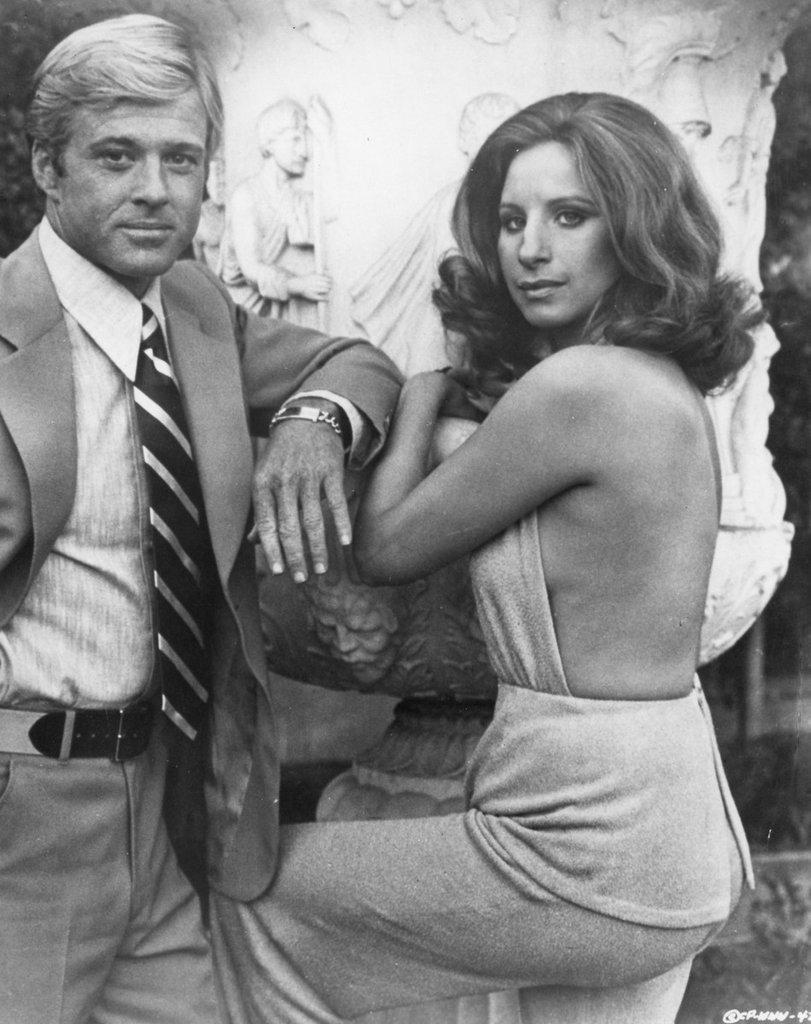
For audiences who first heard the song during the 1970s, it can bring back deeply personal memories.
Music often attaches itself to a specific season, home, relationship, or stage of life. Decades later, a few familiar notes can return a listener to a place that otherwise exists only in memory.
That emotional connection helped the song outgrow the film. It became a standard interpreted by other performers and played during countless moments of private reflection.
Why the Movie Refused an Easy Answer
Many romantic films reassure audiences that love will overcome every obstacle.
The Way We Were takes a more complicated approach.
Katie and Hubbell care for each other, but their relationship cannot remain separate from their personalities, ambitions, and beliefs. Their differences are not minor misunderstandings that can be resolved by one dramatic conversation.
They are part of who each person is.
Katie cannot stop caring about injustice without surrendering something fundamental. Hubbell cannot become the person she imagines simply because she believes in his potential.
The film understands that asking someone to change completely is not the same as loving them.
That realism made the story painful, but it also gave it lasting power. Viewers may recognize relationships in which affection remained even after circumstances made a shared future impossible.
The sadness does not mean the love was meaningless.
Some relationships shape a person without lasting forever. They become part of the private history carried into every chapter that follows.
The Final Meeting Audiences Never Forgot
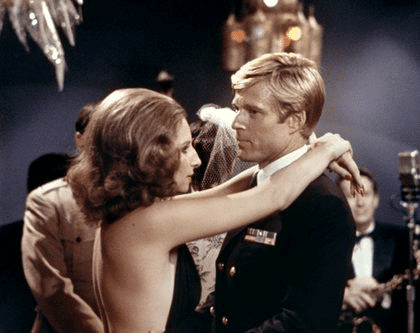
The film’s concluding encounter has become one of the most recognizable moments in romantic cinema.
Years have passed, and Katie and Hubbell meet again unexpectedly. Their lives have moved in different directions, yet the familiarity between them returns immediately.
The scene is restrained.
There is no elaborate declaration and no attempt to undo everything that has happened. Instead, a few gestures reveal the affection and sadness that remain.
The characters understand what they shared, what they lost, and why returning to the past would not solve the differences that separated them.
This is where Streisand and Redford’s contrasting performance styles become especially powerful. Katie’s emotion remains visible, while Hubbell’s feelings appear through quiet hesitation.
The moment respects both love and reality.
It acknowledges that a person can remain important even when the relationship itself belongs to another time.
Robert Redford’s Quiet Screen Presence
Redford’s portrayal of Hubbell relies upon understatement.
The character possesses natural ability, charm, and social privilege, but his ease also becomes a limitation. He can avoid difficult choices because the world rarely forces him to confront them.
Redford allows that contradiction to emerge gradually.
Hubbell is not presented as cruel or empty. He genuinely loves Katie, but he cannot live with the same intensity or political urgency that defines her.
The performance asks the audience to understand him without excusing every decision.
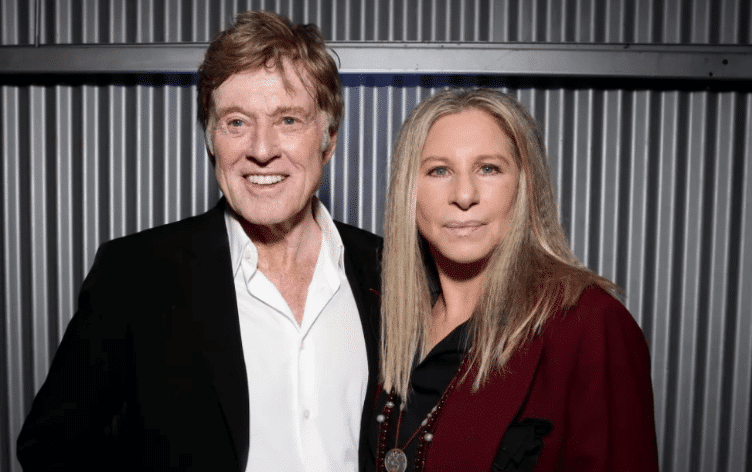
Redford would continue building one of the most respected careers in American cinema through films such as The Sting, All the President’s Men, Three Days of the Condor, and Out of Africa.
His work often depended upon the same quality visible in The Way We Were: the ability to suggest a complicated interior life beneath a calm exterior.
Barbra Streisand Gave Katie Her Fire
Streisand’s Katie could easily have become overwhelming in less capable hands.
She is passionate, argumentative, idealistic, and emotionally direct. Yet Streisand also reveals the vulnerability beneath those qualities.
Katie does not fight simply because she enjoys conflict. She cares deeply and believes that silence carries consequences.
Her love for Hubbell is equally intense. She sees his talent and wants him to become the fullest version of himself, even when her expectations create pressure.
Streisand allows Katie to be intelligent, difficult, funny, loving, and imperfect at the same time.
The performance earned her another Academy Award nomination and remains one of the defining dramatic roles of her film career.
A Portrait of the 1970s—and the Decades Before It
Although the story looks back at earlier periods, The Way We Were also reflects the concerns of the 1970s.
American cinema was becoming increasingly interested in ambiguity. Filmmakers were less committed to tidy endings and more willing to present relationships shaped by disappointment, social conflict, and personal limitations.
Audiences were prepared for love stories that did not promise a conventional future.
The film also arrived during a period when Americans were reconsidering political institutions, personal freedom, and traditional expectations. Katie’s activism and Hubbell’s reluctance to confront controversy echoed debates that remained highly relevant.
At the same time, the movie retained the elegance of a traditional Hollywood romance.
Its stars were glamorous, the music was sweeping, and the emotional stakes were clear. That combination of classical beauty and modern uncertainty helped the film appeal to a wide audience.
The Legendary Pair Behind the Photographs
The unforgettable screen couple shown in these images are Barbra Streisand and Robert Redford.
Their performances as Katie Morosky and Hubbell Gardiner turned The Way We Were into one of the most enduring romantic dramas of the 1970s.
The film did not offer audiences a perfect relationship or a comforting fantasy. It offered something more recognizable: two people who loved each other but could not stop being themselves.
That truth continues to resonate.
The fashions and political settings belong to another time, but the central question remains timeless. What happens when love is real, yet the differences are real too?
Streisand and Redford answered that question with unforgettable chemistry, restraint, and emotional honesty. More than 50 years later, their final goodbye still reminds viewers that some loves do not disappear—they simply become part of the way we remember who we once were.