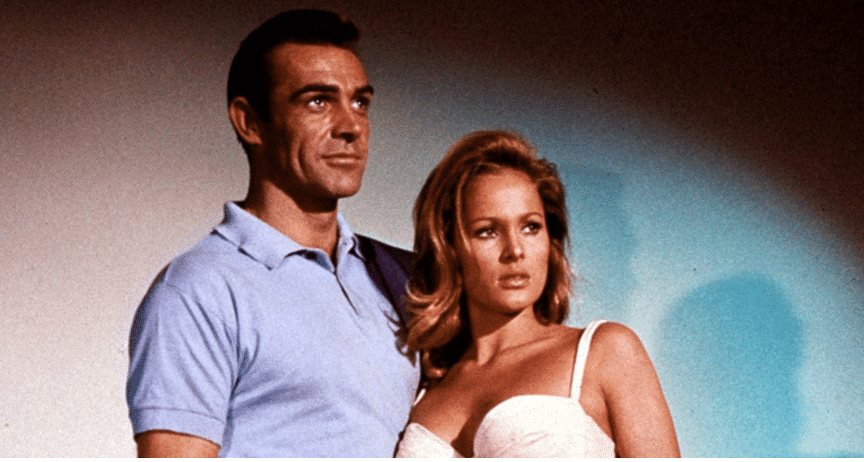
Some photographs capture more than a moment. They preserve the feeling that something important is about to happen, even before anyone understands its lasting significance. Images of Sean Connery and Ursula Andress during the making of Dr. No in 1962 have exactly that quality.
At the time, the production was a modest British spy film being made in Jamaica. Few could have predicted that it would introduce one of cinema’s most durable characters, launch the James Bond film series, and create a new standard for international adventure movies.
Connery and Andress were both already working actors, but Dr. No became a defining breakthrough for each of them. Their characters—James Bond and Honey Ryder—helped establish the style, confidence, and escapist appeal audiences would come to expect from the world of 007.
The Birth of James Bond on the Big Screen
Dr. No was the first James Bond film produced by Eon Productions. Released in 1962, it introduced audiences to Ian Fleming’s British secret agent in a feature-film version that blended danger, humor, travel, and sophistication.
Sean Connery played Bond with a combination of confidence and restraint. He gave the character a working-class Scottish edge while also making him believable in tailored suits, casinos, hotel rooms, and high-stakes encounters.
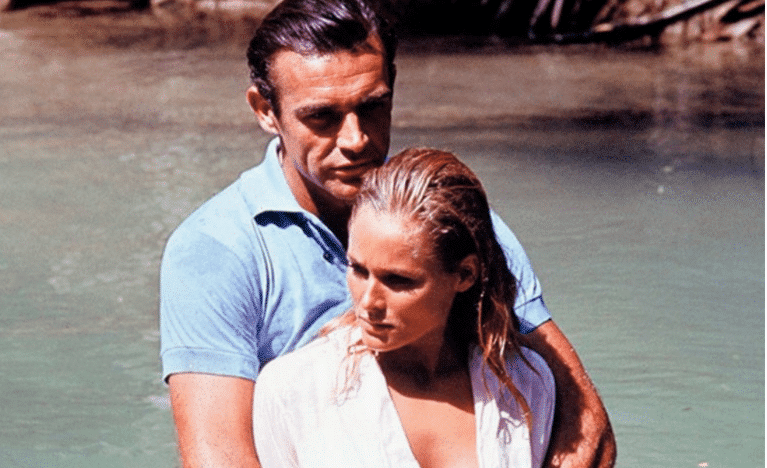
The role did not simply make Connery famous. It gave the Bond character a screen identity that audiences recognized immediately. His delivery, posture, dry humor, and physical presence became the foundation for a film series that would continue for decades.
Connery would go on to play Bond in seven films, including From Russia with Love, Goldfinger, Thunderball, and You Only Live Twice. Yet it all began with a film crew working between Jamaica and Pinewood Studios, creating a world that had not yet become a global phenomenon.
Ursula Andress and the Arrival of Honey Ryder
Ursula Andress played Honey Ryder, a shell diver living near the fictional island of Crab Key. Her entrance from the Caribbean Sea became one of the most recognizable images in cinema history.
The scene was memorable not merely because of costume or setting, but because Honey Ryder arrived as a character with her own knowledge, resilience, and independence. She was not waiting to be rescued. She understood the island, knew how to survive, and entered Bond’s world on her own terms.
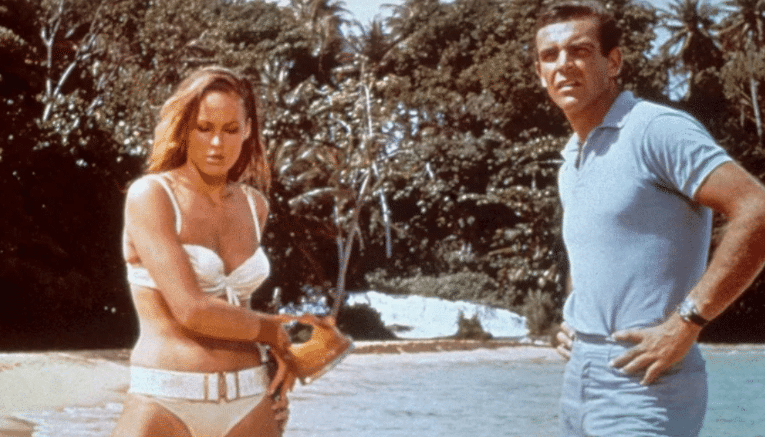
Andress’s work in Dr. No made her internationally famous. She later explained that the film gave her the freedom to choose future roles and build financial independence. In 1964, she received a Golden Globe award for New Star of the Year.
The character of Honey Ryder established a pattern that later Bond films would revisit in many different ways: women who were allies, adversaries, survivors, and essential parts of the story rather than simple decorations around the hero.
Why Jamaica Was Essential to the Film’s Mood
The Jamaican locations gave Dr. No a look that felt fresh for audiences in the early 1960s. The film moved from London offices and elegant interiors to sunlit beaches, dense vegetation, coastal waters, and the mysterious setting of Crab Key.
That contrast became part of the movie’s appeal. Bond was not just solving a case; he was traveling into an unfamiliar and visually striking world. The tropical landscape added atmosphere, while the story’s mixture of espionage and adventure helped set the tone for the films that followed.
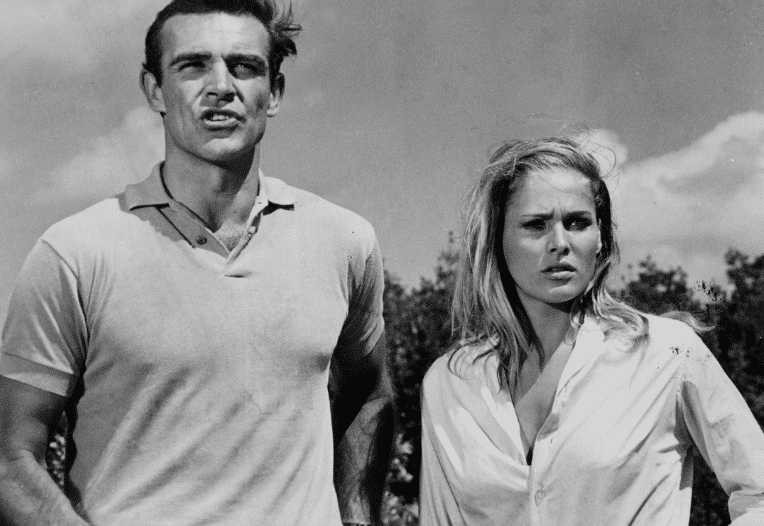
Filming in Jamaica also gave the production a sense of place that could not have been created entirely on a studio soundstage. Even today, the scenery remains one of the reasons Dr. No feels distinct within the Bond series.
The setting made the film feel larger than its budget. It suggested an exciting kind of movie travel, one that invited audiences to leave everyday life behind for two hours and follow 007 into the unknown.
Two Performers at a Defining Career Moment
Sean Connery and Ursula Andress had both acted before Dr. No, but the film placed them before an international audience in a new way. Connery became the first actor to define James Bond for the cinema, while Andress became permanently associated with Honey Ryder and one of film history’s most enduring entrances.
Their work complemented one another. Connery brought controlled confidence to Bond, while Andress gave Honey Ryder an independent spirit that made her more than a supporting character. Together, they created a screen partnership that helped the story feel adventurous, playful, and memorable.
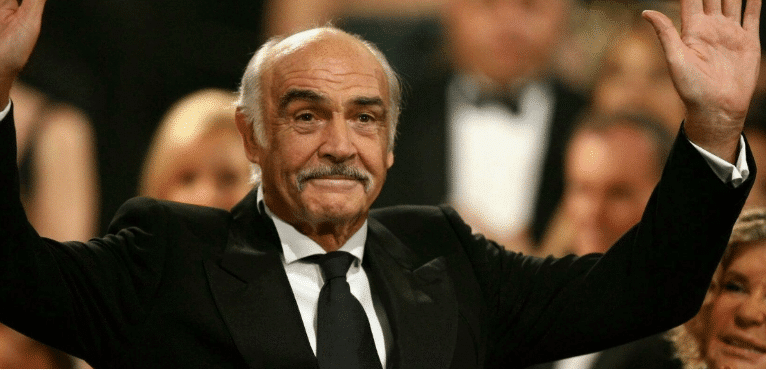
The behind-the-scenes images are especially interesting because they show two performers at a moment of transformation. They were making a film that would soon become part of movie history, though neither could have known the full scale of its cultural impact.
A Legacy That Continues to Influence Cinema
More than six decades after its release, Dr. No remains important because it created a template without becoming trapped by it. The film introduced the style of James Bond, but it also left room for future actors, directors, and writers to reinterpret the character.
Sean Connery’s performance became the first chapter in a remarkable film legacy. His work as Bond brought him worldwide fame, while his later career included acclaimed roles in The Untouchables, Indiana Jones and the Last Crusade, The Hunt for Red October, and The Rock.
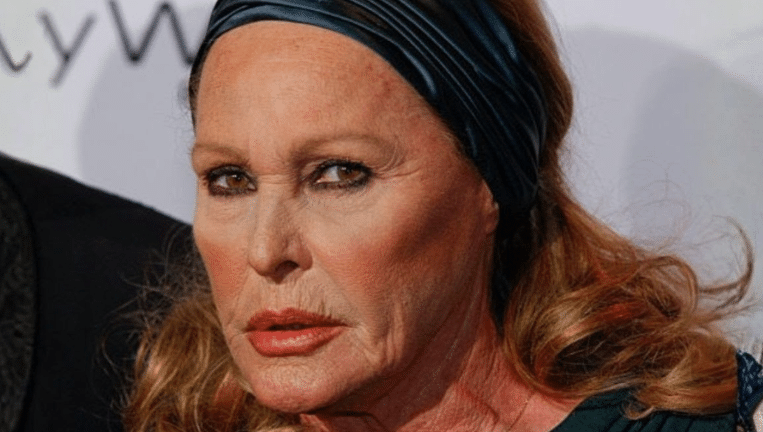
Ursula Andress continued acting in American and European films, including Fun in Acapulco, The 10th Victim, The Blue Max, Red Sun, and Clash of the Titans. Yet Honey Ryder remains the role most closely connected to her name.
These 1962 images remind viewers why classic movies endure. They show the early days of a production built on strong casting, memorable locations, and a clear sense of style. What began as a spy adventure in Jamaica became a lasting piece of film history.
For generations of movie lovers, Connery and Andress will always represent the moment James Bond first stepped onto the big screen—and cinema discovered a new kind of global adventure.