For nearly a decade, millions of viewers have known David Harbour as Jim Hopper, the gruff but deeply human police chief at the center of Stranger Things. With his imposing presence, familiar mustache, and world-weary expression, Hopper became one of modern television’s most recognizable characters.
But new images from Harbour’s latest project show the actor looking remarkably different.
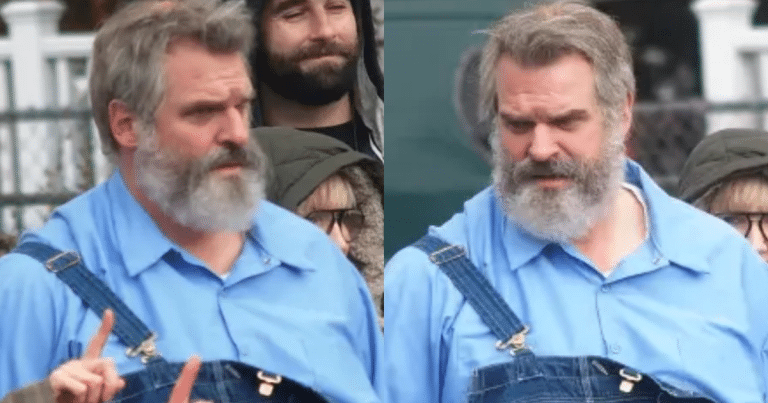
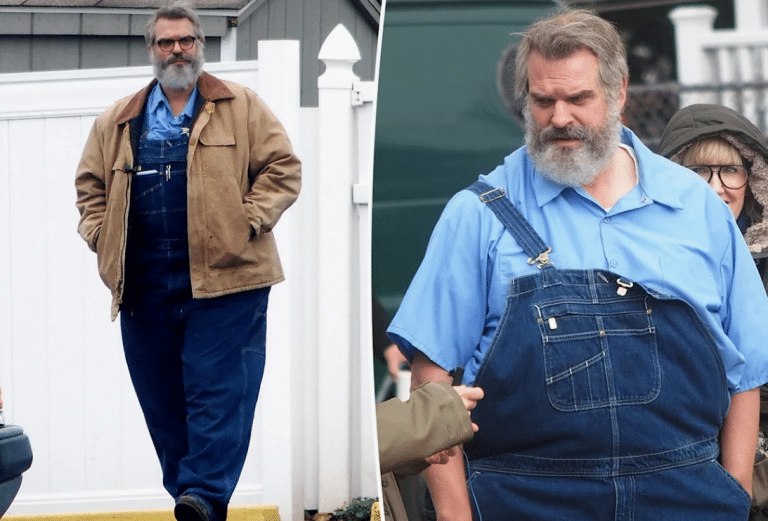
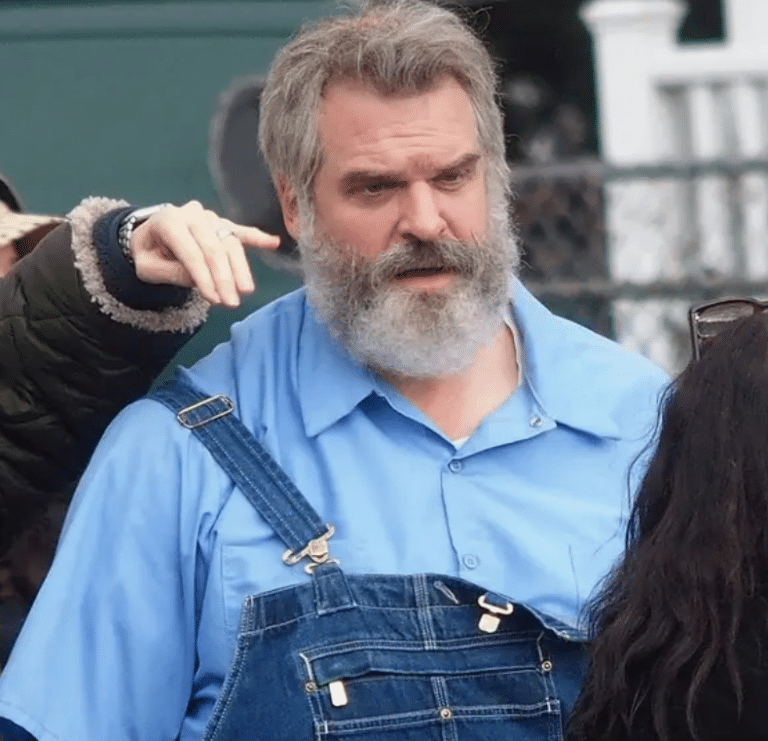
The transformation is not the result of an ordinary change in appearance. Harbour adopted the look for Evil Genius, a crime drama directed by Courteney Cox and inspired by the extraordinary 2003 case involving Pennsylvania pizza deliveryman Brian Wells. Set photographs show Harbour with gray hair, a full beard, glasses, work clothes, and a padded costume.
For longtime viewers, the photographs offer a reminder of something Harbour has demonstrated repeatedly throughout his career: he has never seemed particularly interested in looking like a traditional Hollywood leading man.
A Long Road Before Hawkins, Indiana
David Harbour may now be instantly recognizable, but his rise to widespread fame was anything but overnight.
Born in New York in 1975, Harbour spent years building a career through theater, television, and supporting movie roles.
Long before audiences began calling him “Hopper,” he appeared in familiar television dramas and films, gradually developing a reputation as a dependable character actor.
His credits eventually stretched across very different corners of Hollywood, from Revolutionary Road and Black Mass to The Equalizer and A Walk Among the Tombstones.
For years, he was the kind of actor viewers might recognize without immediately remembering his name.
Then everything changed.
The Role That Turned Him Into a Household Name
When Stranger Things premiered in 2016, Harbour stepped into the role that would redefine his career.
Jim Hopper initially appeared to be the familiar small-town police chief: weary, cynical, and carrying more emotional baggage than he cared to discuss.
But the character gradually revealed something more complicated.
Behind the rough exterior was grief, loyalty, courage, and an instinct to protect the people around him.
Harbour’s performance gave Hopper an old-fashioned quality that particularly resonated with viewers who remembered the movies and television programs that inspired Stranger Things.
He felt like a character transported from another era.
A Very Different Man in Evil Genius
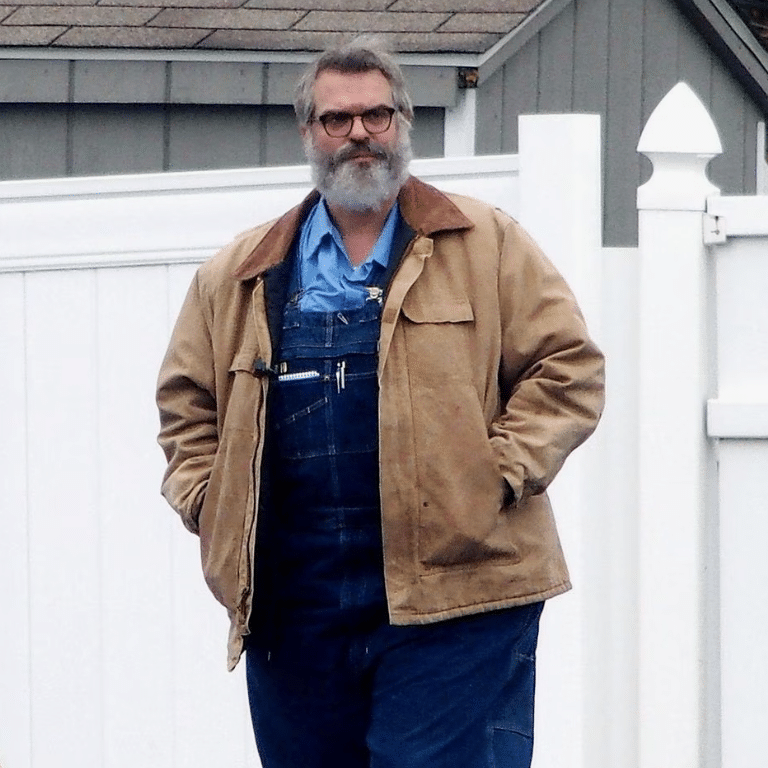
On the New Jersey set of Evil Genius, Harbour was photographed in November 2025 wearing denim overalls, a pale-blue work shirt, glasses, and a tan jacket. Gray hair and a substantial beard completed the transformation.
Reports from the production indicate that Harbour is portraying Brian Douglas Wells, the pizza deliveryman at the center of the infamous 2003 Pennsylvania case commonly known as the “pizza bomber” incident. The film is inspired by the earlier true-crime documentary series Evil Genius.
Courteney Cox directs the project, with Patricia Arquette among the principal cast. Other announced performers include Michael Chernus, Garret Dillahunt, Danielle Macdonald, Tom McCarthy, Ryan Eggold, and Owen Teague.
A True Story That Requires Careful Storytelling
The real case behind Evil Genius was tragic and extraordinarily complicated.
In 2003, Wells entered a bank near Erie, Pennsylvania, with an explosive device locked around his neck. The subsequent investigation uncovered a complex criminal plot and competing questions about Wells’ knowledge and involvement.
Because a real person died, the story is better approached as a human tragedy than as sensational entertainment.
The forthcoming film appears interested in precisely that complexity. Its public synopsis describes a story involving deception and desperation while examining the difficult boundary between victim and participant.
That gives Harbour an unusually challenging role.
He isn’t simply transforming his appearance.
He is portraying a real individual at the center of a case Americans have debated for more than two decades.
The Costume Is Doing More of the Work This Time
Harbour has previously changed his body significantly for roles.
For Stranger Things, he underwent a major physical transformation to portray Hopper after the character’s imprisonment. He later changed his physique again for Violent Night, in which he played an unusually formidable version of Santa Claus.
This time, the production appears to be taking a different approach.
The Evil Genius set photographs show what appears to be padding beneath Harbour’s clothing rather than requiring another dramatic weight change.
That distinction is worth emphasizing.
An actor does not have to endanger his health to demonstrate commitment to a character. Costume design, makeup, prosthetics, lighting, and performance have always been fundamental parts of movie transformation.
In this case, the results are convincing enough that many viewers may need a second glance.
From Hawkins to the Marvel Universe
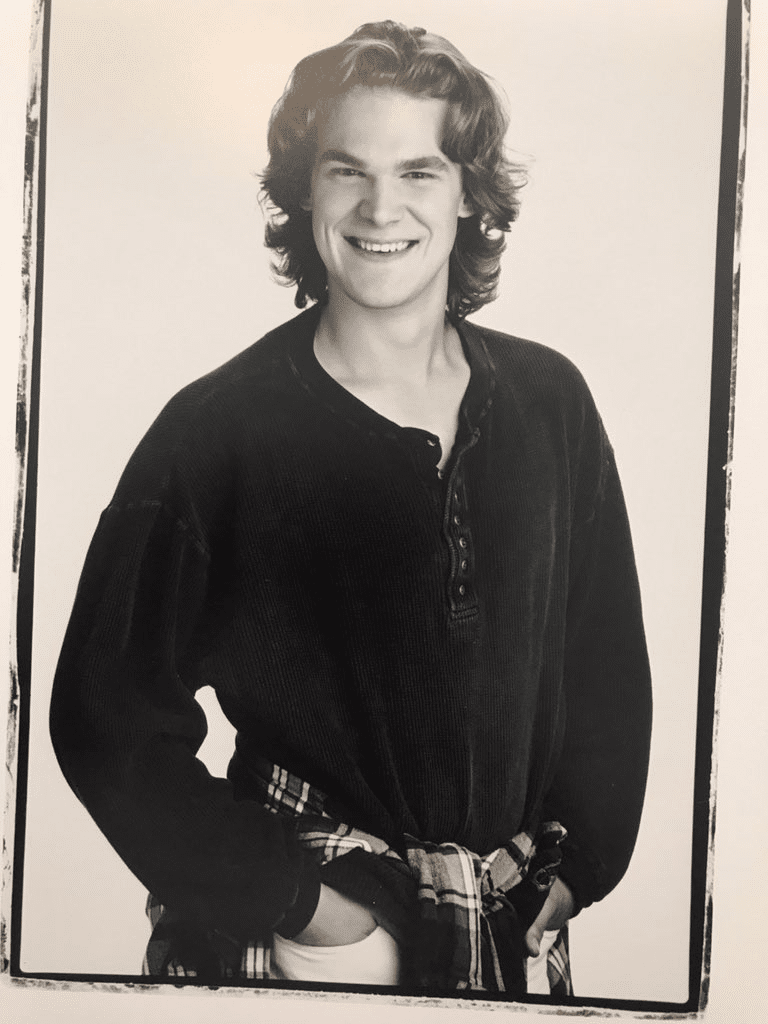
Harbour’s success after Stranger Things demonstrated just how much the series changed his career.
He played the title character in Hellboy and later entered the Marvel Cinematic Universe as Alexei Shostakov, better known as Red Guardian, appearing in Black Widow and Thunderbolts*.
He also took an unexpected turn as a battle-ready Santa Claus in Violent Night.
Each role played with his physical presence differently.
Red Guardian leaned into comic bravado.
Violent Night turned a holiday icon into an action hero.
Hopper mixed authority with emotional vulnerability.
And Evil Genius now appears ready to strip away much of that heroic image.
Why Transformation Photos Fascinate Us
Hollywood has always loved physical transformations.
Classic actors changed hairstyles, gained facial hair, wore elaborate prosthetics, or altered their voices to disappear into characters.
What has changed is how quickly audiences see those transformations.
Decades ago, viewers might not discover a star’s new appearance until a trailer arrived at the local theater.
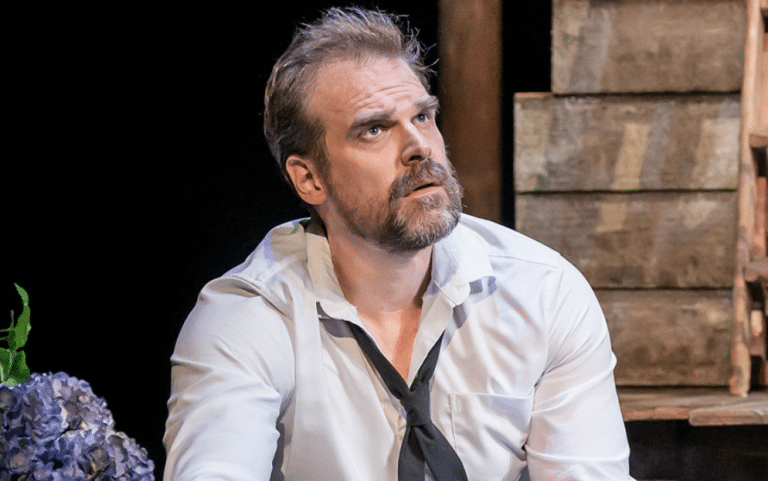
Today, photographs from a movie set can circulate months before audiences see a finished scene.
That creates curiosity—but it can also place too much emphasis on appearance.
Harbour does look different in the Evil Genius photographs.
But the real test will come when the costume stops being noticeable and viewers begin seeing the character instead.
That is ultimately what successful transformation is supposed to accomplish.
Courteney Cox Steps Behind the Camera
Another intriguing element of Evil Genius is the person directing it.
For generations of television viewers, Courteney Cox will forever be associated with Monica Geller from Friends. But here, she occupies an entirely different position: director and producer of a dark true-crime drama.
The film is inspired by the 2018 documentary series created around the Wells case, and Cox has described being fascinated by the story’s strange combination of manipulation, isolation, emotion, and human complexity.
The project therefore brings together performers associated with some of television’s most recognizable series while asking them to enter a much darker world.
A New Chapter for a Familiar Face
At 51, Harbour has reached an interesting stage in his career.
He no longer needs to prove that he can become famous.
Hopper already accomplished that.
Instead, the more interesting question is what he chooses to do with the recognition he has earned.
Evil Genius suggests an actor willing to move away from the heroic roles audiences might expect and toward something more uncomfortable and complicated.
The film is expected to begin its public festival life in 2026, with current listings placing it among this year’s forthcoming releases.
The Man Behind the Beard Is Easier to Recognize Than You Think

Look closely at the new photographs and David Harbour eventually emerges.
The eyes are familiar.
So is the expression.
But the beard, gray hair, clothing, and altered silhouette make the transformation remarkably effective.
That is precisely what costume and character work should do.
The goal isn’t merely to make an actor “unrecognizable” for a headline.
It is to make audiences forget the star long enough to believe the person standing in front of them.
For Harbour, that means leaving Jim Hopper, Red Guardian, and the action hero behind for a while.