For moviegoers who remember the 1970s, few actresses seemed quite like Diane Keaton.
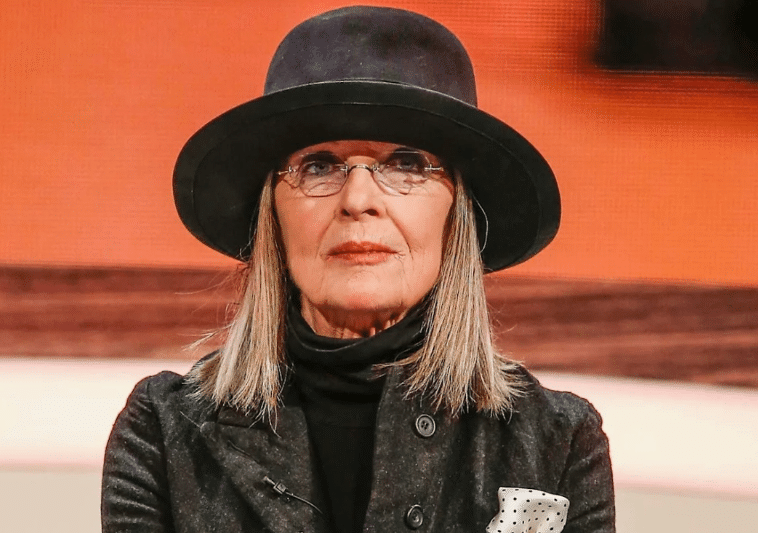
She could enter a scene wearing loose trousers, a vest, a necktie, and an oversized hat and somehow make the entire look feel effortless. She could stumble over a sentence, laugh at herself, become suddenly serious, and then make audiences fall in love with the character all over again.
By the time Annie Hall arrived in theaters in 1977, Keaton was already an accomplished actress. But that performance transformed her into something more: an Academy Award winner, a fashion influence, and one of the most distinctive screen personalities of her generation.
Her death in October 2025 at age 79 brought renewed appreciation for a career that stretched across more than five decades. Yet for many longtime fans, one particular image remains impossible to forget — Diane Keaton walking through Manhattan looking entirely like herself.
A Different Kind of Hollywood Leading Lady
The movie industry of the 1970s was changing quickly.
The old studio system had faded, younger filmmakers were experimenting with new storytelling styles, and audiences were becoming increasingly interested in characters who felt less polished and more recognizably human.
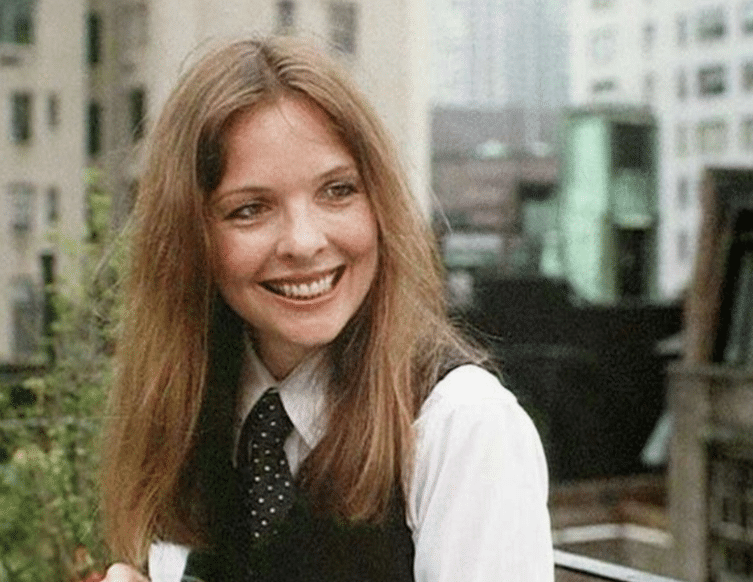
Keaton fit beautifully into that transition.
She did not project the cool perfection traditionally associated with glamorous movie stars.
Instead, she brought nervous energy.
She interrupted herself.
She seemed to think while she spoke.
Her laughter could feel spontaneous rather than rehearsed.
That unpredictability became one of her greatest strengths.
The result was a style of screen acting that could feel intimate, almost as though audiences were watching a real person discover what she wanted in the moment.
Then Came Annie Hall
When Annie Hall opened in 1977, Keaton played the title character opposite Woody Allen.
The film followed the shifting relationship between Annie and Alvy Singer, but Keaton’s performance quickly became one of its defining elements.
Annie was funny without seeming like she was trying to deliver jokes.
She was insecure without being helpless.
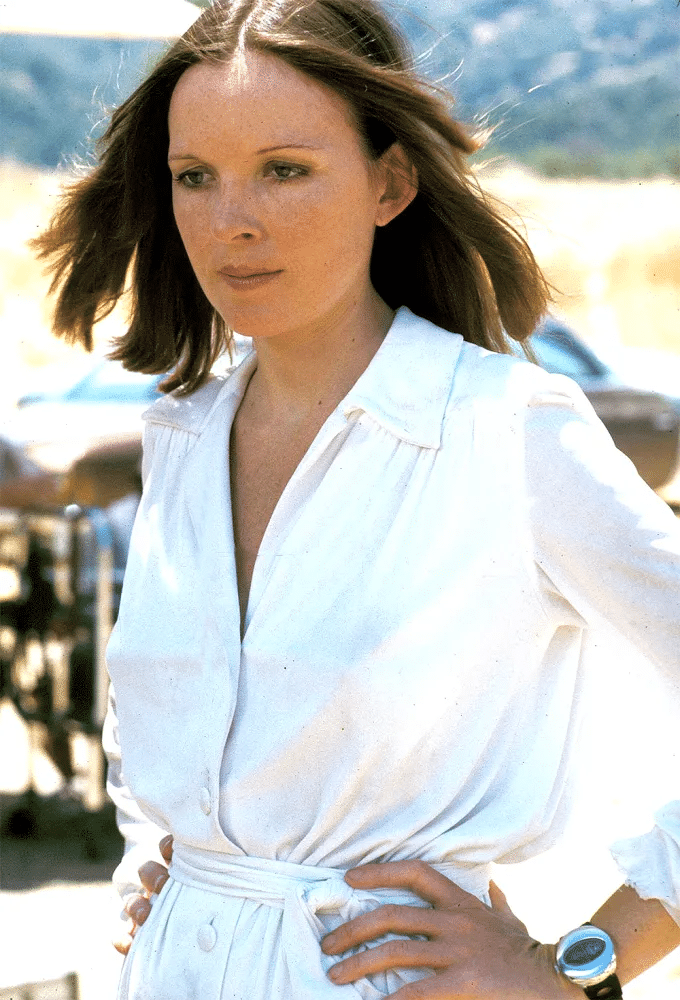
She could be independent and uncertain at the same time.
Those contradictions gave the character life.
The performance earned Keaton the Academy Award for Best Actress at the 50th Academy Awards in 1978.
For viewers who saw the film when it was new, however, there was another part of Annie that became nearly as famous as the dialogue.
Her clothes.
When Personal Style Became Cultural Style
After Annie Hall, menswear-inspired clothing gained broader attention in women’s fashion.
Keaton had not invented trousers, vests, or neckties for women, of course.
What she did was make the combination feel unusually personal and visible at a major cultural moment.
Her clothes appeared to say that femininity did not require following one narrow formula.
A woman could wear loose pants instead of a fitted dress.
She could borrow from men’s tailoring.
She could look intellectual, quirky, comfortable, and stylish all at once.
That idea outlasted the film itself.
Decades later, Keaton’s name continued to appear in fashion conversations because her wardrobe never felt like an attempt to chase trends. It looked like an extension of her personality.
Her Appeal Went Far Beyond Fashion
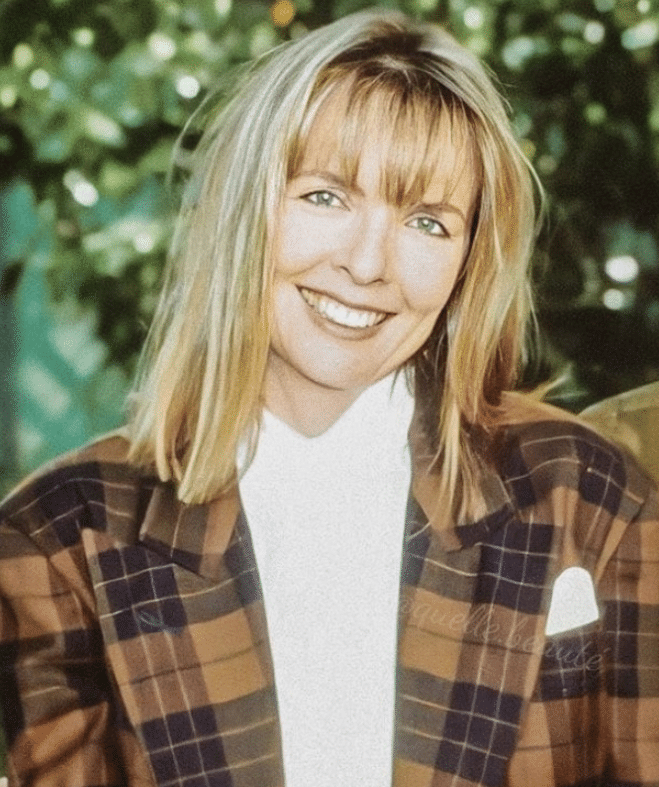
It would be easy to remember Keaton only for hats, ties, and oversized tailoring.
But the clothes worked because there was such a specific performer inside them.
Keaton’s screen presence combined intelligence with vulnerability in an unusual way.
Her characters often appeared capable while simultaneously questioning themselves.
They could be independent without pretending relationships did not matter.
They could be romantic without surrendering their identity.
That balance helped make her especially effective in romantic comedy.
Rather than presenting love as a perfect fantasy, Keaton often made relationships look complicated, awkward, funny, and deeply human.
Long Before Annie Hall, There Was The Godfather
Keaton’s career was already significant before 1977.
She played Kay Adams in Francis Ford Coppola’s The Godfather and returned in later installments of the series.
Kay was very different from Annie Hall.
Where Annie could be spontaneous and playful, Kay often occupied a quieter, more painful emotional space.
She begins outside the Corleone family’s world and gradually becomes trapped inside the consequences of Michael Corleone’s choices.
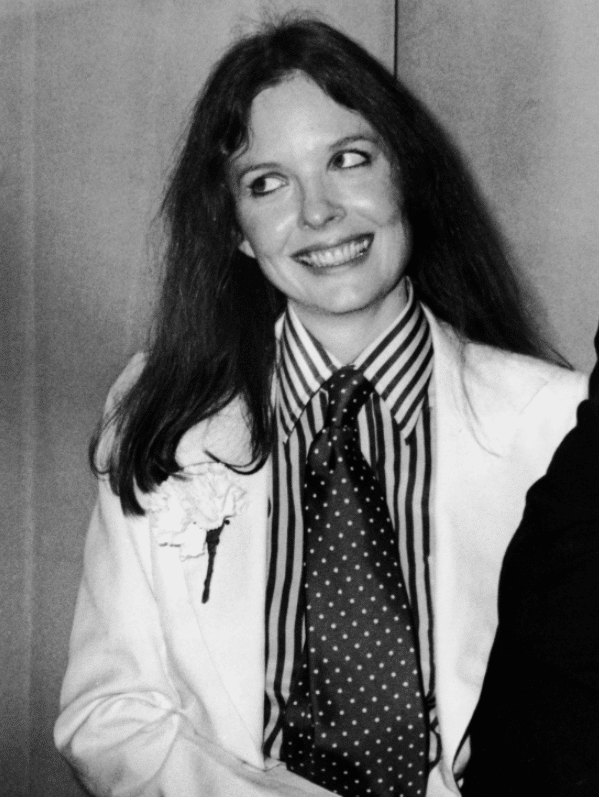
The role demonstrated something important about Keaton’s range.
She did not need comedy to be compelling.
Her stillness could be as effective as her nervous energy.
The success of The Godfather films placed her inside one of the most celebrated chapters of American cinema, while Annie Hall later showed audiences an entirely different side of her talent.
Baby Boom Spoke to a Changing Generation
In 1987, Keaton starred in Baby Boom, playing a highly successful professional whose life changes unexpectedly when she becomes responsible for a child.
The movie arrived during an era when American culture was intensely discussing women, careers, marriage, motherhood, and the difficult question of whether anyone could truly “have it all.”
Keaton was ideally suited to that material.
Her character could be competent and overwhelmed.
Ambitious and affectionate.
Funny and exhausted.
The role helped begin a long creative connection with writer-director Nancy Meyers and writer-director Charles Shyer, which would later produce several films beloved by audiences.
For many women who watched the film in the 1980s, the story reflected conversations already happening in workplaces and homes.
That is one reason it remains such an evocative time capsule.
Then She Became One of America’s Favorite Movie Moms
A younger generation came to know Keaton through Father of the Bride.
Playing Nina Banks opposite Steve Martin, she brought warmth and humor to a film built around family, marriage, growing children, and the bittersweet realization that parents eventually have to let go.
The movie had a very different tone from Annie Hall.
Yet Keaton’s natural warmth made the transition feel effortless.
Fans who had once watched her play young women struggling to understand love were now watching her portray a mother observing her daughter’s life changing.
The actress had aged.
Her audience had aged too.
That parallel gave the film an emotional resonance that only grew stronger over time.
Her Greatest Style Was Being Herself
It is easy to describe Diane Keaton as a fashion icon.
It is accurate, but incomplete.
Her real influence came from the way style, performance, and personality seemed impossible to separate.
She did not appear to be constructing an image of eccentricity.
She simply trusted what interested her.
That trust became contagious.
Audiences responded because the same quality existed in her acting.
Her best characters did not apologize for being uncertain, funny, unconventional, complicated, or older.
They simply kept moving forward.
And perhaps that is why Diane Keaton’s films continue to feel so comforting.
They remind us that charm does not require perfection.
Romance does not belong to one age.
Style does not require permission.
And sometimes the most memorable person in the room is simply the one who had the courage to arrive as herself.