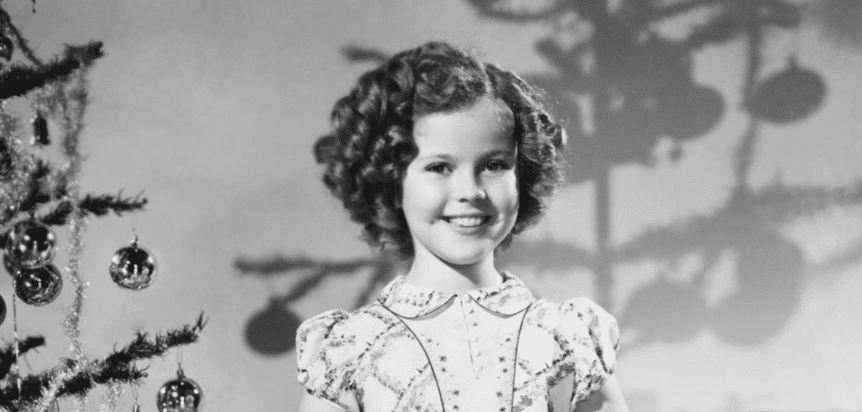
Some faces become inseparable from an era.
For Americans who remember the movies of the 1930s—or grew up watching them later on television—few childhood faces are more familiar than Shirley Temple’s.
The carefully curled hair.
The dimples.
The bright smile.
And the seemingly effortless tap dancing that brought energy to movie screens during one of the hardest periods in American history.
But Shirley Temple’s story did not end when she grew out of child-star roles.
In fact, one of the most remarkable chapters of her life began long after Hollywood stopped seeing her as the little girl audiences once knew.
She would eventually leave movie stardom behind, enter public service, represent the United States overseas, and build an entirely different reputation as Shirley Temple Black.
Looking back at photographs from her childhood and later years is not really a story about how much her appearance changed.
It is a story about how much one life could contain.
The Little Girl Who Arrived at Exactly the Right Moment
Shirley Temple was born in Santa Monica, California, on April 23, 1928.
She entered motion pictures while still extraordinarily young, and by 1934 her career had taken off with films including Stand Up and Cheer! and Bright Eyes.
America was still struggling through the Great Depression.
Unemployment was widespread.
Families were worried about money.
Daily life could feel uncertain.
Into theaters came a small child who sang, danced, smiled, and somehow made optimism seem believable.
Her movies gave audiences an escape during difficult years, and her cheerful screen presence helped make her one of the biggest box-office attractions of the decade.
“On the Good Ship Lollipop” Became Part of American Pop Culture
One of Temple’s signature moments came in Bright Eyes.
The movie featured her performance of “On the Good Ship Lollipop,” a song that became so closely associated with her that even people who never saw the original film often recognized it decades later.
For moviegoers in the 1930s, Shirley Temple was not simply another child performer.
She became a phenomenon.
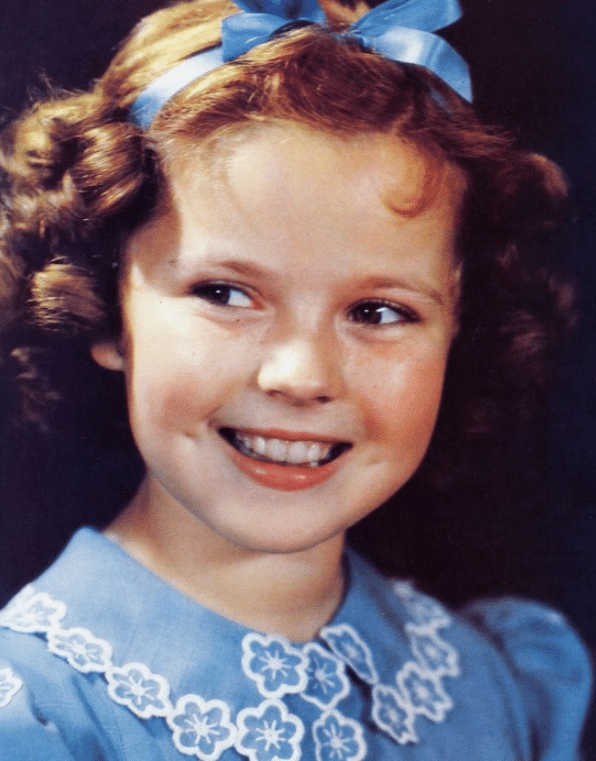
Her image appeared on toys and merchandise, and the Shirley Temple doll became one of the recognizable consumer products of the era.
In a time before television dominated American homes, the movie theater was one of the great shared spaces of popular culture.
And Shirley Temple was one of its brightest stars.
At Six Years Old, Hollywood Gave Her a Special Oscar
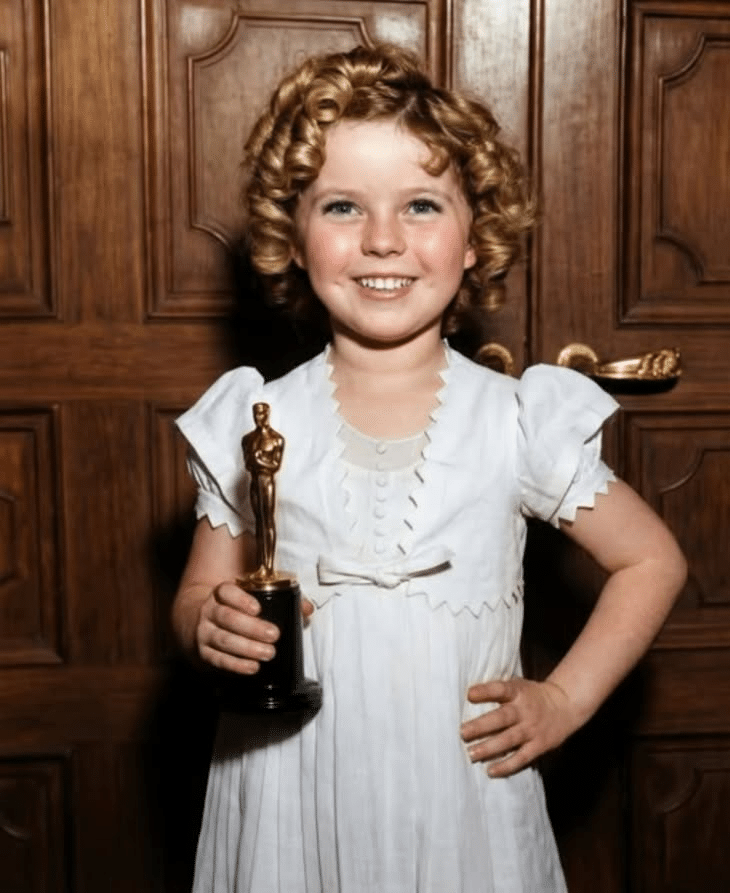
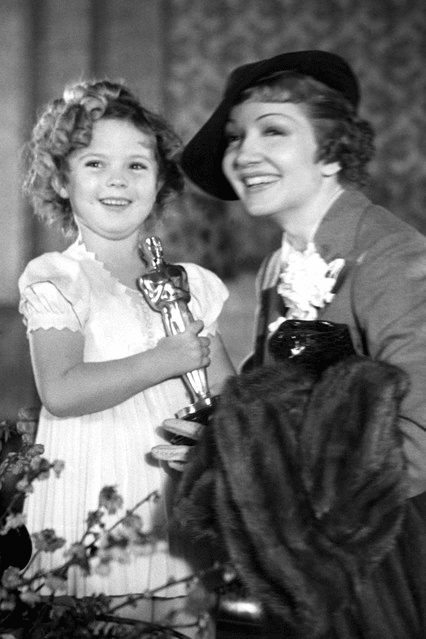
Her success became so remarkable that the Academy of Motion Picture Arts and Sciences honored her while she was still only six years old.
At the 1935 Academy Awards, Temple received a special award recognizing her contribution to screen entertainment during 1934.
The miniature statuette became one of the most famous images associated with her childhood career.
She was only six years and 310 days old at the ceremony, according to Academy records.
It is difficult to imagine that level of fame at such a young age.
Today, child stars grow up under constant social-media attention.
Temple’s world was different, but the pressure of being one of the most famous children in America was extraordinary in its own way.
Her Dance Partnership With Bill “Bojangles” Robinson Made Film History
One of the most memorable parts of Temple’s early film career was her work with legendary tap dancer Bill “Bojangles” Robinson.
They appeared together in several films, including The Little Colonel.
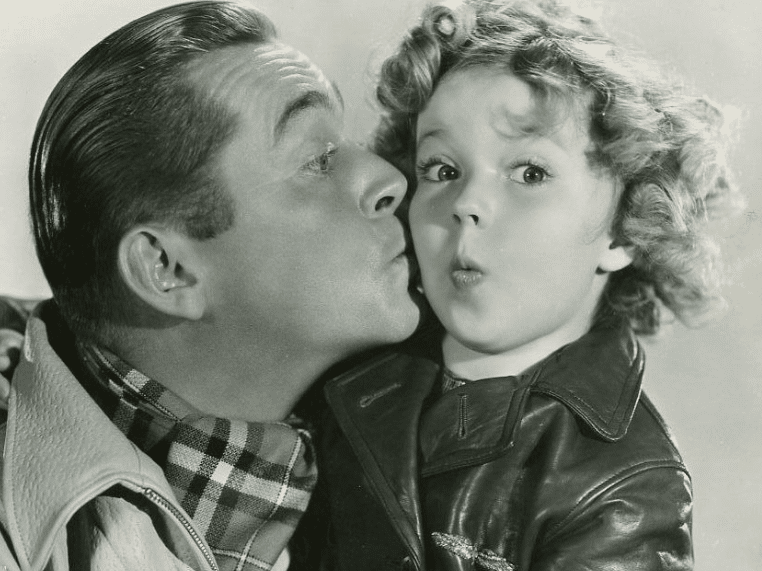
Their stairway dance sequence in The Little Colonel remains one of the best-known images from Temple’s filmography.
The films themselves also reflect the racial attitudes and stereotypes of the 1930s, aspects that modern audiences may view very differently today.
That historical context matters.
Classic Hollywood can be remembered with affection while still being viewed honestly through a modern lens.
The Former Child Star Became Shirley Temple Black
Temple married businessman Charles Alden Black in 1950.
From then on, she was widely known in her adult public life as Shirley Temple Black.
The famous childhood image never disappeared, but she began creating an identity that had very little to do with movie studios.
Public service increasingly became part of her life.
By the early 1970s, she was involved in international affairs and represented the United States in important diplomatic settings.
In 1972, she served as a U.S. delegate to the United Nations Conference on the Human Environment in Stockholm, where she participated in discussions about global environmental issues.
The transformation was remarkable.
The little girl Americans remembered dancing in movies had grown into a serious public figure.
Her Appointment to Ghana Came in 1974, Not 1969
This is where the original article gets an important fact wrong.
Shirley Temple Black was not appointed Ambassador to Ghana in 1969 under President Richard Nixon.
Official State Department records show that she was appointed on September 19, 1974, presented her credentials on December 6, and served until July 1976.
That correction matters because her diplomatic career was not a symbolic footnote.
She held genuine responsibilities representing the United States abroad.
For a former child star, it was an unusually serious second career.
She Later Became Chief of Protocol
After Ghana, Temple Black took on another important role.
In July 1976, she became Chief of Protocol of the United States, serving until January 1977.
The position involved helping manage official diplomatic ceremonies and interactions involving foreign dignitaries.
For someone who had spent childhood surrounded by Hollywood formality and public attention, she brought an unusual lifetime of experience with public appearances.
Yet by this point, she was not being treated simply as a celebrity.
She had established herself as a public servant.
Then Came Czechoslovakia at a Historic Moment
More than a decade later, Temple Black returned to ambassadorial service.
In 1989, she became U.S. Ambassador to Czechoslovakia.
She served there until 1992.
The timing was extraordinary.
Her service overlapped with the dramatic political changes taking place across Eastern Europe at the end of the Cold War.
This was not a ceremonial assignment attached to an old Hollywood name.
It placed Temple Black in a serious diplomatic role during a transformative period in European history.
For anyone who remembered her primarily as the smiling child in Bright Eyes, the contrast was almost astonishing.
Two Completely Different American Lives in One Person
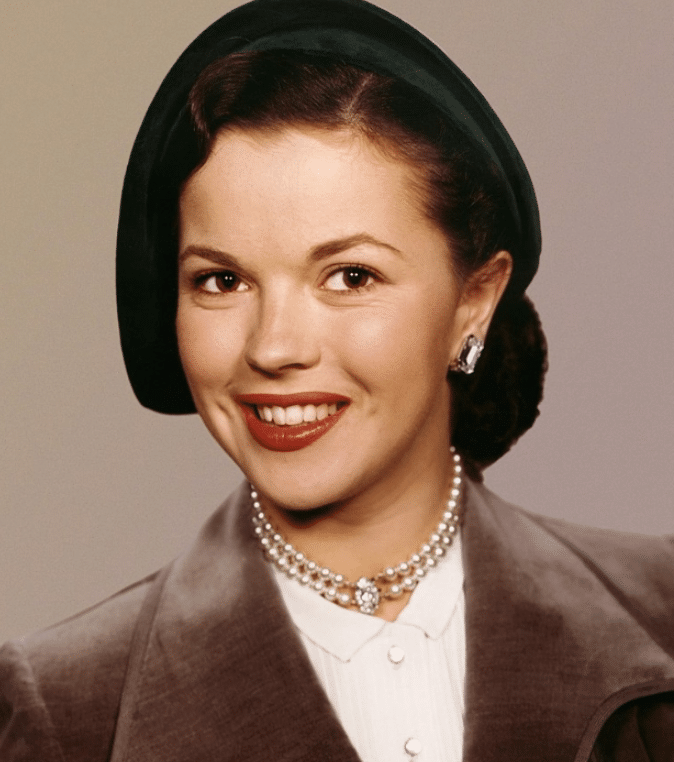
That may be the most compelling way to understand Shirley Temple.
She lived two public lives that would each have been remarkable on their own.
The first began before she was old enough to fully understand fame.
She became one of the defining child stars of Hollywood’s Golden Age, bringing optimism to audiences during the Great Depression.
The second came as an adult.
She entered international public service, represented the United States, became Chief of Protocol, and served as ambassador in two countries.
Very few Hollywood careers have ever taken such an unexpected turn.
For Older Americans, Her Films Can Unlock Very Old Memories
Shirley Temple occupies a special place in American nostalgia because her career reaches back so far.
Some viewers remember seeing her films in movie theaters.
Others discovered them through television reruns.
Still others remember parents or grandparents talking about her.
Her name could evoke a childhood doll, an old song, a black-and-white television set, or stories about going to the movies during the Depression.
That kind of cultural memory lasts far beyond a normal movie career.
She became part of family history.
And for some Americans, she became part of the way one generation explained the 1930s to the next.
Her Life Ended at 85, but the Little Girl Never Disappeared
Shirley Temple Black died on February 10, 2014, at her home in Woodside, California.
She was 85.
By then, more than three-quarters of a century had passed since she first became one of Hollywood’s biggest stars.
Yet mention her name, and the first image many people still see is the child.
That is the strange power of film.
It can preserve a person at one age forever.
But Shirley Temple’s life reminds us not to mistake the preserved image for the whole story.