Some public figures become associated with a movie, a song, or a television program.
Others become connected to an entire chapter of American history.
At 92, Gloria Steinem belongs firmly to the second group.
Born in Toledo, Ohio, on March 25, 1934, Steinem became one of the most recognizable journalists and activists of the modern women’s movement. By the late 1960s and early 1970s, her writing, public speaking, and organizing had placed her at the center of conversations that were reshaping American life.
For older Americans, seeing Steinem today can bring back far more than memories of one famous person.
It can recall a time of changing workplaces, changing families, changing expectations, crowded marches, newspaper columns, political debates, and kitchen-table conversations about what the future might look like for daughters and granddaughters.
Her face became familiar during a period when many of those questions were impossible to avoid.
Before She Became a National Figure, Her Life Was Anything but Conventional
Steinem’s childhood did not follow a traditional path.
She was born in Toledo and spent portions of her early life traveling with her family. After her parents separated, she remained with her mother, whose health struggles required Steinem to take on responsibilities at a young age. Those experiences later became part of the story she told about how she came to understand the limitations women could face in American society.
For readers who grew up during the 1930s, 1940s, or 1950s, the world of her childhood may feel familiar in some ways and remarkably distant in others.
Expectations were different.
Careers available to women were narrower.
Marriage and motherhood were frequently treated not simply as personal choices, but as expected destinations.
Steinem would spend much of her adult life questioning those assumptions.
Journalism Came Before Activism Became Her Public Identity
Long before she became a symbol of the women’s movement, Steinem was building a career as a journalist.
After graduating from Smith College in 1956, she entered a profession that, like much of American working life at the time, was still heavily shaped by gender expectations.
One assignment became particularly famous.
In 1963, Steinem went undercover as a Playboy Bunny at the New York Playboy Club and later wrote about the working conditions she observed. The story brought her considerable attention and became one of the defining pieces of her early journalism career.
The episode also belongs to a very different media era.
Investigative stories appeared in printed magazines.
Readers waited for issues to arrive.
Articles could be discussed for weeks rather than disappearing beneath another wave of online content within hours.
For journalists of Steinem’s generation, the written word still carried extraordinary cultural weight.
The 1960s Changed America — and Changed Her Public Role
The late 1960s were years of extraordinary upheaval.
Civil rights, the Vietnam War, changing family structures, workplace equality, and political participation were all subjects of intense national debate.
Steinem increasingly moved beyond traditional reporting and became an organizer and speaker associated with the women’s movement. By 1970, she had become one of its most visible public figures, speaking in support of the Equal Rights Amendment and participating in the broader Women’s Strike for Equality.
For Americans who lived through that period, the photographs alone can summon memories.
Demonstrators carrying handmade signs.
Television news broadcasts in black and white or early color.
Young people challenging traditions their parents had considered permanent.
Conversations that could become heated at dinner tables, workplaces, churches, and neighborhood gatherings.
Whatever one’s political views were, few could deny that American society was changing.
Steinem became one of the faces most closely associated with that change.
Ms. Magazine Gave Those Conversations a Permanent Home
One of the most enduring chapters of Steinem’s career came with the creation of Ms. magazine.
She helped launch the publication in the early 1970s, creating a national platform that addressed subjects ranging from employment and family life to politics and gender equality.
To younger readers accustomed to websites and social media, it can be difficult to appreciate how influential a magazine could once be.
A publication might sit on the coffee table for weeks.
Friends passed copies to one another.
Articles were clipped and saved.
Letters to the editor became part of a continuing public conversation.
A magazine did not merely deliver information.
It could create a community of readers.
That was part of the importance of Ms.
For women who felt their experiences rarely appeared in mainstream media, seeing those subjects discussed openly could be significant.
Her Influence Extended Far Beyond Magazine Pages
Steinem’s work did not remain confined to journalism.
Over the decades, she became involved in numerous organizations focused on women’s participation in public life and representation in the media. She was among the founders or co-founders associated with organizations including the Ms. Foundation for Women and, later, the Women’s Media Center.
Her public speaking also became central to her career.
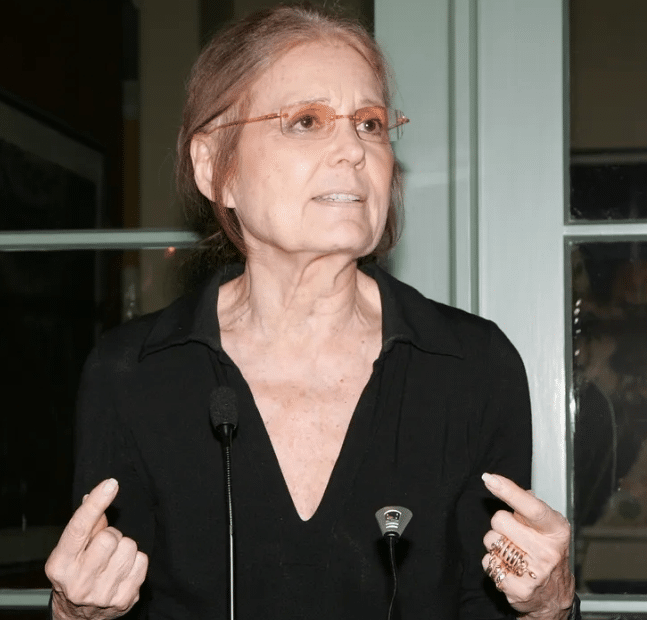
During the 1970s and beyond, Steinem traveled widely, appearing before audiences to discuss equality, politics, race, economic opportunity, and social change.
Those appearances mattered in an era before online organizing.
Movements were built face to face.
People gathered in auditoriums, union halls, college campuses, community centers, and living rooms.
Ideas moved through conversation as much as through media.
The Public Image Became Almost as Famous as the Ideas

Anyone who remembers Steinem during the 1970s will likely remember the visual image as well.
The long hair.
The tinted aviator-style glasses.
The simple clothing.
The photographs of her speaking before crowds.
Those images became part of the visual vocabulary of the decade.
Celebrity looked very different then.
There were no daily social-media updates and no carefully managed personal feeds.
A photograph might appear in Life, Time, a newspaper, or an evening-news broadcast.
That limited visibility often made public figures seem larger and more symbolic than they do today.
Steinem became recognizable enough that her appearance itself came to represent a particular historical moment.
A Presidential Honor Came Decades Later
By the time Steinem entered her later years, her place in American cultural history had long been established.
In 2013, President Barack Obama awarded her the Presidential Medal of Freedom, the nation’s highest civilian honor, recognizing her leadership in the women’s movement and her decades of public work.
There was something fitting about the timing.
A woman whose public career began when many American workplaces, institutions, and political structures offered women far fewer opportunities was receiving one of the country’s most prominent honors roughly half a century later.
For anyone who had watched those decades unfold, the symbolism was difficult to miss.
At 92, She Is Still Writing Another Chapter
Steinem turned 92 on March 25, 2026. Far from marking a quiet retirement, the birthday coincided with news of another major project: a new memoir, An Unexpected Life, scheduled for publication in September 2026.
That detail feels appropriate for a life that has repeatedly resisted tidy endings.
Even after decades of books, speeches, interviews, organizing, and public debate, she is still reflecting on how those experiences fit together.
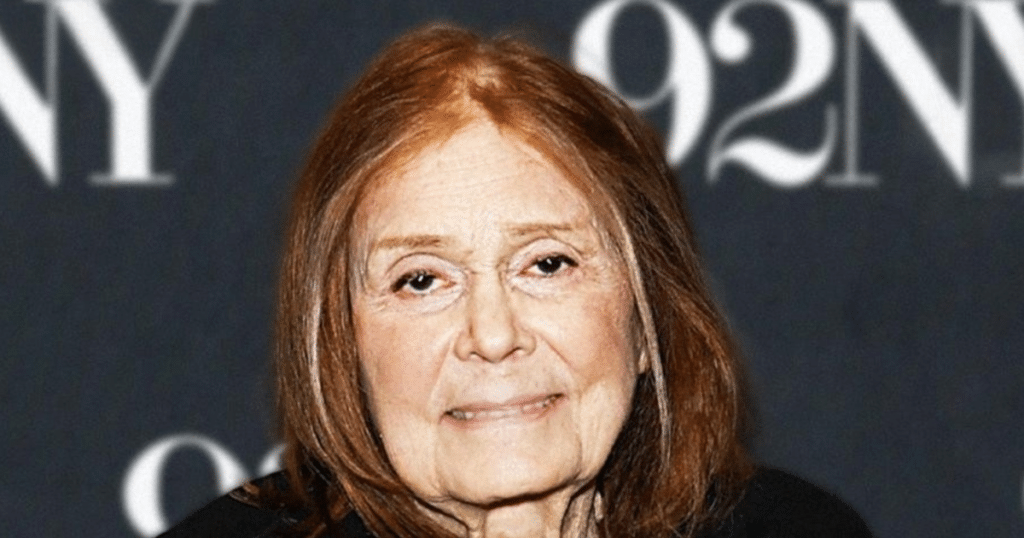
And perhaps that is what makes a recent photograph of her so compelling.
It is not simply a picture of someone at 92.
It is a photograph containing nearly a century of American change.