
Hollywood has always had a way of introducing a new face and making audiences wonder whether they are witnessing the beginning of something special.
In earlier generations, it might have been a young actress stepping onto a studio soundstage at MGM or Warner Bros., hoping for the role that would change everything. Today, the path to movie stardom looks very different, yet the excitement surrounding a genuine breakout performance remains much the same.
For Margot Robbie, that journey began thousands of miles from Hollywood.
Born in Queensland, Australia, Robbie first became familiar to television audiences through the long-running Australian soap opera Neighbours. A move toward international filmmaking eventually transformed her from a promising television performer into one of the most recognizable actresses and producers of her generation.
Long Before the Red Carpets, There Was Australian Television
Every movie star has a chapter that came before the premieres, photographers, and major studio productions.
For Robbie, that chapter was television.

Her work on Neighbours gave her valuable experience before Hollywood audiences knew her name. Like many performers who emerged from soap operas, she learned to work within a fast-moving production environment where actors regularly had to develop characters across many episodes.
For older American viewers, that route may feel somewhat familiar.
Decades ago, daytime television helped introduce audiences to numerous actors who later moved into major film and prime-time careers. Long-running series offered performers something that glamour alone could never provide: practice.
By the time Robbie began pursuing opportunities on a larger international stage, she was no newcomer to performing in front of a camera.
What followed happened remarkably quickly.
The Hollywood Role That Changed Everything
Robbie’s major Hollywood breakthrough arrived with Martin Scorsese’s The Wolf of Wall Street in 2013.
She appeared opposite Leonardo DiCaprio as Naomi Lapaglia, a role that immediately placed her before an enormous global audience. The performance demonstrated that she could hold the screen alongside established stars and became the launch point for a series of increasingly prominent film roles.
Hollywood history is filled with performances like this — a single role that suddenly changes how audiences and filmmakers see an actor.
For previous generations, moviegoers might remember discovering a new performer in a packed neighborhood theater and walking out convinced they had just seen a future star.
The technology has changed.
The basic experience has not.
A memorable performance still has the power to make millions of viewers ask the same question: Where did she come from?
For Robbie, The Wolf of Wall Street provided that moment.
She Refused to Stay in One Kind of Role

After a major breakthrough, an actor can easily become associated with one particular image.
Robbie instead began moving between very different kinds of projects.
She entered the world of comic-book entertainment as Harley Quinn in Suicide Squad, a performance that became one of her most widely recognized roles. She then moved into a very different kind of character with I, Tonya, portraying controversial American figure skater Tonya Harding.
The transformation showed a willingness to move between large-scale entertainment and character-driven drama rather than remain confined to a single Hollywood category.
Her performance in I, Tonya earned her an Academy Award nomination for Best Actress, marking an important point in a career that had begun on Australian television only years earlier.
That kind of range has long been one of the qualities audiences admire most in enduring movie stars.
The faces may change from generation to generation, but versatility never really goes out of fashion.
A Modern Star With an Old Hollywood Kind of Presence
There is an interesting contrast in Margot Robbie’s career.
She belongs unmistakably to contemporary Hollywood, yet her public image sometimes recalls an earlier age of movie stardom.
Classic Hollywood relied heavily on distinctive stars whose presence could help define a film. Audiences did not merely go to see a story; they went to see Cary Grant, Katharine Hepburn, Paul Newman, Elizabeth Taylor, or another favorite performer.
Modern entertainment operates differently. Streaming platforms, franchises, social media, and constantly changing viewing habits have made Hollywood far more fragmented.
Yet audiences still respond when someone possesses that difficult-to-define quality known simply as screen presence.
Robbie’s progression from dramatic films to action movies and major studio productions demonstrates how effectively she has adapted to different corners of modern filmmaking.
Her Ambitions Eventually Moved Behind the Camera

For Robbie, acting became only one part of the story.
She also stepped into producing through LuckyChap Entertainment, the production company she helped build as her career expanded. The company has been associated with projects centered on distinctive filmmakers and female-led stories, including Promising Young Woman.
That move placed Robbie within a long Hollywood tradition.
Many performers eventually discover that the most meaningful creative influence can come from helping decide which stories are made in the first place.
Producing allows an actor to participate much earlier in that process — from selecting material to helping shape a project before cameras begin rolling.
For someone who entered the entertainment business primarily as a performer, it represented another important evolution.
How Hollywood Stardom Has Changed
Older movie fans have witnessed an extraordinary transformation in celebrity culture.
There was once a great deal of mystery surrounding movie stars.
Fans might wait weeks for a new magazine issue just to see photographs of a favorite actress. Studio publicity departments carefully controlled star images, and candid glimpses of famous performers were relatively unusual.
Today, photographs can travel around the world within minutes.

Red carpets are livestreamed. Interviews appear instantly. Vacation photographs and everyday outings can become entertainment stories before the day is over.
Yet beneath all those changes, audiences remain curious about the same things they always were.
What is a star like away from the cameras?
How did they begin?
Which role changed their life?
And which performances will people still remember decades from now?
That fascination explains why candid photographs can attract nearly as much attention as carefully prepared premiere appearances.
They create a brief contrast between the person audiences know from enormous movie screens and someone simply experiencing an ordinary moment.
From Harley Quinn to Serious Drama
Few roles illustrate Robbie’s versatility better than the contrast between Harley Quinn and Tonya Harding.
Harley Quinn belongs to a heightened comic-book universe — colorful, unpredictable, theatrical, and larger than life.
I, Tonya asked for something quite different.
The film gave Robbie an opportunity to explore a complicated real-life figure through a performance that ultimately brought her major awards recognition.
For audiences who appreciate the great character actors of earlier Hollywood eras, that willingness to transform can be particularly appealing.
Movie history is filled with stars who survived changing tastes because they refused to play the same person forever.
Robbie’s career has followed that philosophy surprisingly early.
More Than the Face on the Movie Poster
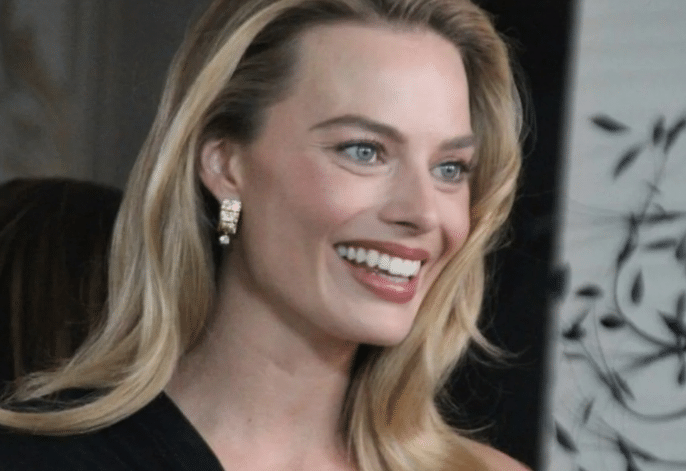
One of the easiest traps in celebrity coverage is reducing an actress to appearance alone.
Hollywood has been doing that for generations.
Robbie certainly became known for glamorous magazine covers, premieres, and fashion appearances, but her career reveals a much broader picture.
Acting success brought her recognition.
Producing gave her greater involvement in which stories reached audiences.
And moving repeatedly between genres allowed her to avoid being defined by one breakthrough character.
That combination helps explain why her rise has been more substantial than a brief period of celebrity attention.
A New Generation of Hollywood Memories
For longtime film lovers, Robbie’s story also offers an interesting reminder that every generation eventually creates its own nostalgia.
Today, movies such as The Wolf of Wall Street, I, Tonya, and Suicide Squad still feel comparatively recent.
Years from now, audiences may remember seeing them the same way older moviegoers remember discovering the stars of the 1960s, 1970s, or 1980s.
That is how popular culture works.
The movies playing everywhere today eventually become the classics someone remembers from their youth.
The actors walking contemporary red carpets eventually become the familiar veterans whose careers seem to contain an entire era.
From Queensland to the Center of Modern Hollywood
Margot Robbie’s career began far from the traditional center of the American film industry.
Australian television provided the starting point.
The Wolf of Wall Street opened the door internationally.
Harley Quinn brought blockbuster recognition.
I, Tonya demonstrated dramatic range and earned an Academy Award nomination.
And LuckyChap Entertainment expanded her influence beyond acting and into production.
Taken together, those chapters tell a familiar Hollywood story in a distinctly modern form.
A young performer gets an opportunity.
One role changes everything.
Bigger offers follow.
Then comes the harder challenge: proving the first success wasn’t accidental.
Robbie managed that transition by continuing to change directions instead of simply repeating what had already worked.
And perhaps that is why audiences remain interested.
Hollywood may look very different from the era of grand studio lots and Saturday-night movie palaces, but the excitement of watching a performer build a lasting career has never disappeared.
Someday, today’s movie fans may look back at these photographs and films with exactly the same warm nostalgia older generations feel when remembering the stars they first discovered decades ago.
That is one tradition Hollywood has never had to reinvent.