Hollywood has always loved a good transformation.
Long before computer-generated effects could change almost anything on screen, moviegoers watched familiar stars disappear beneath wigs, makeup, costumes, and carefully practiced mannerisms. For generations of film fans, part of the magic was sitting in a darkened theater and realizing that the famous face on the screen had somehow become someone entirely different.
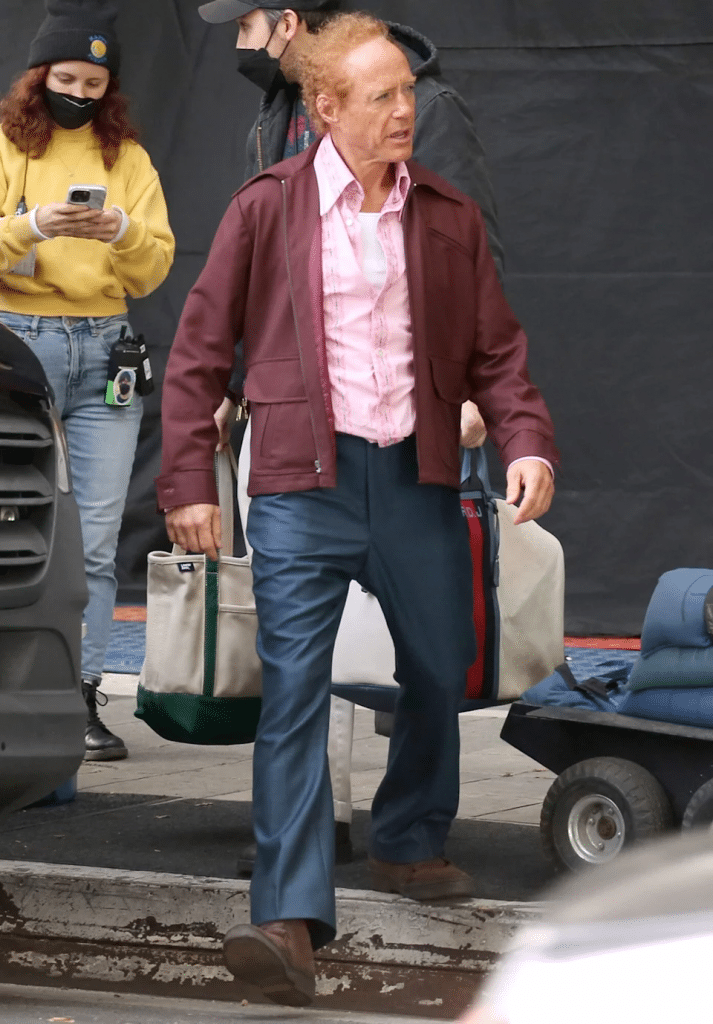
Robert Downey Jr. brought that old-fashioned sense of transformation back in a particularly ambitious way with HBO’s The Sympathizer.
For viewers who remember watching his career unfold across decades—from his younger Hollywood years to his enormously popular run as Tony Stark—the change could be especially striking.
A Transformation That Started at Home
Before audiences saw the finished characters, there was a much quieter moment away from the cameras.
As Downey prepared for The Sympathizer, he shaved his head rather than repeatedly relying on a bald cap for the production. His children even became part of the process, helping shave his hair in a playful family moment.
It was an unexpectedly ordinary beginning to an extraordinary acting challenge.
There is something wonderfully old-school about that commitment. Actors from Hollywood’s earlier generations often altered their appearance dramatically for a role, sometimes becoming almost unrecognizable beneath the work of talented makeup and costume departments.
Video: Robert Downey Jr looks unrecognizable while filming HBO
Downey was preparing to do something similar—but not for just one character.
One Actor, Several Very Different Faces
In The Sympathizer, Downey takes on multiple roles connected to the experiences of the story’s central character, known as the Captain.
Among them are Claude, a CIA operative; Professor Robert Hammer; Congressman Ned Godwin; and filmmaker Niko Damianos.
Each man has his own appearance, personality, mannerisms, and position of authority.
That decision was more than a clever showcase for an established movie star. Director Park Chan-wook explained that having the same performer portray these figures was important to the larger idea behind the series.
The result gives viewers an unusual experience.
You recognize Downey—and then, almost immediately, you begin noticing everything designed to make you forget him.
Video; When Robert Downey Jr. Goes Totally Off Script!
The hair changes. The eyebrows change. The clothes, posture, voice, and expressions shift. One familiar Hollywood face becomes a collection of distinctly different personalities.
Remember When Character Actors Could Disappear Into a Role?
For longtime movie lovers, performances like this can bring back memories of an era when transformation was one of cinema’s great pleasures.
Think of those classic films where a familiar performer entered a scene and it took several seconds before you realized who you were watching.
There were no social-media clips explaining the makeup process before opening weekend. Often, audiences simply discovered the transformation when the lights went down.
That sense of surprise remains part of the appeal here.
Downey has been one of the most recognizable actors of his generation, particularly after years spent playing Tony Stark in the Marvel films. The sharply dressed suits, distinctive facial hair, quick humor, and unmistakable screen presence became familiar to millions of viewers.
The Sympathizer asks audiences to put that image aside.
More Than Makeup and Wigs
A convincing transformation cannot come from appearance alone.
Costumes and prosthetics can change what audiences see, but an actor still has to convince viewers that the person underneath them has changed as well.
That is where Downey’s assignment becomes particularly interesting.
Each character occupies a different corner of the story’s world. Moving between them requires more than changing clothes between scenes. The performances need different rhythms, gestures, voices, and energies.
For an actor who spent years at the center of some of Hollywood’s biggest blockbusters, it offered an opportunity to return attention to something fundamental: character work.
And for longtime fans, that may be the most enjoyable part of the transformation.
A Different Chapter After Tony Stark
Every major star eventually becomes closely associated with one role.
For Downey, that role is unquestionably Tony Stark.
Beginning with Iron Man in 2008, he helped create a screen character that became deeply connected with an entire era of popular filmmaking. For many younger moviegoers, Downey and Stark were nearly inseparable.
Older audiences, however, may remember a much longer journey.
They may recall the young actor emerging in the 1980s, his acclaimed performance as Charlie Chaplin in the early 1990s, his later comeback, and eventually his transformation into one of the biggest stars in modern Hollywood.
That history makes his willingness to disappear beneath unfamiliar characters all the more interesting.
Instead of protecting the polished image associated with movie stardom, he embraces receding hairlines, unusual hairstyles, altered eyebrows, prosthetics, and deliberately exaggerated details.
The goal is not simply to look different.
It is to make each character feel different.
The Old Hollywood Art of Reinvention
Reinvention has always been woven into Hollywood history.
Careers rise, disappear from view, return, and change direction. Leading men become character actors. Comedians surprise audiences with dramatic performances. Familiar stars take chances that remind viewers why they became famous in the first place.
Downey’s career has contained several such chapters.
That may explain why these images attract so much attention. The fascination isn’t simply, “Look how different he looks.”
It is the realization that the person beneath all those transformations is someone audiences have watched for decades.
For longtime fans, photographs can become little markers of time.
One image recalls the 1980s. Another brings back the 1990s. Another immediately evokes the first Iron Man. Then a photograph from The Sympathizer appears, and suddenly that familiar face seems almost completely new again.
Why Hollywood Transformations Still Fascinate Us
Perhaps we enjoy dramatic movie transformations because they remind us what acting can be.
Celebrity culture encourages audiences to become familiar with an actor’s real-world appearance. We see stars at premieres, interviews, award ceremonies, and public events. After enough years, their faces can feel almost as familiar as those of old acquaintances.
Then a role comes along and disrupts that familiarity.
For a moment, we stop seeing the celebrity.
We see the character.
That illusion has been part of Hollywood since its earliest days, and even in an age of elaborate digital effects, there remains something satisfying about watching an actor transform through performance, makeup, wardrobe, and physical detail.
A Familiar Star Still Finding New Ways to Surprise
Robert Downey Jr.’s work in The Sympathizer offers longtime viewers another chapter in a career already filled with reinvention.
The shaved head that began as a practical decision became the starting point for several dramatically different appearances. Wigs, makeup, costumes, and performance completed the transformation, allowing one of Hollywood’s most recognizable faces to repeatedly become someone else.
For viewers who have followed Downey since his younger years, there is also something quietly nostalgic about seeing him continue to experiment.
Hollywood changes. Styles change. Audiences change.
But one tradition remains remarkably durable: a gifted performer stepping in front of the camera and asking us to forget, just for a little while, the famous person we thought we knew.
And after all these years, that may still be one of the movies’ simplest—and greatest—forms of magic.